Backrooms Explained | Are You Disappointed In Your Life?

on

|

views

and

comments

Watch More Films

Do you want to watch more films and have discussions with cinephiles? Join Watch More Films and enjoy weekly film flights, In-depth conversations, and mastery series on filmmakers, countries, genres, and movements.

How did you get here? Your consciousness is a room full of memories that is constantly evolving. But as you walk through life, the untrained mind can start to build walls, put up barriers, to protect itself from the outside world. It’s a natural response, something we are often unaware of. But if gone unchecked, it can leave you feeling trapped. You can become convinced that the world outside is better off without you, that you never deserve the relationships you had, resigned to watch your life unfold from behind a lone window. 

We all have our loops. Our habits. Behaviors that keep us walking in circles. Reaching for the same solutions over and over again. Thinking each time, they’ll take you somewhere new. But they don’t. And still, it’s a neural pathway of least resistance. A path you made. It’s the one that kept you safe when you were a child. You learned to push people away before they could hurt you. And now, as an adult, you’re still stuck right where you started. Alone.

-Mary Kline, Backrooms

The simplest explanation of Backrooms is that the Backrooms are a visual metaphor for a consciousness trapped in a behavioral loop. You walk in circles, expecting to eventually find a solution, only you don’t. The repetition leads to a form of annihilation that’s not destruction but a terrible emptiness.  

The question Backrooms asks is can we break the loop? Is that actually possible? Clark, unfortunately, can’t. For Mary, the jury’s still out. 

If you want a deeper explanation, read on. 

Backrooms Explained

CLARK IS AN ARCHITECT

Clark isn’t living the life that he wants. He wanted to be an architect. That didn’t happen. Instead, he owns a Pirate-themed furniture store that sometimes mixes metaphors by using Sultan-related language. We never see a single customer in the store.

Clark not being an architect is why he’s bitter. His bitterness is why he drinks and why his wife left. It’s why he’s so bad at owning a furniture store. Instead of making a change, instead of pursuing architecture, he persists in a life he hates, telling himself, day after day, that it’s temporary, that the career in architecture is just around the corner. He wants it to happen, tells himself and others that it will happen, because the alternative is too terrible for him to accept. That’s why he still wears his Modern Design Conference 1970 shirt to bed. He might dress as Captain Clark during the day, but, at night, he holds onto the dream. 

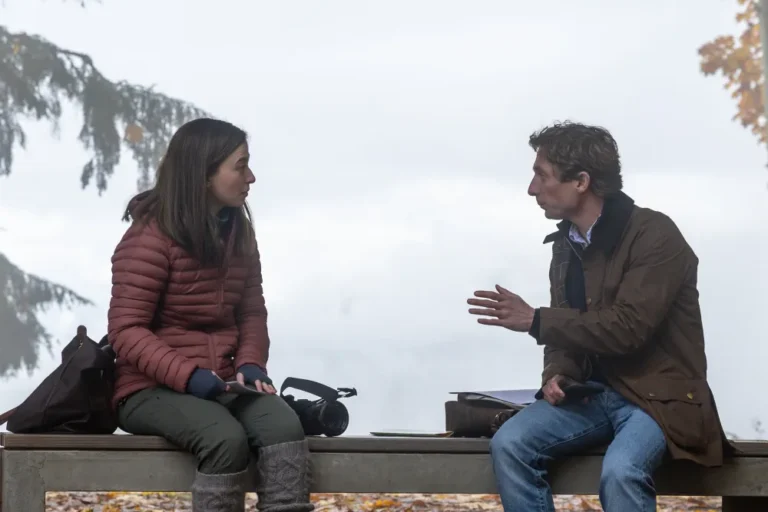
Here’s the conversation Clark has with Mary at the start of the film:

  • Clark: I’m not lonely. I have… employees and customers. 
  • Mary: I didn’t say lonely. I said alone. 
  • C: I hurt people. I don’t want to. It’s just the way I’m wired, so maybe I deserve to be alone. 
  • M: Do you think anyone deserves to be alone? 
  • C: I don’t know, but, you know, maybe it’s not such a bad thing. 
  • M: Being alone feels deeply ingrained. I understand. You’ve had dreams and a lot of resistance, not a lot of support in realizing those dreams, and when we’ve experienced… hurt, again and again, we start to expect it. It’s like, oh, I know this path. I know where it goes. So, are you interested in forging a new path and see where that leads? 
  • C: Sure. Why not? You know, I’m here. 
  • M: Great. So I want to revisit an exercise we’ve done before. The role play. 
  • C: Oh, the acting thing? I feel stupid doing that. 
  • M: I know. But we have a few minutes. Let’s, um… Yeah, let’s try. A little bit. 
  • C: All right. 
  • M: Let’s set the scene. Let’s go back to the night that Barbara left you. 
  • C: What, you mean, like, she kicked me out of my own house? 
  • Yeah. 
  • C: I’m playing myself. 
  • And I’ll be Barbara. 
  • C: It is my house, by the way. I’m the one paying for it. 
  • I know. 
  • C: All right. Okay, so, um… I got him home late. I don’t know how late. Uh, she was already asleep, maybe midnight. She usually goes to bed before—it doesn’t matter. The point is, I was in the kitchen, and, um, the glass. I broke the glass, and she comes running down to see what happened, and… things escalated. 
  • M: And how do you feel? 
  • C: Well, I was. I was drunk. And, um, I felt stupid, and, uh, you know, I was angry, because because I broke the glass. 
  • M: Can you say that to me? 
  • C: What, to Barbara? 
  • M: Yeah. 
  • C: I’m sorry that I woke you. 
  • M: Maybe if you’d come home earlier, we could have spent the evening together. 
  • C: No, I was, I was working. You know? I came straight home after work. 
  • M: Be honest with me, please. I can smell it on your breath. 
  • C: I had a few beers. 
  • M: Define a few?
  • C: Well, it was a hard day. I needed to wind down. 
  • M: All you ever do is wind down. You’re always at the store. 
  • C: You want kids, right? 
  • M: We both do. 
  • C: Well, you know, having a family takes money, which means someone has to work. Unless being a professional student is considered a job these days. 
  • M: That’s not fair. You know, I have to take time off. 
  • C: Well, it’s not my fault you can’t keep up. How are you gonna be a lawyer if you can’t even handle law school? Who do you think pays for everything while you’re gallivanting around campus like a 30-year-old freshman? I’ll give you a hint. It’s me. I pay for your school. I pay for your time off school. I paid for the roof over your head. 
  • M: Can I talk now? 
  • C: No, no, because I’d like to know, what do you think happens if you do manage to graduate? You know, you pop out a kid, and then you leave me with the bill. Or am I stuck at home changing diapers because you’re too busy working for the first time in your life? 
  • M: Now you’re being cruel. 
  • C: I’m being honest. I thought that’s what you always wanted. 
  • M: Just because you didn’t get to be an architect. 
  • C: I am a fucking architect. Goddamn it, I’m just stuck selling shit furniture because someone won’t get off their fat fucking ass and help me. 
  • M: How do you feel, Clark? 
  • C: Who am I talking to? 
  • M: Me. Here. Now. 
  • C: Um… Sorry, I didn’t mean to, uh… You know, get angry or losing my temper or whatever.
  • M: Yeah. That’s the purpose of the whole exercise. This is a good start. To feel what you feel. and then learn to identify a new path.

The goal of the roleplay exercise is to repeat it enough times to where Clark can see different forks in the conversation. Instead of reacting and giving into his anger and attacking “Barbara”, he would have some emotional distance and be able to actively choose how to respond. There’s a version where he’s open and vulnerable with Barbara and she responds with compassion, with support. Maybe if he had let Barbara support him not in just this conversation but in life in general, maybe he would have had the strength to fight for his dream rather than leave it to whither like a raisin in the sun.

Therapy is an exploration of the mind, body, and soul, observing what you already know and rediscovering what you had forgotten. Sometimes, you even uncover something new. The scene in Mary’s office is the realistic version of this exploration. It’s often something we put into words, either said out loud to someone else or written in a journal or simply given voice by that little voice in our head. 

A wall in Backrooms

THE MONSTER REPRESENTS SOMETHING

Film is a visual metaphor. So internal things are often represented externally. Especially in horror. Anxiety becomes the monster in It Follows. Resentment and grief become the monster in The Babadook. Repression becomes the monster in Cure. Possession is an expression of division, both on the personal level (divorce) and the societal (democracy vs. communism).

Let’s look again at the quote I had at the start of the article, from Mary: How did you get here? Your consciousness is a room full of memories that is constantly evolving. But as you walk through life, the untrained mind can start to build walls, put up barriers, to protect itself from the outside world. It’s a natural response, something we are often unaware of. But if gone unchecked, it can leave you feeling trapped. You can become convinced that the world outside is better off without you, that you never deserve the relationships you had, resigned to watch your life unfold from behind a lone window. 

That dialogue isn’t coincidental. It’s what I call an in-road, a bit of text that illuminates the film’s underlying subtext. The Backrooms are rooms full of memories. That’s why this area of the Backrooms looks like Clark’s furniture store and has remnants of the store: the furniture, the signs, etc. We even see it with Mary. A shot shows her childhood home as she knew it followed by a series of replications that lose specificity until nothing of Mary’s house remains. Everything from the outside world is gone, leaving only an empty, generic room. 

A room in Backrooms

In exploring the Backrooms, Clark is really just exploring himself. In a realistic movie, we’d see him taking long walks on the beach, reflecting, writing in a journal, having more therapy sessions with Mary, until, finally, he comes to the conclusion that he doesn’t want to change, that he’s okay with being an alcoholic, divorced furniture shop owner. It would be like if Will Hunting at the end of Good Will Hunting rejected therapy, let the girl go, and rejected his intelligence, opting, instead, to hang out with his degenerate friends, drinking and fighting for the rest of his days. All that potential, wasted. Or, if at the end of Fight Club, Jack decided that Tyler was right and let himself become Tyler Durden. 

Clark’s scared to take down his walls and barriers, to change his loop. Which is why, at the end, we have the repetition of the roleplay conversation. Clark repeats the loop and we hear the same  anger and negativity, the same accusations against Barbara. Initially, Clark asks how he can change. But then he concludes. “I don’t think I want to change. I don’t. I like it here. For the first time in a long time, I feel like I’m right where I’m supposed to be.” 

Seconds later, MonstroCaptainClark appears and kills Clark. 

CLARK ISN’T AN ARCHITECT ANYMORE

The appearance of MonstroCaptainClark (I know it’s Pirate Clark but shoutout The Substance) is another example of externalizing something internal. Clark was torn between who he wanted to be (an architect) and who he was (Captain Clark). By deciding he doesn’t want to change, he accepts who he is. While it’s not said out loud, this is him giving up on his dream. He won’t be an architect in the Backrooms. He’ll only be the guy who never became an architect. 

In a realistic film, Clark would just go on being Captain Clark for the rest of his life. Maybe he’d get married again? Maybe not. Maybe his store would take off and he’d become rich. Maybe not. Even if he had success and love, he’d never have satisfaction because he was too afraid to pursue the one thing he truly wanted. His death would be existential. A death of the spirit. 

In a horror film, you have a monstrous version of Captain Clark appear and eat Clark. It represents the same thing. The Clark who wanted to be an architect is dead. Captain Clark continues on. It’s simply presented in a literal, hyperbolic way. 

MARY HAS A HEALTHY BREAKTHROUGH?

Clark’s haunted by architecture. Mary’s haunted by a childhood spent living with a mentally ill mother who kept her locked in the house. The same way Clark wears his Modern Design Conference shirt, Mary carries around the cement handprint from her childhood driveway. Since MonstroCC represented the thing Clark feared becoming, you could also view it as a stand-in for whatever Mary fears becoming. Which probably ties back to her childhood. Maybe she fears becoming her mom. Or fears being trapped in a room again. Her whole therapy program is based on her childhood. She was literally stuck inside, trying to look out a window, unable to step outside. 

This is the last portion from the commercial: I can help you open [the window] now, because the window isn’t locked. The latch was never broken. Are you ready to step through? So that you can reclaim that which was once yours and take back control of your life. The life you want to be living, unburned by the traumas of the past, free of the confines you had built. And free to choose a path of your own design. 

Clark didn’t want to reclaim that which was once his (architecture) and take back control of his life. He lets his trauma consume him. Mary, on the other hand, frees herself from the confines. And finds a new path. 

Well. Maybe. At the end, Mary’s held hostage by the Async corporation who first discovered the Backrooms. So she’s kind of right back in her own childhood situation, once again stuck in a room, looking out a window, hoping an authority figure lets her leave. We don’t know if they will or won’t. 

But we do know that Mary used the relic of her childhood, the cement handprint, to free herself from the clutches of MonstroCC. And there’s something symbolic in that. Her damage colliding with Clark’s damage. And, at the very end, we see the rubble of her childhood home following the demolition. The other half of the handprint visible on a chunk of broken cement. It’s now part of the Backrooms, as are her other memories, as are memories from Clark’s assistant and her boyfriend, as are Clark’s memories and store. 

The last shot is of MonstroMary in a chair in a deconstructed version of the interrogation room.

THE MARY IN THE CHAIR

I feel like some people will think the last shot of MonstroMary in the chair is some twist, like maybe Mary was never interrogated by Async and has only been in that chair the entire time. Something like that. 

Clark told us earlier that the Backrooms remembers people and makes copies of them. So the version of Barbara who he scalps wasn’t actually Barbara. Just like the guy in the striped shirt Clark eats isn’t actually the guy in the striped shirt. Or the wheelchair guy with the lamp. The actual wheelchair guy with the lamp is still somewhere out in the world. 

So the MonstroMary probably isn’t actually Mary. It’s just a Backrooms copy of her. 

Where it gets interesting is that you could read the implication of the copy being in the chair as symbolic for Async keeping Mary prisoner in the facility. Which is the tragic reading. 

The glass-half-full reading is that MonstroMary in the chair is the trauma of the past and that real Mary is now free to go about her life, unburdened, just like Mary promised in her commercial. 

I lean glass-half-full because of two things. First, Mary using the cement handprint to defeat Captain Clark. Second, the shot of the demolished house. Imagine if Clark had recommitted to architecture. There might be a shot of the store and workers taking down the “Captain Clark” sign. The removal of the sign becomes symbolic for the end of that chapter in Clark’s life and the start of something new. It’s the same with Mary’s childhood home. Or the destruction of the One Ring in The Lord of the Rings. Or in V for Vendetta the symbol for the political oppression that is the antagonist of the film is the Parliament building. At the end of the story, the building goes boom, signaling the old regime is over.

And it also makes sense to have a foil. You have two haunted characters. Both are alone. Both end up in the same place. And both have the opportunity to “open the window” and break the loop. One fails to do so. Having the other also failing would make Backrooms a pretty bleak tragedy. Which is fine. Hereditary is a pretty bleak tragedy. Horror films don’t have to have happy endings. But the final girl trope often ends with the final girl not only surviving but overcoming some personal hurdle. While Backrooms isn’t your standard horror film, it’s also not not your standard horror film, you know? 

IS BACKROOMS ABOUT AI

There’s an AI quality to the Backrooms. That whole, unaccy “describing a dog to someone who has never seen a dog then asking them to draw it” thing. AI has never experienced life. It can see videos and photos, read text, but it’s not a conscious entity. Even though its responses can feel real, the images it generates look real, it’s a mimicry. Like if you ask Gemini to make a video of a female chess player, the female chess player might look vaguely like Anya Taylor-Joy because ATJ played a female chess player in the popular Netflix show The Queen’s Gambit. Everything AI makes is based on things other people have made. 

And that’s the Backrooms, isn’t it? The Backrooms area by Clark’s store looked like Clark’s store because it was a memory of Clark’s store. Once Mary enters, parts of her life become part of the Backrooms because it now has her memories. Same with Clark’s assistant and her boyfriend. And on and on. 

That’s AI. Everything I’ve ever written on Film Colossus has been ingested by ChatGPT and other AI models. So when someone one month from now asks AI “What is Backrooms about,” this article will have some influence on the response. 

No joke, the other day I was having a discussion with someone on Twitter about highbrow vs middlebrow vs lowbrow, and I had made a point that while Scorsese had popular films they were way more artistic in execution than, say, a Ron Howard film that was truly middlebrow. Within 2 minutes of posting the tweet, I decided to Google “Martin Scorsese middlebrow” to see if there were any similar discussions on Reddit or articles about it. And the Google AI answer said “Whether Martin Scorsese is ‘middlebrow’ is a matter of ongoing debate. While film purists and cinephiles generally revere him as a master of art-house cinema and a Sight & Sound auteur, critics who use the term often categorize him as ‘high middlebrow.’” 

I looked over at the citations and my tweet from mere minutes earlier was one of the cited sources. So I said something online, Google’s AI ingested it immediately, then started using what I said as part of its “authoritative” answer on the topic. That’s so Backrooms it’s crazy. As the Google AI collects more and more information on the topic, what I and others actually said will disappear, giving way to the AI’s increasingly generic answer. 

So I don’t think ALL of Backrooms is about AI. But I think Parsons was inspired by AI and that Backrooms is possibly also having a discussion about AI. 

How many stories have we heard about people going crazy over AI and convincing themselves they were in a relationship with ChatGPT? Or people who now use it for everything to the point of asking it questions like how to boil water or what they should name their kid. Or people who have replaced human friendship with AI chat discussions. That was the entire premise of South Park’s ChatGPT episode. You can kind of see it with Backrooms, too. The Backrooms are AI and its slowly replacing our world with a poor replication that’s seemingly safe, sterile, and lacking the stresses of real life.

There’s something to all of that. But I still think the main idea of the film is what I talked about earlier. Kane Parson’s didn’t shy away from using dialogue to “explain” the metaphor of the film. So if it was really primarily about AI, I’d expect he would have included similar dialogue or some signal. Like how Eddington opened with the sign of the data center coming soon and the SolidGoldMagikarp reference. 

I’M DONE WITH FILM COLOSSUS?

On a personal note, the movie hit close to home. Since I was 15 years old and read T.S. Eliot’s “Hollow Men” for the first time, I’ve wanted to be a great writer. When I graduated from college, all I wanted to do was write novels and poetry. I threw myself into what it took to become a professional writer. And book after book, magazine after magazine, website after website, mentioned having a platform. They said you could be an amazing writer but without a platform agents and publishers might not be interested in you.

So I told myself I’d build my platform. Instead of only writing poetry and novels, I’d create a website where I wrote about movies. Being a film critic would be my platform. Then I added a podcast about Kanye West. And both were pretty successful. Watching the Throne would get 50,000 to 100,000 downloads a month, depending on Kanye’s buzziness at the time. Film Colossus generated over one-million pageviews a year. I had 120,000 followers on Twitter and 40,000 subscribers on YouTube. 

But I was so busy building my platform that I didn’t write or read as much. Sometimes ever. I released a novel in 2015 and another in 2020. I’ve  been working on my third novel for 6 years. That’s infuriating. Do you know how many literary opportunities I’ve had because of my platform? Zero. Do you know how many poems my platform has helped me publish? None. My first two novels were published by someone I became friends with in college, before any platform. Like…what the hell have I been doing?

So watching Clark yell how he’s an architect when he’s not…that hit close to home. I’m a novelist and poet. Right? Right? 

I literally just let out a huge sigh. 

I can’t keep doing other things hoping that they’ll lead to the thing I actually want to be doing. If I want to write novels and poetry, being a film critic and a podcaster won’t get me there. 

I know, I know. Both Kane Parsons and Curry Barker built platforms on YouTube that then allowed them to make Backrooms and Obsession. They were “Youtubers” only in the sense that was their means of distribution. But, really, the entire time they were filmmakers. A film critic is not a novelist. A podcast, despite what many podcasters may think, is not a poet. 

So…I’m going to go write novels and poetry. See ya. 

Cast

  • Clark – Chiwetel Ejiofor
  • Mary – Renate Reinsve
  • Kat – Lukita Maxwell
  • Bobby – Finn Benett
  • Phil – Mark Duplass
  • Naren – Avan Jogia
  • Pirate Clark – Robert Bobroczkyi
  • Nora – Krista Kosonen
  • Written by – Will Soodik
  • Directed by – Kane Parsons
Chris
Chris
Chris Lambert is co-founder of Colossus. He writes about complex movie endings, narrative construction, and how movies connect to the psychology of our day-to-day lives.
Share this

Recent articles

Subscribe
Notify of

This site uses Akismet to reduce spam. Learn how your comment data is processed.

0 Comments
 
Skip to toolbar