
To understand One Battle After Another, I want you to think about a garden.
If you put time and effort into a garden, it will look nice. If you ignore the garden, then slowly and inevitably other forces will act on it. Insects will eat the leaves and roots. Weeds will commandeer the soil. Animals will dig and burrow. Weather will take its toll. The world will destroy your garden if you let it.
Stay active, and you’ll have the garden you want. Get distracted and you’ll lose it.
Paul Thomas Anderson takes this concept and maps it to life, specifically the idea that, when we’re younger, we’re more active and more willing to fight for the garden. But, as we get older, we become complacent. Weeds collect. Grubs feed. The flowers wilt.
Pat vs. Bob
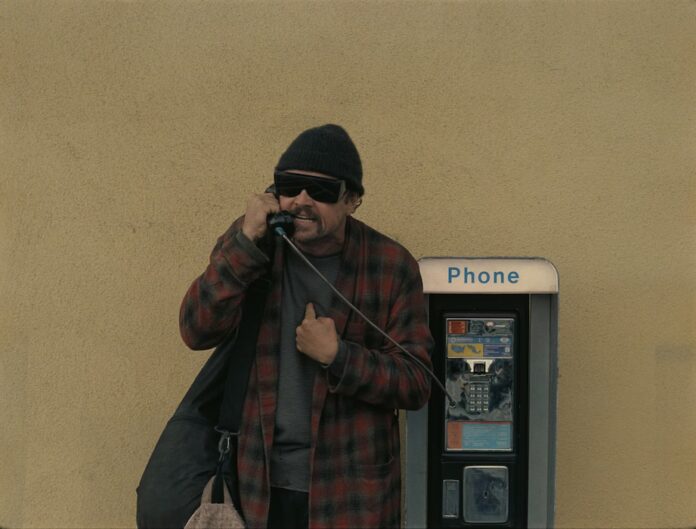
Zoom out for a second and ignore the insane amount of story beats and just think about Leonardo DiCaprio’s character. Pat is a 26-year-old revolutionary, the Rocket Man. Bob is a 42-year-old burnout. He goes from young and happy to old and dormant. What happens when we become complacent is the core of the film.
Lockjaw as entropy
Like with Eddington, I think people will focus on the politics of One Battle After Another and miss the bigger picture. They’ll center discussion around left vs right, revolution vs obedience, and overlook the heart of the matter.
Lockjaw doesn’t just represent the right and white nationalism, he is a consequence of poor choices, much like Anton Chigurh in No Country For Old Men.
Three key bits of dialogue
There are three bits of dialogue from Bob that I really want you to pay attention to.
The first is when Bob can’t remember the password and keeps calling and arguing with Comrade Josh. Here’s what he said then: My name is Bob Ferguson. I don’t know if you’ve ever heard of me, alright. I was part of French 75 for years, years and years. They used to call my Ghetto Pat. Rocket Man. Stuff like that. Only problem is I’ve fried my brain since then, man. I have abused drugs and alcohol for the past 30 years, man. I’m a drug and alcohol lover. And I cannot remember for the life of me or the life of my only child the answer to your question. What time is it?
The second is a bit later, when Pat’s in the car with Sensei. He says: Just never thought this fucker would come back for us. I got lazy, man. I wasn’t paying attention. I thought the person coming through that door one day was gonna be her mom, not this fucking asshole. See her daughter, you know. Teach her girl stuff. She’d do her hair. She’d be a mom. I can’t do her hair, man. You know that? I don’t know how to do her hair right.
The last one comes once Bob and Willa are back home. I’ve been holding onto something for a while now, and I wanted to give it to you, okay? And I didn’t give it to you before because I just didn’t want to expose you to certain stuff, you know? I didn’t want you to feel sad or confused about it. I don’t, I don’t know what I wanted. I wanted to protect you. From all your mom’s shit. From all my shit. I supposed I wanted to be the one that you came to for help, right? You know, the one, the cool dad, that you could say anything to. Even though I know that’s impossible. But I don’t want to lie to you about anything anymore.
In the first quote, Bob acknowledges that his poor lifestyle is why he can’t remember the password that would save his life and his daughter’s lives. His stagnation has led to an inability to take action. He outright states that in the second quote. And in the third one, he comes clean to Willa about his own weakness and fear. The first quote is desperate, the second is reflective, and the third is cathartic. The events of the film are essentially a way to trigger the character’s self-reflection and redemption.
You could tell Bob’s story any number of ways. He could have been a celebrated guitarist in a popular rock band, but then quits the band to be a dad. In this version of the story, he still spends 16 years on the couch. Then, say, his daughter forces him to go on a road trip with her and Bob once again falls in love with music. Or, he could have been a gardener who gave up gardening because he got distracted by other things. Only for the events of the story to remind him why he needs to garden.
The basic movement is “I knew something. I forgot it. And this experience reminded me why the thing is important.”
Willa’s coming of age and the letter from Perfidia
Willa’s character arc is similar. Except it’s not about remembering a lesson lost. She’s learning the lesson for the first time. For her, it’s a very dramatic coming of age story. Early on, she’s just a normal, clueless teenager at a school dance. By the end, she’s incredibly aware of the world at large and the struggles that take place therein. Her innocence is gone. Having crossed that threshold, she earns the letter from her mom, which essentially states that Willa now shares responsibility for the garden.
Dear Charlene. Hello from the other side of the shadows. I don’t mean to shock you, but I’ve been contemplating writing you for a long time. I often wake up and I find it completely crazy how and why I am where I am today, disconnected from my family. I pretend my whole life, pretend to be strong, pretended to be dead. Is it too late for us, after all my lies? Are you happy? Do you have love? What will you do when you get older? Will you try to change the world like I did? We failed. Maybe you will not. Maybe you will be the one who puts the world right. I think of you every single day. every single day. And I wish I had been strong for the both of us. I know some day, when it’s right and it’s safe, you will find me. Please send a kiss to your dad, my Ghetto Pat. Love, your mom, Perfidia.
Bob has an iPhone
At the end of One Battle After Another, Bob’s on the couch, trying to figure out how to use an iPhone. That may seem silly but it’s actually a huge sign of growth. He had spent 16 years completely paranoid and disconnected from everyone and everything. Him having an iPhone means he’s trying to be part of the world again. Likewise, Willa has joined the revolution. She’s taking action, trying to help, trying to make a difference. And both are much happier than they were.
Willa becoming a revolutionary means that Bob didn’t just save his daughter. He also saved someone who will make a difference in the struggle. Even if he himself isn’t fighting on the front lines, by doing his part as a parent, he’s contributing. That’s another reason why his constant pursuit of Willa was important. Even though she kind of ultimately saves herself, with a little help from Avanti, Bob finally giving a damn meant something.
And I want to clarify, the film isn’t saying all kids should become revolutionaries. The literal resistance in the film is hyperbole, dramatization. In real life, a positive contribution can take many forms. Being a great teacher, a caring doctor, a patient friend, a present parent. What matters is showing up and engaging with the world.
Am I really going to ignore the political discussion?
Okay, so with Eddington, I really believe anyone who primarily thinks of that film as a political statement is missing Aster’s larger point about the loss of a shared reality and how that’s created conflict in society as a whole, not just politically. It’s not about right vs. left so much as it’s about what has created such a rift between the right and the left.
With One Battle After Another, PTA takes sides in a way Aster doesn’t. Progress is the garden. And far-right conservatism is the force acting on the garden. If no one fights for progress, for freedoms, for equality, for themselves, for others, for our children, for the future, then you’ll lose ground to the Lockjaws of the world who want a Christmas society (white nationalism).
And that’s what’s happening right now, in America, in 2025. Trump’s government is full of Lockjaws and Christmas Adventurers Club members.
We’re the ones who have to fight for the garden we want. For the country we want. For the world we want. But many of us are distracted. By phones, computers, social media, YouTube, Reddit, etc. The real world is stressful, so we’d rather read about celebrity gossip, or run a stan account on Twitter. Weeds collect. Grubs feed. We don’t vote. Racists take over the government.
It’s one battle after another. That’s how we have to live our lives, to get the most out of life. And that’s the generational struggle that parents pass down to their children.
With that said, I don’t mean all of us have to become political revolutionaries. But you should come out of OBAA doing some self-reflection about the ways in which you have grown complacent, like Bob, or been sheltered from the world like Willa. If you’re honest with yourself, One Battle After Another could be one of the most important movies you ever watch, because it’s one of the few movies that directly calls out our bad habits, our delusions and illusions.
To get personal for a moment. I’m 38. My main goal in life was to be, is to be, a great novelist. And while I’ve had two novels published through a small press, I’ve lost momentum. From ages 22 to 27, I read 30 pages every day. I wrote, every day. I was submitting poems and short stories. But then I moved to Austin, TX. I started dating my now wife. I spent a bit more time on Film Colossus, on a Kanye West podcast that went from popular to doomed, almost overnight. I got a dog. I’ve played more video games. I spent more time on Reddit, on Twitter. I got a corporate job to see what that’s like. I keep telling myself, “Yeah, I’ll write. I’ll get back to it.” It’s been 5 years since my last book. The days pass by like each of those hills in the car chase, one after another, after another.
Do you remember the answer to the question “What time is it?” It was “Time doesn’t exist, yet it controls us anyway.” It’s easy to forget that time is real. That time matters. That we’re running out of it. Every second gained is another lost. That there’s a Lockjaw coming for us, in the form of disease, or a car crash, or falling down the stairs, or financial ruin.
What we put in, we get out. What we fight for, we protect.
One Battle After Another was a polite criticism I needed to hear. It has me reevaluating my priorities, how I’m spending my time, etc. I’m seeing things as gardens, and some are lovely. Others need attention. This is power of a movie that’s a work of art and not just a temporary escape. A great movie can change your life, save your life. Man, I love movies. Thanks, PTA.
Sensei Sergio St. Carlos
Immigration is obviously a major motif in One Battle After Another. The film starts with the operation to free immigrants from the Otay Mesa detention center. And then we have Sergio’s evaluation of the undocumented workers in Baktan Cross.
I think it’s worth noting that Sergio’s the opposite of Bob. Where Bob gave up, Sergio is still an active revolutionary. He’s been actively helping people, he has a plan, he doesn’t miss a beat. In fact, most of the active revolutionaries are people of color. Regina Hall’s Deandra. The nuns at Sisters of the Brave Beaver. Even Avanti, the indigenous bounty hunter, ends up revolting against the racist group he was supposed to leave Willa with.
I wonder if this was a conscious choice on PTA’s part, him showing that non-white people never gave up the fight while Bob had the privilege to disconnect from it all? Or if that’s reading too deep into it/
Cast
- Directed by – Paul Thomas Anderson
- Bob Ferguson/Pat Calhoun – Leonardo DiCaprio
- Willa Ferguson/Charlene Calhoun – Chase Infiniti
- Colonel Steven J. Locklaw – Sean Penn
- Sergio St. Carlos – Benicio del Toro
- Perfidia Beverly Hills – Teyana Taylor
- Deandra – Regina Hall
- Mae West – Alana Haim
- Laredo – Wood Harris
- Junglepussy – Shayna Mchayle
- Howard Sommerville – Paul Grimstad
- Avanti – Eric Scweig
- Based on – Vineland by Thomas Pynchon
- Written by – Paul Thomas Anderson


I see the real revolutionaries, the people who want to save this great nation, as the hard-working Americans of the conservative movement and I see the lock jaws and the extremists as the far left liberals as I’m sure most of the country does
I love this interpretation. I was searching the web for the exact quote of what time was in the movie and ran across this review. I recall not being really liking the film for superficial reasons but I was only looking at the surface. Anyone can see this movie and say it’s political. I’ll admit I saw it as a white man being the hero in a black story. But I was looking at it all wrong. It wasn’t a black struggle story, it was simply a story on the human struggle of maintaining purpose in life. Fighting for meaning and the values of what truly matters. On one side you have people fighting for love, community, family and unity. On flip side you have people that want division and inclusion for a small class of people. Each character has their own personal battles and those who lose sight of what’s important lose the battle thus the meaning of the title. Seriously profound. Keep giving us these insights Chris.
It’s my first time on FilmColossus. I finished your text about “28 years later”, then this one. And I freaking like it SO MUCH. Now I will always read this site and your texts. Your words are clicking on buttons in my soul and point of view.
Thank you, Chris.
Also, please — write. I’m just a 29 years old Social Media Producer, I post a lot, but not a one book. But I read much. And I can definitely tell, that you are really good at this.
i love your writing style and this particular analysis – dont give up on your writing dreams chris ! it’s obvious to me from reading this that you are a truly capable writer and you must use your gifts for another novel
Really enjoyed reading this – sums up how I felt leaving the movies exactly. Deleting social media and finding out when the next protest is
Great analysis! I also think that there is a message on family and community–blood vs found. In the movie, Willa is abandoned by her two blood relatives, and saved largely by people she didn’t know or aren’t related to. Benicio’s character and his ring, the nunnery, these are communities that will risk their own lives for people that they don’t know–just because they need it. Now contrast that with the Christmas Adventurers, who seem to only care about blood–think about Lockjaw’s interview: who are his children? What are his genetics? Can he trace his bloodline back to only white people?
In fact there is an idea of trying to kill one’s own or abandoning one’s own. I think that the key of the revolution is how quickly they abandon each other, with very little interrogation. It’s a question of survival, a very real question that hits those in danger much more than those with privilege. When the high schoolers are questioned, it’s the nonbinary character who gives Willa up. Why is this? Is it saying that nonbinary characters are not to be trusted? No. If you look at that scene and you’re like fuck nonbinary people man Idk what to say. Because they didn’t do anything wrong. They simply have no power in this situation, no means of negotiation, they’re fucked. And if you see that and you’re like oh well it’s the nonbinary character’s fault that Willa got got, then, truly, you missed it. She was gonna get got no matter what. The movie is, all throughout, trying to show privilege, and the importance of being proactive. Who gets away, and who gets caught? Only ONE character really gets away (besides the white classmates, etc.)–Bob, the one white guy. This IS NOT saying that Bob is better than the other revolutionaries. It is just revealing his privilege.
Back to Lockjaw, I think that there’s also this idea of not just a physical exclusion but a mental one as well. What are characters locking away from themselves? What are they hiding away, refusing to look at? Lockjaw is running from his own emotions and his attraction to Perfidia, which he can’t control. His whole goal in the movie is to find a way to control that, and he can’t. The group he has attached himself to also does not allow for this–and how do they kill him? They gas him. I personally see a connection to the nazis in that choice. But also Perfidia, locking herself away from her child out of safety. I think she knew the danger that she presented and chose to be safe and leave. But this is not possible. Same with Bob. They all lock themselves away from the real world, from the real battles, and it’s revealed that these actions are all done in vain. As much as we want to hide from problems–we have no control over them. We are who we are, and we have to accept it.
Going back to the different ideas of community, I think there’s another point of being inclusive or exclusive. Who is in the Christmas Adventurers? Maybe six people? So much power being concentrated to just a few people seems to be their prerogative. I’m glad PTA goes out of his way to make it such a stupid group too. All of the fanfare in the world for essentially six guys sitting in a room with a fake hunting backdrop–wow. And it seems to be exclusive just to be exclusive, which is pretty poignant for right-wingers in America. This is opposed to the revolutionaries, which as we see in the movie, seems to be infinite. How many people are “revealed” to be for the cause that you wouldn’t expect? They seem to be popping up out of nowhere, ready to risk it all. Anyone can join and are encouraged to.
This was brilliant. The interpretation of the gas chamber bit gave me goosebumps. Good stuff
Really nice review and explanation. Thank you.
To add, I loved how Bob was so helpless in his daughter’s plight apart from him giving love that she needs and wants the best for Perfidia. She is better than him at dealing with her own affairs and her leaving at the end shows growth for them both.
The general annoyances in life getting in the way of heroism is so true in life and his daughter (passwords, charging devices etc). Bob seems to be just as avoidant as he is lazy.
There is violence from both sides of the extremists that is deplorable (Perfidia shoots a guard). I loved how awful she was but at the same time irresistable and magnetic; the definition of sin getting the better of goodness.
Deandra and Sensei were great stablising characters able to show that goodness is necessary for a functioning life.
In terms of the left vs right / immigration vs racism political topics. Many on the left seem to support the film and say the politics are empowering but if you look at what the group actually want; completely open borders and are prepared to kill and destroy for it; that is not a popular stance at all! I think this, with Perfidia’s irresistableness, perhaps shows how we can become enticed into violence from an initial position of goodness.
PTA’s films often leave me with a sense of feeling that there is a subtle truth in opposing what we now see as a norm or a contradiction that shouldn’t make sense but does. I think there may well be a few of those in this film.
Great breakdown of the movie. You are definitely on point on the different things we overlook if we are not careful.
I also think Anderson tries to keep the movie purposefully from being swept up in culture war discussions by giving both the revolutionaries and the establishment the same gear. Both sides use plastic zip-ties and smoke bombs. Even down to their respective silent takeovers. I’m not going to say both sides had even resources, but how they treated their missions were the same. It helped to not create this hammered-over-the-head political statement about the government. There were subtler ways it was accomplished.
Ooh, excellent point, Amarillo! I do believe you are correct regarding the same gear, tactics, etc. I recognized it at the time of viewing and found the film to be enlightening and educational in regards to war games, but the idea that this held a higher purpose meant to not elevate stresses to its audiences to further insite one side of the other was lost on me. Thanks so much for pointing that out!
thanks
Beautifully written, I really enjoyed reading it!
Time really is a Lockjaw coming after us all.
My reading of the movie that you referred to in the closing paragraph is that people of color have no choice but to fight.
Bob, can choose to opt out of the “militant and revolutionary” lifestyle when it’s no longer convenient (to raise a child) and live the rest of his life on a comfortable sofa.
For those who are not white, it’s a fight they must fight everyday.
I agree, Sensei St Carlos says as much, he says something like we’ve been figihting for hundreds of years’