
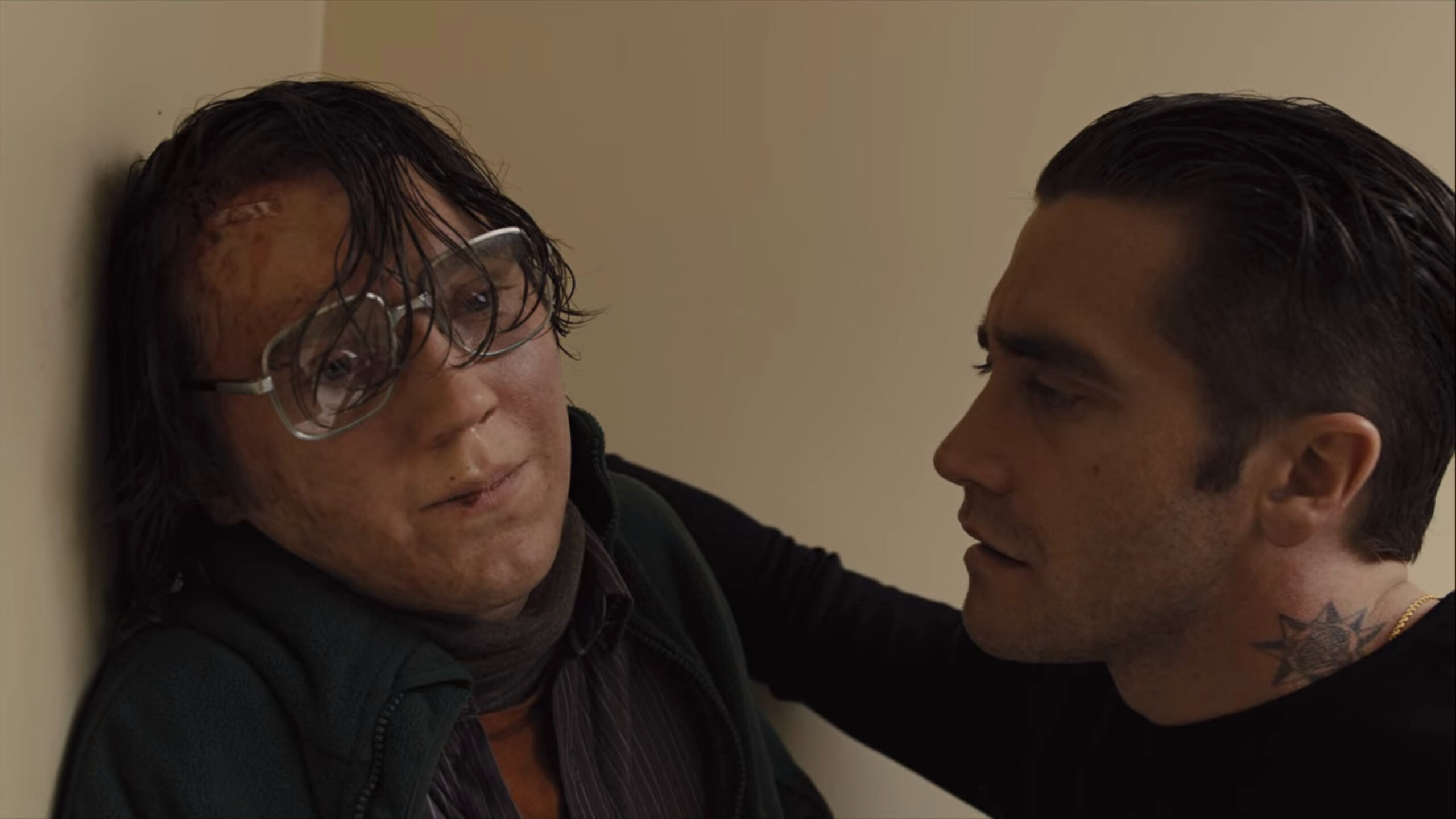
What is Prisoners about?
The main story of Prisoners is the kidnapping of two young girls. But the movie as a whole is an examination of the kinds of prisons people find themselves in—physically, mentally, emotionally, and spiritually. Mazes end up being a bigger deal than you’d probably expect. The whole concept of a maze is that people become lost in the convolutions and complications of the structure. Prisoners puts that concept onto how people struggle to work through and escape from their traumas. Whether that’s the death of a child, the loss of faith in God, discovering a parent who has committed s***ide, murdering a murderer, having your child abducted, torturing someone you know is guilty but won’t confess, or a high-stakes job where lives are on the line.
That idea of the maze goes beyond the characters to the structure of the story. Prisoners could have presented information in the way most movies do—stacking details in a chronological, linear fashion that’s digestible and allows viewers to go from a place of total ignorance to a place of complete understanding. Instead, it purposefully scatters important details throughout the story, without chronological context, meaning it’s easy to forget them or not connect them the way we should connect them. This is done in order to have Prisoners become a narrative maze. The seemingly simple progress of the story is an artistic choice to create the sense of an itch you can’t quite scratch, that there’s more going on than you may have realized. Denis Villeneuve and company accomplished this by placing key backstory and exposition details throughout the movie without ever having a scene that clearly ties them all together. Meaning it’s on the viewer to actively complete the few missing pieces of the puzzle.
There are two more layers that make Prisoners an even deeper kind of cinematic dive. One is thematic, the other is…well…for lack of a better word, pretentious.
Thematically—beyond mazes—religion and trees are huge motifs. The main villain is in a war against the Christian God, while the hero is named after a god of Norse mythology. There are characters named Grace and Joy. Many times throughout the film, there’s an emphasis on forests and trees. What a coincidence that Joy’s last name is “Birch” (a very common tree in America). There’s something being said in this collision between civilization and nature, Christianity and the “Old Gods.”
The pretentious stuff gets at the construction of the story. The last shot of the movie is Loki, at night, hearing a faint whistle. We know it’s coming from Keller Dover, trapped underground. Unfortunately, Loki doesn’t know that. There’s tension as Loki hears the whistle but dismisses it, hears it again, but dismisses it again, before hearing it another time. But before we see him decide to investigate or leave—the movie ends. We’re left with the question of, “Does Loki save Keller or not?” Maybe the most impressive thing to me about Prisoners is that almost everything that happens in the movie is a clue for Loki. The question is will he put it all together and solve the puzzle? Which really is a question for us. Have we been paying attention to all the clues that point to whether Loki will or won’t find Keller?
Cast
- Keller Dover – Hugh Jackman
- Grace Dover – Maria Bello
- Franklin Birch – Terrence Howard
- Nancy Birch – Viola Davis
- Detective Loki – Jake Gyllenhaal
- Alex Jones – Paul Dano
- Holly Jones – Melissa Leo
- Bob Taylor – David Dastmalchian
- Anna Dover – Erin Gerasimovich
- Joy Birch – Kyla-Drew Simmons
- Written by – Aaron Guzikowski
- Directed by – Denis Villeneuve
Why it’s called Prisoners
The title is simple but that simplicity can disarm you. At first, we might think it applies to the abduction of Joy and Anna. They’re prisoners, right? But then midway through the movie, Keller Dover kidnaps Alex Jones and keeps Alex prisoner. And what do you know, at the end of the movie, Keller’s imprisoned by Holly Jones, Alex’s “aunt”. You might think that’s the end of it.
But the more you dig into Prisoners it eventually becomes clear as day that the entire movie is this layered exploration of various types of prisons: physical, mental, emotional, and spiritual.
Beyond that, the story plays out in such a way that it intentionally leaves viewers to put together key details. Compare this to other crime thrillers like Silence of the Lambs or Seven or Girl With the Dragon Tattoo. Those three movies do the normal thing of stacking information so that as the plot progresses we feel more knowledgeable and empowered about what’s going on. You start the movie in a place of ignorance but end with a sense of superiority in understanding the who, what, when, how, and why.
But Prisoners doesn’t neatly stack information. Instead, it gives you a pile of puzzle pieces. If you want to get the full picture of the story, you have to unite the fragments. In this way, the movie itself becomes a bit of a prison, a kind of labyrinth we can lose ourselves in. This is purposefully meta, as midway through the film the motif of the “maze” is introduced. At first, the maze might seem like nothing more than the ravings of a mad man, put into the script to add to the mystery and tension. But, like the title, things aren’t always so simple…
Explaining the plot of Prisoners
The plot in chronological order
To talk about Prisoners, it helps if we un-maze the story by laying out its key events in chronological order.
- Back in the 80s, Holly Jones and her husband are devout Christians.
- Their son—still a child—dies, causing them tremendous grief. Their pain turns to anger at God, as such tragedy must have been His will. What happens next Holly eventually describes as, “Making children disappear is the war we wage with God. Makes people lose their faith.”
- In August of 1987, they kidnap a boy named Barry. They rename him Alex and raise him under the guise that he’s their nephew and they adopted him after his parents died in an accident. They drug him, a lot.
- A 1987 newspaper article about Barry mentions there might be a serial child abductor and the FBI are involved in the case.
- Years pass and the Joneses abduct and murder over a dozen other children. An FBI agent writes a book called Finding the Invisible Man, which details the theory about this serial abductor in the Pennsylvania area and the abductor’s obsession with mazes.
- At some point, the Joneses had kidnapped Bob Taylor. Taylor eventually leaves the home, either by escape or indifference from his captors (maybe due to age). He is mentally broken by and obsessed with his own abduction.
- 5 years before the events of the movie, Holly’s husband, Mr. Jones, goes to the church and confesses his sins. The Father, horrified, kidnaps Jones and leaves him tied up in the basement to die (add that to the count of characters who qualify as a prisoner).
- Because Holly can’t steal children easily on her own, fewer children go missing.
- The movie starts.
- Alex drives his RV to the house he had been abducted from in 1987, the home of his actual parents. It happens to be near the Birch house, where the Dovers celebrate Thanksgiving.
- Joy and Anna see the RV while on a walk with their siblings, Ralph and Eliza. Because Joy and Anna play on the RV, Alex keys in on them.
- Joy and Anna leave the Birch’s to find Anna’s missing whistle. Alex, nostalgic about his own childhood, tries to play with the girls in the RV. Ends up bringing them home. There, Holly does what crazy-psycho-child-snatchers do. Alex, terrified, drives away from the home. Is arrested as the prime suspect.
- After the police let Alex go, Keller kidnaps Alex. Because Alex is missing, Holly doesn’t leave the girls in the hole to die but brings them into the house to keep her company. That choice allows the girls to eventually survive the ordeal.
- Loki goes to the Father’s house, discovers a secret passage behind a refrigerator, finds, in this hidden basement, the body of Mr. Jones (identity unknown to Loki).
- Bob Taylor hears about the girls gone missing and “plays” kidnapper by doing weird stuff like showing up at the vigil and stealing clothes and burying mannequins in his yard (in an equivalent spot to where the hole is at Holly’s house). He ends up arrested then commits suicide because Loki’s loss of control allows Taylor to seize a gun from an officer.
- Alex succumbs to Keller’s torture and mentions a maze, so Keller goes to Holly’s house to see if she will reveal something about a maze. Unbeknownst to him, Joy and Anna are in another room and Joy sees him/hears him. Holly offers Keller tea, which would probably be drugged (we later see she kept a jar of drugged liquid in the fridge). But a newspaper on the table catches Keller’s eye as it mentions Taylor’s suicide. Enraged, Keller leaves before Holly can capture him.
- Joy and Anna attempt to escape, but only Joy is successful. In the hospital, Joy says to Keller, “You were there,” which Keller realizes means Holly’s house and that Holly wasn’t an innocent old lady. We then get the final showdown that involves Keller’s imprisonment and Loki’s heroics. We end with Loki either saving Keller or Keller dying underground.
Did Alex actually take Joy and Anna?
While Alex is a victim, he can be a dick. There’s a reason that scriptwriter Aaron Guzikowski and director Denis Villeneuve included the scene of Alex yanking the dog off the ground by the leash to watch it choke and kick. It’s pretty well-known that the victims of abuse are prone to abusing others. From a paper: Among 747 males the risk of being a perpetrator was positively correlated with reported sexual abuse victim experiences. The overall rate of having been a victim was 35% for perpetrators and 11% for non-perpetrators.
So the answer to the question of “Did Alex actually take Anna and Joy?” is yes. We know this for a few reasons. We know he was in the area, in the van. We know the girls were interested in the van. And later, Alex tells Keller “They didn’t cry until I left them” (more on that in the next section). Prisoners never shows us the abduction or has someone explain outright what happened. Instead, it leaves a few context clues there for us to piece things together.
The girls went to Anna’s home to find her whistle. Got it (which is why Keller finds it in the hole at the end). But on the way back they saw the van and decided to play on it since their older siblings weren’t there to tell them no. Alex invited them into the van. Then took them back to Holly. Holly preceded to do crazy Holly things.
Bob Taylor didn’t have the opportunity. He’s a red herring that creates doubt about Alex. He’s only reacting to the abduction because it reminds him of his own and he starts to copycat, reliving the nightmare of what he experienced with Holly and her husband. He’s thematically relevant to Prisoners but not crucial to what happens and how it happens.
Holly eventually admits to Keller she can’t really abduct kids without her husband so hasn’t been as active. So it’s unlikely she suddenly appeared and seized the girls. If that was the case, Alex’s “They didn’t cry until I left them” wouldn’t be meaningful or even logical.
And while Alex may have initially had innocent intentions with Anna and Joy, to pretend he was a child again, free from the burden of his theft, he had to have known bringing them back to Holly wouldn’t end well. He isn’t innocent here. If he was, then he wouldn’t have continuously lied to the police and Keller. He’d have explained what happened. But the same casual way he decided to choke the dog, he probably decided to bring the girls back to Holly.
This can be the complicated nature of someone who has been hurt as substantially as Alex has been hurt. Their plight is immense and it can drive them to do unto others as has been done unto them.
Why didn’t Alex confess to the police or Keller?
The answer to this question isn’t actually explained, but it is shown. There’s a second “Alex” in Prisoners. That’s Bob Taylor, one of the many children Holly and her husband had abducted. Taylor was lucky enough to have survived (others did not), having escaped (according to exposition from Loki) after 3 weeks.
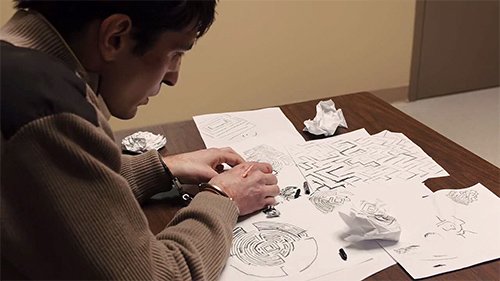
Both Taylor and Alex are old enough that they could physically move beyond what happened to them. Yet, psychologically, neither can. Even though Taylor lives somewhere else, it seems all he thinks about is Holly and her husband. He’s burying mannequins in his yard. Obsessively drawing mazes on the walls because he can’t stop reading an FBI agent’s book about the mysterious child abductor, known as the Invisible Man, who was never caught (and who was actually Holly and her husband). Splashing pigs blood on children’s clothes he then locks in boxes with snakes. All as a “best imitation” of his abductors.
When Loki brings Taylor in, Taylor can’t just explain what happened and why. Instead, he draws a maze. That’s the only way he can communicate to Loki where the girls might be, what happened to him, etc. How does one start to put into words something that’s as cosmically horrific as being stolen and everything that follows?
Alex is in a similar situation. He clearly remembers something about his life before the abduction, otherwise he wouldn’t park at his old house. Yet he still lives with Holly. That says a lot about his mental state, the degree of Stockholm Syndrome he’s experiencing. With all the opportunity to gush to the police about what happened—he stays silent. And then refuses to reveal anything to Keller, despite the constant torture, despite Keller’s utter desperation and desolation. Like Taylor, Alex is both influenced by his abductor and struggling to speak on something that is too terrible to express.
At their first encounter, in the parking lot of the police station, Alex toys with Keller, much like he did the dog, by saying, “They didn’t cry until I left them.” He knew what he was doing. Right before the altercation with Keller, we witnessed a stare down between Alex and Loki after Loki had spent hours belittling, demeaning, and flexing on Alex in the interrogation room. Alex couldn’t do anything to Loki, but when Keller comes barging in and grabs Alex—Alex could hurt Keller. So does.
But sometime during Keller’s torture of Alex, the dynamic changes. It’s no longer Alex being the byproduct of Holly and her husband, or being cruel just to be cruel. He’s reduced to a scared child who finds it impossible to provide the logic of language to the absurdity of the life he’s been forced to live. He’s essentially frozen by cognitive dissonance. That’s why all Alex can eventually muster, even when it’s his life on the line, is, “They’re in the maze.”
This is reinforced later by Joy’s struggles to explain what had happened to her, only able to look at Keller and say, “You were there…. It put tape on my mouth.” But in the moments before she speaks, we see Joy’s memory of escaping, the flashes of being in the house, on the ground, someone leaving the room, the book of mazes they had to complete, running away. Despite her knowing all this, remembering all of this, what does she express? Nothing more than chilling fragments. She was there less than a week. Now imagine Taylor and Alex being there for years and years.
And just to put a bow on it, when Grace brings Anna to see Loki, a similar silence occurs. This is the man who saved Anna, and Anna doesn’t say a word to him, despite being prompted by her mom. So while Alex not confessing what happened to Keller could seem crazy, it’s in-line with how Prisoners shows other victims of abduction struggling to express themselves.
Who was the guy in the priest’s basement?
This is part of the maze-like construction of Prisoners. Some people may follow the clues and put 2 and 2 together. Others will be so invested in the first watching that this goes right over their head—which is intentional on the movie’s part.
When we first meet Holly, she tells Loki that her husband has been gone for 5 years. Doesn’t know what happened to him.
When Loki finds the body in the priest’s basement, the priest/father explains the man came to confess and spoke proudly about killing 16 children. So the priest left the man tied up to die. The body is beyond recognition, but there is a necklace of a maze.
We then have Bob Taylor being obsessed with mazes and the FBI agent’s book detailing how the child abductor dubbed the Invisible Man had used mazes. We know Bob Taylor was abducted by Holly Jones and her husband.
In Joy’s flashback there’s a note saying to complete all the mazes in the book. Alex Jones also refers to a maze.
Finally, when Loki’s at Holly’s house, suspicious because he thinks Keller might be there and might have done something awful, he sees the picture in the bedroom. It’s Holly’s husband, and he’s wearing the same maze necklace as the mysterious body from the basement.
No one ever says out loud, “THAT WAS HER HUSBAND!” They could have. There are a ton of changes that could be made to make this subplot more efficient and straightforward. But it’s done in this subtly disorienting way to make you have a sense of, “Wait…who was that guy…” and then hopefully figure it out and have an ah-ha! moment.
Does Loki discover Keller in the hole or not?
The screenwriter, Aaron Guzikowski, did an interview with Buzzfeed and just straight up said:
Oddly enough, that’s how it was in the script when it was bought. And it never really changed. When we were shooting, we did shoot a version where it goes a little beyond where the fade out is. There’s a version where he moves the car and sees Hugh down there, and so on. None of us really wanted to do that version, but we wanted to make sure we had it in case once the film was put together it seemed like it really needed it. But after testing the film with the ending it has now, everyone decided that was definitely the way to go. Joel Cox, the editor, felt very strongly about it. I just think that’s the moment when the movie is ready to end.
They move the car. They see he’s down there. You know he’s going to be taken out of the hole. I like it much better being ambiguous. Even though you assume that’s what’s probably going to happen, I like that there’s a small chance that he’s not going to get him out of there for whatever reason.
Keep in mind, the final scene was foreshadowed earlier in Prisoners. When Loki’s at the priest’s house, he sees the mark on the floor where the refrigerator gets moved in order to access the secret door to the hidden basement. His initial response is to dismiss it. But his instinct, thoroughness, and curiosity get the better of him. So he moves the fridge and finds the body.
Replace the fridge with the old car. And the hidden basement with the hole in the ground. And the long-dead Mr. Jones with the still-alive Keller Dover. That kind of foreshadowing is done for a reason. The implication being that Loki will be as thorough as before and discover Keller.
The themes of Prisoners
Real quick recap. Themes are developed through motifs. Motifs are repeating elements in a movie, which can be anything, from physical objects, to dialogue, to shots, to music, to concepts. A theme in the Star Wars universe is that good is associated with light and bad is associated with darkness. That theme reinforces itself through motifs such as Darth Vader’s black armor, his black cape, and often being shadowed (not to mention the heavy, marching music that feels very imperial and domineering). Compare that to Luke, when Luke finally becomes a Jedi, wearing a white outfit (and having more hopeful and exciting music).
Or in the movie Black Swan, a theme is duality, so we often see the main character, Nina, reflected in mirrors or windows. Or in the movie Us, we have subterranean beings created by the government. One of these underground people tells a shocked family, “We’re Americans.” After that information, the title, Us, can be read as US, or U.S., or United States. These repeating elements, and a few others, add up. To the point where it becomes undeniable that one theme of Us is the cultural state of America.
The main motifs in Prisoners are:
- Prisons (physical, emotional, mental, spiritual)
- Mazes
- Religion
Prisons
We’ve talked a lot about prisons already, so this might be repetitious to you. If you skipped right to his section, welcome! The notion of a “prison” recurs so often. Let’s go through the various types that show up.
Physical imprisonment: Holly keeping the two girls (then Keller) captive. Keller having Alex captive. The priest trapping Mr. Jones in the basement to die. And Loki literally arresting people with the intent of sending them to prison.
Emotional imprisonment: the disappearance of Anna and Joy emotionally devastates the Dover and Birch families. Grace, Anna’s mother, goes from sad denial of reality to drugging herself into oblivion. Franklin, Joy’s dad, objects to Keller’s treatment of Alex, but participates for a time because he feels he has no other option if he wants to get his daughter back. There’s an extreme cognitive dissonance that Franklin struggles with.
Psychological imprisonment: Alex and Bob Taylor both suffer from the trauma of their kidnapping. The kidnapping stunted both young men. And there’s a contrast to how their trauma expresses itself. By that, I mean Alex has headed towards introversion. Barely talking. Barely existing. We (and Keller) struggle to understand what’s going through Alex’s mind. Compare that to Bob. Bob’s almost completely externalized his pain. He draws mazes on walls. Imitates kidnapping children. Everything is action, action, action. Yet he’s equally difficult to understand.
Spiritual imprisonment: Holly and her husband found it impossible to move beyond their belief God had wronged them. Because of that, they’ve tortured other families to cause a similar crisis of faith and turn more people against God. How fitting we have a character named Grace, a word typically associated with God’s favor. It’s Grace who, in the wake of her daughter being stolen, completely falls apart. Her character is the embodiment of the spiritual crisis the Joneses hope to enact.
Mazes
Before we talk about mazes, let’s talk about in-roads.
An in-road is a purposeful element that the writer/director includes to clue the viewer in on thematic subtext or plot mysteries.
In-roads aren’t always necessary, as many artists will use more obvious devices. Like in Nocturnal Animals we have three stories being told. There’s Amy Adams’s character going about her life in the present day. There’s the world within a book she’s reading that was written by her ex (Jake Gyllenhaal, funny enough). And lastly, we get flashbacks to her time with Gyllenhaal that reading the book triggers. Nocturnal Animals, through cross-cutting, makes it clear there’s a connection between what happens in the book and what happened in the relationship with Gyllenhaal. That the book is a dramatic retelling of Adams cheating on then dumping Gyllenhaal and the pain he dealt with in the aftermath of her hurting him. No story in-roads are necessary because the editing/plot sequencing makes obvious the parallels between the book and the relationship.
Now if Nocturnal Animals didn’t have flashbacks, if we only saw Adams read this book and get emotional but otherwise live her life normally…that wouldn’t work. The book would lack meaning because it lacked any and all context. You’d have to add some sort of in-road, like a conversation she has at a party where she mentions she used to date someone who wanted to be a writer but she broke his heart. That line would be an in-road that provides the necessary context to understanding why the book has such a devastating impact on her.
When you get to the end of a movie like Inception, there’s no explanation about what happened. We’re purposefully left to figure it out on our own. We do that by identifying in-roads, understanding their implications, then arriving at a conclusion.
Prisoners, like Inception, ends on a cliffhanger. Will Loki put 2+2 together and save Keller? Or will Keller die in the hole Holly Jones had left him in?
Okay, back to mazes.
Midway through Prisoners we’re introduced to the concept of the maze. Bob Taylor’s house has mazes drawn on the walls. When he’s in police custody, the police demand to know where the abducted girls are and Taylor spends 3 hours drawing a maze to show them. The dead body discovered in the priest’s house just so happens to have on a maze necklace. There’s an FBI book about a serial abductor who was obsessed with mazes. And the imprisoned Alex Jones eventually tells his captor that the girls are, “In the maze.”
On the surface, all of that just plays into the drama and mystery of a crime thriller. We expect psychos to have weird obsessions like mazes. And just basic everyday human psychology-wise, mazes are kind of magnetic, one of these archetypes that have been part of myths and legends and interest for centuries and throughout cultures.
But then you look at the structure of Prisoners, how it tells its story, how it reveals information, there’s an understanding that the maze stuff wasn’t just to spice up the thrills (as some people have complained). It serves a meta-purpose to make us aware of how to watch/understand the movie. This technique is more common in “artsy” projects than it is mainstream ones.
A funny example is Kendrick Lamar’s 2017 album, Damn. The final song on the album is called “Duckworth”. It tells the story about how Kendrick’s mentor, Top Dawg, robbed a fast food place that Kendrick’s dad worked at. Kendrick’s dad had always given Top Dawg extra biscuits on the house. So when TD robbed the place, he didn’t shoot Kendrick’s dad. Because of that, Kendrick’s life turned out 1,000% different than it would have had he grown up without a dad. That’s cool, that’s interesting.
But at the start of the song, there’s an intro that concludes with, “We gon’ put it in reverse.” Then near the end of the song, Kendrick raps, “Pay attention, that one decision, changed both of they lives/One curse at a time/Reverse the manifest and good karma…Because if Anthony killed Ducky, Top Dawg could be serving life/While I grew up without a father and die in a gunfight.” There’s a gunshot and the sound of audio reversing with lyrics from earlier tracks playing backwards. The album finishes with the very first line from the first song: “So I was takin’ a walk the other day…” It’s a line that begins a situation where Kendrick gets shot and killed.
There’s clearly an attempt to get us to think about listening to the album in reverse chronological order. Instead of tracks 1-14, listen 14-1. But so many people missed this concept that Kendrick actually released a special edition of the album that was reverse chronological order. That way people without a doubt understood the point was for the album to have a happy ending one way and a tragic ending the other way.
This kind of internal instructional clue is something that didn’t really exist until the 20th century and the rise of modernism and post-modernism. By the turn into the 21st century, storytellers got pretty good at blending traditional narrative techniques with some of the more oddball ones from the modernism/post-modernism movements. Almost a hundred years later, it can be pretty seamless.
So yes, the maze stuff in Prisoners is part of the basic plot. And yes, it also reinforces the theme of imprisonment, because a maze can be, after all, a prison and almost every character in Prisoners is working through some kind of maze (physical, emotional, psychological, or spiritual). But it’s also a clue from the filmmaker to treat the movie as a maze.
Religion
As mentioned before, we have a character named Grace. And we have a character named Loki.
“Grace” originated, as a word, in France in the 1200s and soon after had a firm association with Christianity and the idea of virtue and receiving the favor of God. It’s a huge part of the religion—like…a cornerstone of Christian theology. So while Grace may seem like a simple name, it’s not.
Same with “Loki.” In Norse mythology, Loki’s a big deal. Popular depiction has Loki as a trickster. A god who complicates things for other gods. Norse mythology’s climax is Ragnarok, where gods fight giants and everyone dies. Loki is on team giant and kills the god Heimdall.
Christianity ties itself to notions of faith and God’s grace. Ephemeral, spiritual things that operate on a metaphysical level.
While Norse mythology roots in paganism and associates with the natural world. Germanic paganism/mythology (of which Norse is an offshoot) put great symbolic importance on trees and forests and stones. To the point where they said the center of the entire universe was a gigantic tree named Yggdrasil. Not to mention how tattoos relate to paganism and Norse culture.
Villeneueve even discussed trees in an interview with Indiewire (interview has been deleted): They’re kind of like ghost characters,” director Denis Villeneuve said of the recurring motif of trees in the film; as we said earlier, like silent witnesses to the various violent crimes in the movie. “They’re always there, at least in the background. Each scene you can feel their presence. And they are linked with this idea of necessary violence.
Keeping the source of these character names in mind, if you re-watch Prisoners you definitely pick up on some thematic subtext involving religion.
Regarding Christianity, we hear the Lord’s Prayer. We see many crosses. Characters pray. They invoke God’s name. Keller keeps Alex in a box that’s similar to a confessional box. That whole torture subplot is like a twisted form of repentance. The idea of faith comes up again and again. Faith in God, faith in the police, faith in yourself.
When I say “faith in the police,” keep in mind that Loki is the detective. This means the Dovers and Birches have to place their faith in…a character named after a Norse God. A character whose first scene is talking about Zodiac signs. A character who wears a Masonic ring. Has astrological symbols tattooed on his hands. And on his neck, a star that probably represents some other non-Christian religion.
So we have two very Christian characters in Keller and Grace who are dependent on Loki, a character symbolizing non-Christian religions. Then the cinematography. It’s full of images relating to Christian iconography and references. But also pagan and other spiritual iconography and references.
What’s it mean that Keller prays to God to save him from the hole and it’s Loki who’s there? Does Loki represent a spirituality beyond Christianity? Or the sum of other religions being in service to the Christian God? I don’t think there’s a definitive answer. It’s an unsolvable puzzle. A maze without an exit.
But the important thing is that once you’re aware of this motif, you can re-watch the movie and appreciate what it adds to the overall experience of Prisoners and the meaning you derive from it.
A quick discussion about names
The two kidnapped girls. One has the last name Dover. The other Birch.
“Birch” is a type of tree.
In Latin, “Dubris” meant waters. And “was the name given by the Romans to Dover, England,” according to DoverHistorian.com.
(But is also “comes from the old Scandinavian meaning a ravine, gap, gorge, or a crevasse between cliffs.” The French, Celtics, and Gauls all had similar versions of the word (Douvres, Dubrās, and Dubris, respectively) and all meant “water” as well. Funny enough, Dover Historian mentions in Turkey the word means “to beat or hit a person.” Keller Dover definitely did a lot of dovering in Prisoners.)
We’ve already discussed the importance of trees in pagan religions. In Christianity, water is a major theme, playing a vital role in baptism and the idea of purity. So right there in the last names of the two main families, we see more religious references.
Tormenting those families we have Holly Jones. Jones, as a last name, means “son of John.” And John, as a name, means “God is gracious.” The irony here is that Holly’s child died. And that ignited in her a hatred of God. She feels God is anything but gracious.
Loki doesn’t have a first name, but we know the meaning of his last name.
We’ve talked about Grace’s name. But do you know what Keller’s name means? It’s a German version of “cellar.” Meaning basement, store room. You know, a room that’s underground. What a coincidence that the character with that name ends the movie in a hole in the ground?! But, at this point, you know better than to think it’s coincidence, right? Hopefully you’re thinking, “That’s an in-road!”
If that is what you’re thinking, high-five! Because that’s exactly what these names are. In-roads. When you realize one of the names has a deeper meaning, it leads to the question: “Do the rest of the names have meaning?” This brings us back to Grace and Loki and Dover and Birch, etc. You have another piece of the puzzle with which to unlock the deeper thematic intentions and questions of Prisoners.
The main theme of Prisoners
With the motifs in mind, we can finally get to what I think is the most interesting thing about Prisoners. The story is great. The characters are great. The filmmaking is great. But how the movie explores religion and puts Christianity in conversation with other religions/spiritualities is pretty incredible. Similar to how Fight Club is powerful because it’s not really about Edward Norton’s character but rather a deconstruction of individuality in a consumer-driven culture.
Prisoners is about spirituality and the complicated nature we have with spirituality. How do we make sense of the bad that happens in the world? How do we have faith in the face of bad events? And how do we make sense of the miracles in our lives? Are they divine or circumstantial?
The big issue every character has is with acceptance. Accepting not just the bad but the good as well. Holly and her husband could have found comfort in one another—instead their crusade ends up resulting in both of their deaths. Bob Taylor survived his abduction but can’t move beyond the trauma of it. Grace completely falls apart in the wake of Anna’s disappearance, to the point of being non-functioning. People can’t accept freedom, they can’t accept loss.
It’s really just Loki and Keller who keep their faith. Dover in his belief Alex Jones knows where the girls are. And Loki in his own inclinations and deductions. They accept what their instincts tell them and both end up playing the hero. Keller’s faith in preparation creates a chain of events that causes his daughter to leave a whistle in the hole in Holly’s yard. It’s that whistle he uses to signal Loki. While Loki’s faith in following signs guides him right to the imprisoned Keller.
The fact that our two most faithful characters end the movie together, each trusting in their faith, is pretty beautiful. They’ll each find salvation because of it. Though, as the movies ends before Loki saves Keller, that sense of catharsis is something Prisoners denies us. Which is, all in all, pretty fitting. By not showing Keller’s rescue, we’re left with a choice: do we have faith in Loki or don’t we? What ending do we choose? What fate for Keller do we accept?
By leaving that choice in our hands, the film becomes a moment of reflection, of confrontation. It asks you what you believe in.
Questions and Answers
Why did Holly and Mr. Jones kidnap kids?
As Holly explains, she and her husband lost a child. They blamed God. And to make others lose faith in God they decided to kidnap kids. Another instance of hurt people hurting people.
Who was Bob Taylor?
Bob was another kidnapped kid, like Alex. Except it seems Bob aged out of the Jones household. He’s been living on his own but clearly hasn’t adjusted well. The trauma continues to dominate his life. So even though he’s free, he’s still a prisoner.
Why does Joy say that Keller was there too?
After Joy escapes and is taken to the hospital, she tells everyone that Keller was there. There’s an initial moment of shock. What could that possibly mean? I’m sure there are some viewers who may think this is the start of a twist.
Joy and Anna were just in a side room in Holly’s home. So they could hear Keller but because of how drugged up they were they couldn’t call for help. No one else at the hospital would understand the context of this, but Keller does. Which is why he takes off from the hospital and goes right to Holly.
Why does the movie open with Keller and his son hunting?
Narrative construction is a craft like anything else. And like all crafts, there are varying levels of techniques. We can quickly sum it up as basic and advanced. One of the more advanced techniques you’ll find in “higher quality” movies like Prisoners is using the opening shot or scene to distill the main themes or encapsulate the story.
A really basic example of this is The Lion King. The very opening is the sun rising on the horizon. The start of a new day. It’s basic enough. But it takes on deeper meaning when you realize Lion King is about the circle of life, endings and beginnings. Life and death. But mostly is a celebration of the life we have. Hence why it focuses on the sunrise more so than the sun set.
A more advanced example would be American Psycho. American Psycho is about perception and misperception. In the opening credits, we think we see blood. But in reality it’s a raspberry sauce for a meal at a fancy restaurant.
As Prisoners deals with themes of religion, violence, and nature, opening with a forest, Keller praying, and then pulling back to reveal father and son hunting, all kind of encapsulates what the film is about.
Why is Dover Keller a doomsday prepper?
At one point, Loki looks at an old newspaper article about the death of Dover’s dad. The father was a correction officer who took his own life. Dover, a teenager at the time, and his mother found the body in their apartment. The very apartment building Keller now owns and imprisons Alex Jones. It’s likely that Keller preparing for the apocalypse is a byproduct of his father’s unexpected death. It was something that surprised him that he couldn’t prevent or prepare for or fix. So he never wants to be in that position again. Meaning he now over-prepares for other disasters. It’s an example of the many existential and emotional prisons we see throughout Prisoners.
What did the priest do to Mr. Jones?
Mr. Jones and Holly Jones were religious. Then their child died. So they became angry at God and started kidnapping other kids. It seems that after decades of this, Jones had an attack of consciousness and wanted to confess. He and Holly fought about this (speculation on my part but she mentions a fight before he disappeared). He went to the priest, confessed, and the priest freaked out and decided to take justice into his own hands. Why not call the cops? Good question. I think Alex and Bob would have been living there. So you’d think the cops could have caught Jones and Holly red-handed? Maybe it’s a vow thing and the priest felt like he couldn’t tell the cops? But if you’re going to leave the guy to rot in your basement…maybe you should just tell the police? Or maybe he just thought Mr. Jones deserved something worse than jail and accepted the responsibility of making sure it happened.
What did Holly inject Anna with?
It’s not specifically shown what’s in the vial, but we do know it’s some kind of drug. I’d imagine some kind of opioid.
Why didn’t Alex just tell Keller what was going on?
Alex is heavily traumatized by everything he experienced. It would seem less a refusal to tell Keller and more an inability to do so. Alex, like Bob Taylor, is still lost in the maze. A prisoner of his experience. That even when it’s in his best interest to explain himself, he can’t.
Though, I think it could be argued that he is just being cruel. The same way Holly talks about wanting to punish others, Alex could feel the same. “I went through this, so now you will too.” It would line up with how he taunts Keller at the police station. And the way Alex held the dog up by the leash. The pain Keller inflicts is nothing to the pain Alex has already gone through. And Alex might enjoy the power he has in causing Keller such grief.
Is it a coincidence Keller is a carpenter and a Christian?
Absolutely not. Keller is pretty symbolic for Christianity while Loki is symbolic for all other faiths. The fact these two work together while being in conflict isn’t a coincidence. And the fact that Keller’s fate is up to Loki is also not a coincidence. It feels like Prisoners kind of makes a case for faith transcending any one belief system.
Who was Alex waiting for?
I imagine it’s either Mr. Jones or Bob Taylor. Like maybe Bob drove them in the van to that spot, said he’d be back, then left. And Alex goes back to that spot to see if Bob will ever come back. I don’t think Alex would be as attached to Mr. Jones? But Bob would have been his only real kind of friend.
Did Keller actually save his daughter by kidnapping Alex?
Yes! Holly Jones says she would have actually gotten rid of the girls but she was so lonely with Alex missing that she kept them alive. You could read this as purely coincidental. But it’s similar to the way in which Anna goes to get her whistle and that very whistle is what will save Keller from the pit. It makes you wonder if the movie may want us to look at maybe a larger divine impact on events. Especially with how Keller will pray for God’s help only for the movie to immediately cut to Loki doing something that helps.
What question do you have?
Help improve the Colossus Movie Guide for Prisoners by leaving your question in the comments. We’ll answer it there or add it to the article and notify you. Thank you!


The s**cide of Dover Sr definitely is the reason why Keller doesn’t want to renovate his childhood home and adds another layer to that house where Alex is eventually imprisoned.
Oh yeah, that’s a very good point!
Hi Chris and everyone 👋 who has commented.
I got the dvd from my local library by chance and watched it and before I did I checked, it got 8.1 score. I thought, must be good. And I also found this thread by Chris by chance. And I read some of it after watching the film a little. I thank you ❤️ all from the bottom of my heart. Without your amazing, insight ful comments I would never have got any of it at all. It’s just too confusing and I skipped some of the violent parts. While I was watching the film in board day-light, I crotched my teddy bear with me, something I don’t normally do as it’s that scary! I shall watch it again. It’s a really great movie. I searched for more movies with the actor Jack G after watching Nortunal Animals. I am from a complex family, nothing like what the film portrays but still some issues and I thank my last lucky star,
and feels all is well in my life. Just one quick question, why the hunting scene at the beginning? Thank you my good people and a wonderful site for film’s discussion. Blessings.
Hey! I’m sorry I just saw this. One interesting thing I’ve noticed is that usually the highest quality movies find a way to distill their themes or narrative in the opening shot/scene. It’s a silly, basic example but the opening of The Lion King is the rising sun. And the movie deals a lot with the circle of life, the dawning of a new age, new beginnings, etc. etc. Or Fight Club deals with the mind and the opening credits occur while the camera travels through the main character’s brain and out a poor of their forehead.
So the beginning of Prisoners gets at themes of nature, religion, and violence. Three things that we see come up again and again throughout the film.
I have made a discovery of hidden symbols in movies. Before you trash this post, and think I’m a nut case, please view the first 5 minuets of my video. Then you will see that what I’m saying is absolutely true. Please also note the professors I have been working with at the end of this video. They are from USC, UCLA, Columbia, Yale, and Chapman University.
Here’s my video showing my discoveries:
Click this link or cut and paste link:
https://vimeo.com/manage/videos/733092911
And use the PASSWORD: “UCSB1971”
Thank you,
Steve Weston
I’m only 13 minutes in right now, but it is interesting!
Chris, what do you think or D.’s explanation regarding Alex waiting in the RV and crashing into the trees: …Alex said that he was waiting for a man to come back and he never did. I assumed that it was Bob and he was referring to when he was captured by the police in the van at the rest stop. I thought that Alex and Bob had kidnapped the girls and Bob had left Alex to take the fall. This would explain why Alex was not able to drive the van.
So Alex AND Bob abducted the girls?
I could see that. It’s a solid theory. I hesitate though because Bob was out of the house and living on his own. We know he’s still traumatized by what happened but not that he’s necessarily still in contact with Holly or does Holly’s bidding. The girls never mention a second man either. And I’d imagine Holly would have said something about Bob, just to telegraph it to the viewer, if this was actually what happened. Alex might have just been referring to Holly’s husband who did go missing and who Holly and Alex were both wondering if he’d ever come back. It just points at a larger abandonment issue Alex has. I believe they say that Alex often drove the van and looked at his old house? Or implied that he drove on his own just fine.
That was a great analysis. There’s one thing not mentioned that I can’t shrug off. There’s a moment in the movie where Loki is searching for clues in old newspapers and he founds a note of a man, a correctional officer, who commited suicide (allegedly) after his son was abducted. This is the father of Alex or Bob Taylor. The article mentions that his co-worker Mr Dover didn’t make any comments.
I thought that was a major clue about the protagonist Keller Dover but at the end of the movie it seems to be a complete coincidence.
I guess it was made to distract/confuse the viewers.
That’s really interesting. I never caught what was said in the newspaper. It could provide some backstory about Keller but there’s nothing concrete enough (at least as far as I’m aware) that you could really point to. Just some assumptions, like “Keller’s dad saw what happened to his co-worker and decided to become over protective of Keller. Which led to Keller’s survival mindset.” Something like that. Not sure how much I buy into it, but it’s an example.
Wasn’t that newspaper article about Mr Dover Snr committing suicide? I thought it was. It was on screen so briefly, and Netflix’s Pause function obliterates whatever I’m trying to read, so I didn’t bother.
We weren’t given any other reason for Dover Snr’s death, were we? I thought this was the whole reason behind Keller being obsessed with preparing for the worst, that his dad had been facing something he was unable to cope with and killed himself as his only way out of that situation.
Great and detailed review, Chris!
Hey Aggie! The pause on Netflix is infuriating. I’m not sure about that detail. It would add some nuance to Dover’s backstory. And can be argued is another example of being in a prison. Appreciate the kind words!
Finally returning to the movie and looked into this. You’re absolutely right.
I paused on the newspaper article. It is clearly about Keller’s dad committing suicide when he was a teenager and Keller’s mom and Keller finding him. The article says nothing about someone being kidnapped and that’s why he took his life. I don’t believe anyone really knows why he took his life. Keller’s dad was also not associated with Alex or Bob Taylor, and the officials at the Graterford prison where Keller’s dad worked, are the ones who declined to comment.
This is the best analysis I have read. You’re so thorough and the ending is brilliant. I believe that Loki will save Keller.
Thank you!
I was confused when Alex said that he was waiting for a man to come back and he never did. I assumed that it was Bob and he was referring to when he was captured by the police in the van at the rest stop. I thought that Alex and Bob had kidnapped the girls and Bob had left Alex to take the fall. This would explain why Alex was not able to drive the van.
Wow, I suppose I’m late to the party because I only just watched it on Netflix. But again, wow! I’ve never read such a detailed and thorough review of a movie (well aside from LOTR-but that has a whole cult following). I am impressed by how you have dissected each and every detail down to the meaning of the characters’ names. I especially appreciate that you explained the connection of religion & faith-I never thought much of it and I’m somewhat serious about my Catholic faith myself, well, until those fundamental issues arise that you have raised ofcourse! ‘How do we make sense of the bad in the world? ‘How do we have faith when bad things happen?’
Anyway just brilliant write up.
Thank you Miss A
Holly and her husband, who used to be fundamentalist believers, might have practised snake-handling as part of their faith and would have kept snakes for that purpose. These snake-handlers believe that God will reward their faith by making them immune to snake venom… And yet their son dies of cancer. Also, I thought Holly was injecting Anna with venom and that Loki was rushing the girl to hospital to get her the anti-venom in time.
I believe that Loki will find and rescue Keller because: 1. He always closes a case and he said he would find Keller, 2. When he discovers the door to the basement behind the fridge, there is no staircase (the hole under the car also has no ladder) yet he quickly drops down to investigate and finds the body, 3. The whistle is red, the colour of blood, and ”life is in the blood” (Lev. 17:11), 4. Blowing a whistle in order to be heard, and thus saved from dying in the hole, is the equivalent of being ”saved by the bell” from being buried alive.
I must reiterate how spectacular this review was. I thoroughly enjoyed it and now need to watch this movie again. What a brilliant dissection of it all. You did an amazing job! And yes, I love the juxtaposition of David Loki’s name.
I just noticed something interesting. I noticed how Holly cares for her dog and I wonder if Alex abusing it is his way of getting back at her (His abuser). Everyone describes Alex as pretty internal and passive, but I wonder if (in his own traumatized and child-like way) he is trying to break out of the maze! By visiting his former home, he must remember a time before he was entrapped!
I noticed this strange bit of dialogue from Loki:
“You know IF YOU KNOW something
about what happened to these girls and you DON’T TELL US, YOUR AUNT WILL GO TO JAIL too. You want that for her? After she took care of you all this time?
And what if he does! What if deep down he DOES want her to go to jail! My question is, why didn’t he just tell the detective everything right then! But he is stuck in that child-like mentality and he did know what was going to happen to those kids, like he did with so many others. What if he was like the sex offender priest, who thought no one would believe him if he spoke out, so the priest thought that only HE could stop Holly’s husband the way that he did!
When I think of mazes, I think of complications. Alex knows where the children are, but if he wants his Aunt in jail, and therefore stopped for good, he can’t tell…so it’s complicated. The priest is a registered sex offender, but how should he stop a child killer? Why did Holly’s husband brag/confess to him? Did Holly’s husband have more dirt on the priest that could have gotten him in more trouble? Who knows! But to stop him, the priest ties Holly’s husband up and leaves him to die. Why? Because it’s complicated. Franklin says and believes that he would do anything for his daughter, but ( like Peter in the Bible who acted cowardly when he thought he would act bravely at Christ’s crucifixion ) Franklin (who thinks he can play the trumpet, but can’t) is not a killer. He doesn’t have the practical personality to do whatever it takes for a certain result…that’s not bad, but in this situation, it makes things complicated. Rather than face the sobering realization that she may have left the protection of her family entirely on her husband’s shoulders ( according to the screenplay, she drank wine and was tipsy at the Thanksgiving get-together, but he just drank milk), she would rather sleep because she loves her children and husband deeply and gladly serves what he prepares in the more safe and secure world that he is trying to create for them…so it’s complicated. There are SO many other examples of this in the film! No one acts exactly as they or we expect or hope they will act because they are human and humans make things complicated and maybe because we are complicated (physical, emotional, mental, and spiritual beings) and when anything confronts us in these realms they just don’t “happen” to us, we have to navigate through them and we can easily get lost!
Holly and her husband lost a child and in their grief, shock, and anger, they navigated their way to blaming God just as Keller navigates his way to blaming Loki. Because Holly and her husband seemed to be active, external types, they don’t internalize their pain, but externalize it! If God caused them to loose their faith in this way, they will play God and cause others to loose their faith in this way too. Keller will take matters into his own hands too! It’s complicated and not effective. Keller doesn’t get the answer he seeks from all the torture HE did, but by Joy’s miraculous escape and him making the connection that she saw him at some point. The abusers can only shake their fist at God so long as they assume that all the parents they abduct the children from will have the same re-action to their loss as they did. Though Keller was having a most difficult time thinking and behaving Christian or Christ-like, their never was a scene where he cursed God or threw away his cross.
People are complicated. Good people do bad things, bad people do good things…The wicked knowingly and methodically try to spread their wickedness to as many as they can. But sometimes, by shear grace, all the good and bad complications of what people do and think come together to form a hope-filled outcome. In this film, no character will ever be the same. Alex and Keller will probably go to jail. Will Franklin and his wife have to testify against Keller for amnesty, because they were part of Alex’s torture too. What will it do to their friendship? The little girls are not the same (one clings to her mother for dear life and the other is stoic)? But Anna still clings to her whistle…a symbol of her father’s protection because I believe that he is still the hero in her life. Loki will find Keller and Keller will be rescued by someone else and face that new realization that he could never have been a self sufficient island unto himself and his family. People need people and people need grace. That unmerited favor that we cannot predict or control. Keller needs someone to find him and pull him out of that pit, but he also needs that whistle that’s only down there because his daughter was down there because she got kidnapped looking for it, though he gave it to her for her rescue so many months or years ago. He equally needs the cold and frosty weather because he’s shot and maybe this will keep him alive a little longer (don’t know, I am not a doctor) or keep the drug from effectively knocking him out. He needs someone like Loki to be there at the right place and time! He needs grace and so does Loki…he relies heavy on his ability to observe and pay attention to details. His rapid eye blinking is almost like a tick that may have varies meanings…one of which is that the man rarely blinks. It’s almost as though his body forces him to…but during the chase to save Anna’s life, Loki was driving blind. I don’t know where his faith lie, but it was grace that got him through.
Brilliant analysis.
I would love to hear your take on the current covid “crisis” and response.
Tired of all the brainwashed/braindead people out there…need to know there are people out there figuring this out like RFK jr.
Watching the movie for the first time, I noticed that Loki was also non-communicative at times, especially around the parents. For example, he doesn’t say a word when introduced to Joy’s mother and she hands him photographs of her daughter. It made me wonder if he also was carrying around some past trauma.
On the character names, I took Keller to be a variation of killer because he hunted, owned a handgun, and was prepared to use extreme violence to protect his family. Dover seemed like a portmanteau of dove (peace) and lover. Perhaps it was intended to reflect his personality, peaceable in normal situations, but with a killer instinct ready to take over when pushed by circumstances.
Birch was also interesting as a name because birch trees are thought to be resilient, bending but not breaking. That idea is expressed in Robert Frost’s Birches and also the Blackfoot myth Why the Birch Tree Wears the Slashes in It’s Bark. The Birches certainly seemed far more resilient than the Dovers, who were breaking in different ways.
This really helped me make sense of what I found a disturbing and confusing film. I expect to be returning to this site again.
Absolutely brilliant analysis, I wouldn’t ne surprised if it is the best lne there is. Thank you so much!