

Newsletter Subscribe
Enter your email address below and subscribe to our newsletter
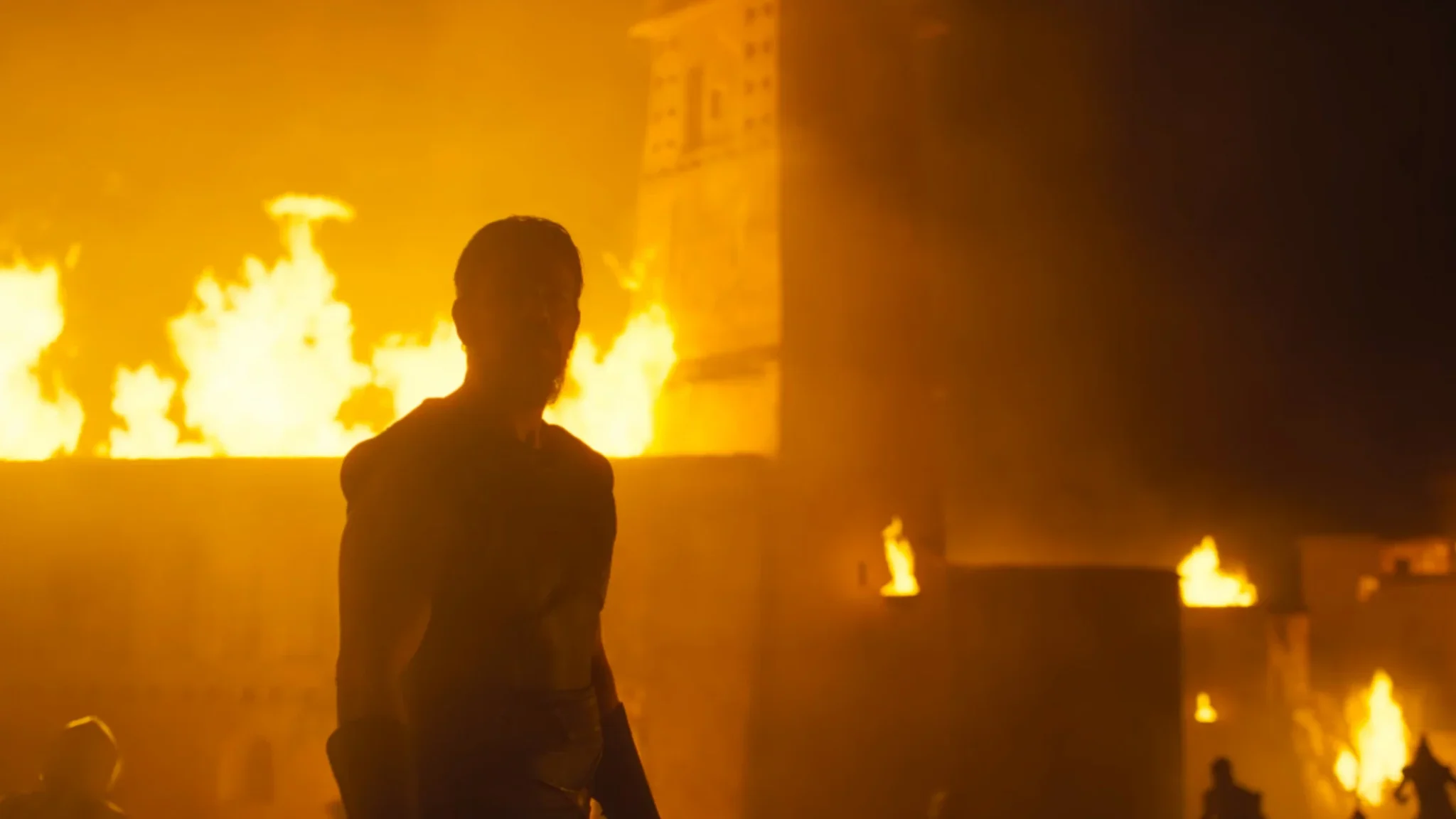
The main thematic concern in Nolan’s version of The Odyssey has to do with Zeus’s Law. Zeus’s Law is classically known as xenia. The word refers to ideas of hospitality and “ritualized friendship”. Hosts treat guests with respect, guests treat hosts with respect. It was a cultural law that transcended station, race, ethnicity, etc. And when I say “cultural law” I mean cultural law.
Imagine if holding the door for someone behind you wasn’t just something nice you did every so often for a stranger, imagine it was a necessity and if you failed to hold the door for someone then you might get sent to jail, ostracized, or receive a declaration of war.
Xenia was that serious because of the respect people had for the gods. They believed gods would walk amongst them. So if a strange traveler appeared on your doorstop, it could be Zeus in disguise, testing you. Even if you knew it wasn’t, like in the case of the suitors in Ithaca, maybe a god watched from afar and would punish your poor hospitality all the same.
Characters in The Odyssey refer to and invoke Zeus’s Law dozens of times. Initially, it seems like merely part of the plot. It isn’t until the film’s second half that it takes on deeper thematic significance. That happens when Odysseus attempts to explain to Penelope why he couldn’t come home. It was because he felt his Trojan Horse ploy broke Zeus’s Law. Not just in that moment but extending into the rest of the world, for years to come.
Here’s the exact quote:
What if the Odysseus you knew lost his way? What if…one night, in a strange city, he saw things that made him think the home he knew couldn’t possibly be there anymore. What if…when he left the belly of the horse, and opened the gates of Troy, he saw ten years of rage pour into that city in one night? We left them a gift, an offering of peace, that they took into their home. We violated all that’s ever sacred between people. It turned a fight into a hunt. To burn the walls of Troy was to burn the world-entire. Including his home. What if he knew, that very night, as he walked through fires, anarchy, and pain—and in a daze of sweaty celebrations that follow—what if he knew exactly what he’d done? [Penelope: What all of you had done?] One man’s idea. One man’s trick to break Zeus’s law forever. We lived in a world of palaces and trade, language, blind to its beauty, until we broke it. [Penelope: You are the people from the sea.] Yes, my queen. The breaking of Zeus’s law, spreading like plague. Our age of bronze is collapsing, and maybe he couldn’t bear to see the ruins of what he’d done. Anywhere. Least of all, his home.
Accompanying this explanation is the flashback to the victory in Troy. Odysseus and the others slink out of the Trojan Horse, unbar the front gate, then join the waiting army as it races in and begins Troy’s destruction. Odysseus moves with the soldiers deeper into the city, until he reaches a temple dedicated to Athena. There, he witnesses fellow Achaeans execute a priestess of Athena, just as another soldier strikes the stone head from Athena’s statue. The overlapping actions hit Odysseus like a thunderbolt and he, horrified, understands that the priestess might as well have been Athena in disguise.
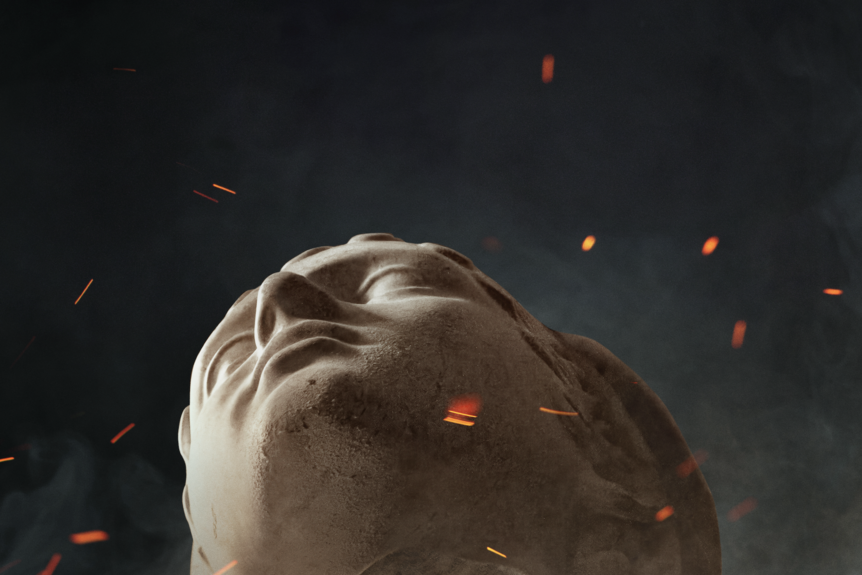
That all coincides with the dialogue regarding “We left them a gift, an offering of peace, that they took into their home. We violated all that’s ever sacred between people. It turned a fight into a hunt.”
Early in the film, someone had asked Odysseus why he plucked his bow to warn the animals he was hunting. In response, he said it’s about fighting with honor. So during this speech, when he says, “It turned a fight into a hunt,” the subtext is that what they did was dishonourable. In other words, Odysseus was ashamed.
Once Odysseus reveals that concern, it puts earlier portions of the film into context.
Initially, these scenes come off as nothing more than backstory. They’re what happened to Odysseus after Troy and explain how he ended up on Calypso’s island. But once you understand the film’s thematic concern about Zeus’s Law, each encounter transforms into a manifestation of Odysseus’s guilt. He worries his breaking of the law means good people will become inhospitable monsters, thus his world becomes full of inhospitable monsters.
If Odysseus had just returned after the war, he would have found Ithaca in one piece and could have actually tried to do something about his concerns regarding Zeus’s Law. Instead, he hemmed and hawed and punished himself and ultimately made everything worse than it had to be. It’s egotistical to blame yourself for ruining the world when the world isn’t actually ruined. And that leads us to another theme.
This theme deals with attention and presence. Because Odysseus is caught up in his existential crisis about what happened in Troy, he’s not in Ithaca. Not there to be a father to his son. Or be a husband to his wife. Or a king to his people. His home is on the brink of ruin.
The term for this is “entropy”. Entropy is the idea that ordered systems decay towards chaos unless otherwise supported. If you have a garden but put no energy towards it, other forces will. Bugs will eat the leaves. Mammals will steal what’s grown. Rot will spread. Weeds grow. And the garden is no longer a garden. If “entropy” sounds familiar it’s part of the logic behind the reversal mechanics in Tenet.
The suitors are the physical embodiment of the entropy afflicting Odysseus’s home, the consequence of his inattention. So the slaying of the suitors becomes a cleansing ritual that brings order back to the system.
This cleanse is a pretty common narrative trope.
In Forgetting Sarah Marshall, the main character lets entropy take over in the form of a dirty apartment,irresponsible behavior, etc. When he finally flips the switch and gets his life together, we see him clean his apartment and start doing all the adult things he had avoided.
In The Matrix, Neo keeps refusing the title of The One and that refusal is what allows the machines to continue gaining ground and threaten the people Neo cares about the most. Once he finally lets go and embraces the fight, he beats back the forces of entropy, becomes The One, and establishes a new order.
In The Dark Knight, Bruce wants to step back from Batman and allow Harvey Dent to take his place. Joker is the force of entropy that fills the void and creates chaos that ultimately results in Bruce having to be even more Batman. That dynamic repeats with The Dark Knight Rises. Bruce hasn’t been Batman for years and that allows Bane to take over Gotham. Bruce then has to reverse entropy, rediscover his big bad bat self, and cleanse Gotham of Bane’s influence.
Once Odysseus defeats the suitors, what happens? Telemachus becomes king, and he and Penelope get to sail away together to start a new, happy chapter in their relationship. Oh, and Odysseus can make amends with the souls of those he failed to properly bury. It’s a lot of healing and hope and new beginnings.
There’s a strange tension at play. Odysseus regretted using an offering of peace to trick Troy. He saw the horror of being a guest in a monster’s home. Yet his solution to the suitors is to trick them back to his home then murder them. Is he all that different from the cyclops or the giants or Circe or Scylla?
He plays the trick because of the story Agamemnon tells of coming home thinking everything would be perfectly fine, only to realize others had plotted his demise. He cautions Odysseus to not “walk through the front door” but to “come in disguise” and “take your time”. If Odysseus had walked through the front door, would the suitors have left and everything returned to normal? Or would they be bitter and plot Odysseus’s demise?
Every 2026 movie I’ve seen, ranked. Became a dad, so catching up. Updated: October 5th
People have debated Odysseus’s heroic status for centuries. He’s always been flawed, more so in the original epic than the movie. In the movie, he shoots an arrow at the Cyclops and upsets it because he’s mad about the death of his men. In the original, he taunts the Cyclops out of ego. And that was always the dichotomy. You admire Odysseus’s endurance and cleverness, but you don’t want to make the mistakes he made. And would a true hero slaughter all the suitors?
To be fair, you could argue that the suitors didn’t have to fight him. And Nolan shows many take a knee and opt out of the fight. But by not providing the suitors with weapons, it feels like a fight, more like a hunt. Which is the exact thing Nolan’s Odysseus felt awful about in Troy.
I wonder if Nolan’s aiming for something along the lines of Odysseus has to become the monster to defeat the monster he created? That actually ties back to the dialogue at the very end of The Odyssey.
Having defeated the suitors, Odysseus and Penelope go into exile. The movie ends with their departure for the unknown West. This is the dialogue:
You have the parents who represent the previous generation and the child, Telemachus, who represents the next generation. Odysseus slayed the suitors to spare Telemachus, to keep his hands clean and maintain his innocence so Telemachus’s rule could mark a new chapter for Ithaca.
We can and should extrapolate that to a larger message about the modern world. Nolan’s essentially saying that the older generations have made mistakes that have ruined civilization and “darkened the world”.
The point of building the movie around Zeus’s Law was to make audiences reflect on the state of hospitality in the present. How do we treat strangers? Which makes the whole pre-release backlash from xenophobic conservatives about the casting of Lupita Nyong’o and Elliot Page all the more ironic. They’re the monsters who attack people for being “other”.
There’s also a bit of transitive property going on. We may not have Zeus’s Law in America or the UK, but we have the Bible.
Hebrews 13-2 says: “Be not forgetful to entertain strangers: for thereby some have entertained angels unawares.”
That’s Zeus’s Law except with angels instead of Greek Gods. Be kind because you don’t know when its an angel in disguise and what that angel will then say to God about you.
A lot of the xenphobic people who hate foreigners and immigrants and minorities—and pretty much everyone who isn’t white and cis-—claim to be devout Christians. Yet they would sooner send an angel to hell than provide hospitality to a stranger. They can’t even accept a non-white actor in a movie without throwing a tantrum.
Nolan is very much lamenting the state of the world. And hoping the mistakes his generation have made won’t be forever. That’s actually very similar to what Paul Thomas Anderson did with One Battle After Another. Dicaprio’s character, Bob, was a revolutionary who wanted to change the world but became a parent and gave up on change. By quitting the fight, he allowed the monsters (entropy) to gain more power. And those monsters eventually come for his child. But Bob can’t change anything at this point. All he can do is love and support his daughter, Willa, and teach her what he knows and hope she and her generation can do a better job. Which is why the movie is called One Battle After Another, as it gets at how each generation picks up where the previous one left off.
Telemachus and Willa serve the same purpose in movies with similar concerns about the state of the real world. The difference is Paul Thomas Anderson believes his generation still has a role to play. Bob’s failure wasn’t that he didn’t change the world but that he stopped participating entirely. PTA believes we’re stronger as a collective, with each person playing a small part in the struggle.
Nolan takes the position that the people who messed up should get out of the way and give the next generation a chance to make things right. Which has been his thematic concern for a few movies now.
Posterity refers to future generations or those who come after. If I spend money on a new TV, that’s for my personal entertainment in my lifetime. If I spent that same money on planting trees, that’s for posterity.
Odysseus and Penelope leave Ithaca for posterity and hope that their departure will allow for a reversal of the entropy that had affected civilization.
I was going to say “you know what other two Nolan movies were concerned with entropy and posterity?” but you already know the answer because it’s the section title. Yes, Tenet and Oppenheimer.
In Tenet. Nolan outright has characters talk about entropy and posterity. Sator wants to end the entire world, which is the ultimate entropy. But the catch is that the end of the Earth wouldn’t happen for many generations. That means the protagonist and everyone else are fighting not for themselves but for…
“Posterity?”
Exactly! Posterity. They sacrifice in the present for the future.
Then you have Oppenheimer, where Oppenheimer is so caught up in the present and building the bomb to win the war that he doesn’t stop to think about the future until it’s too late. The last hour of the movie is him wrestling with the weight of what he’s done and the fear he’s set off a chain reaction that will one day destroy the world. Maybe not in his lifetime but eventually. He fears for posterity.
The atomic bomb is entropy incarnate. Built on the laws of thermodynamics, the goal of the bomb is to land on something ordered and reduce it to nothing. And Oppenheimer’s main concern is that there’s no going back. What’s done is done. The split atom cannot be made whole again.
Oppenheimer is Nolan at his bleakest. It’s almost like, with Tenet, he still felt he could make a difference. Then lost that hope and made Oppenheimer and infused it with his heartbreak and fear. And with The Odyssey he’s climbing out of that spiral and hoping the world may not be the broken thing of his nightmares and that it’s possible for future generations to be better than his generation.
I’m now going to refer to Tenet, Oppenheimer, and The Odyssey as Nolan’s Posterity Trilogy.
You know how a storyline of the last decade is that Gen X, Millennials, and Gen Y have had a hard time reaching adulthood milestones? There’s a recurring joke about how grandparents and great grandparents could buy a house on a single income, while younger generations can have two incomes and barely afford to rent an apartment.
Baby Boomers are the reason for that. Fortune recently published an article, written by Nick Lichtenberg, called “The pig in the python: Baby boomers are strangling the economy they built by refusing to move or retire.”
For half a century, the baby-boom generation has functioned like a slow-moving wave through the American economy, and as the last of them cross into retirement age, the country is discovering just how much of its future they’re still holding in place. In the labor market, four decades of boomer dominance suppressed wages and opportunity for younger workers, and their accelerating exit now threatens a worker shortage businesses are unprepared to absorb. In housing, empty-nest boomers sit on a disproportionate share of the family-size homes that millennial parents need but cannot find or afford. And in the corner offices, executive suites, and corridors of political power, boomer leaders have spent years building monuments to their own indispensability rather than successors capable of replacing them—leaving institutions to manage their decline rather than their transition.
Baby Boomers are the reason why younger workers struggle to find jobs. Baby Boomers are the reason younger families struggle to buy homes. And Baby Boomers are the reason politics are terrible.
For context:
Millennials are the “the largest generation of parents in America” but “Baby-boomer empty nesters own nearly twice the share of American homes with three or more bedrooms—28%—compared to millennial parents, who own 16%, according to a recent Redfin analysis of 2024 Census data.”
“‘Empty-nest baby boomers own more large homes than millennials with kids in every major U.S. metro,’ Redfin says, with millennial parents not reaching 20% of large homes anywhere in the country. The top cities are Austin and Columbus (19.2%), with Minneapolis (18.9%) just behind. Empty-nest boomers, on the other hand, own at least 20% of large homes everywhere in the country. Grandma and grandpa are having the whole family visit, but those bedrooms are sitting empty most of the year.”
“Boomers are 43% of Congress despite being only 23.7% of the U.S. population—a representation ratio nearly 2-to-1 relative to their actual share of the country. But when you zoom in on the Senate, boomers still hold 61% of seats in the more influential chamber. In raw numbers, that’s 233 boomer members versus 196 Gen Xers and just 84 millennials, who are roughly 25% of the population but only 16% of Congress. Any way you look at it, one generation holds the cards.”
Nick ends the article with: “Every generation inherits a country and leaves one behind. The boomers inherited the most prosperous nation in history. The argument about what they did with it is just getting started.”
Nolan is 55 years old. So he’s firmly Gen X. But at this point I think he might be looking at it more as “older folk” vs “younger folk” and seeing himself lumped with the Boomers. His kids are 25, 21, 18, and 18.
While Nolan himself isn’t to blame for anything that’s wrong in the world, it seems like for the last few years he’s been looking around and thinking, “What has my generation done? And will my kids be okay?”
And who could blame him. But art is action, and the world will be a better place because there will be more than one person who sees this The Odyssey and is so moved by it that they’ll spend the rest of their life consciously choosing to be hospitable and kind and civilized when they have every reason to do the opposite. And because of that, I say thank you, Christopher Nolan.
During Odysseus’s confession, Penelope suddenly says “You are the people from the sea.” I’m seeing a lot of chatter online where people think that means Odysseus and his crew he left Troy with were the People From the Sea. But that’s not the case.
Remember, after Troy, Odysseus and his crew land at one abandoned village. Shortly after, they meet the giants who destroy two of the three ships. Within the year, the rest of the men perish. They didn’t encounter enough communities to create the rumor of the People From the Sea.
Penelope was referring to the army of soldiers from Troy who sailed home (not just Odysseus’s bunch). Because of what happened at Troy, those soldiers no longer respected Zeus’s Law. The twist is that this oncoming force is not a foreign foe but Greece’s own returning soldiers..
That gets back to the idea of hospitality to strangers. The People From the Sea initially seem like foreign intruders who have no respect for Greek culture and Zeus’s Law. Everyone is fearing this “other” and you could imagine that extending into concern about providing hospitality to foreigners. Why welcome them if they might be the People From the Sea who will harm you? The safer thing would be to reject foreigners. Turns out, they aren’t the problem.
Which makes it veiled commentary on the immigrant scare currently happening in the Western world, especially in American and the UK. You have these conservative politicians screaming about how immigrants are stealing jobs and breaking laws and bringing in drugs. But those same politicians are actually the ones disrespecting the constitution, putting their own interests over the public, pandering to corporations and foreign leaders, enabling extremism, crippling progress. The threat isn’t from outside. It’s from within.


Film Colossus Supporters get access to the Frameshift and Active Viewing courses, an ad-free site, the Watch More Films newsletter, and the ability to request movies for analysis. Your support also directly keeps Film Colossus alive while I try to scale it into something sustainable, as it's just me, Chris, who does everything here.
Or create a free account. You gain access to the Active Viewing course and Watch More Films.
Join the Film Colossus community, get the newsletter, and unlock member features as they're added.
Very well written and an interesting breakdown on the film and social commentary themes behind it. Makes you think but also not preachy which is where many fail when writing about current themes adding their own bias (sometimes unaware). This writer gets the balance spot on. Will keep an eye out for future articles on film.
Amazing analysis. I think there are themes about the immorality of war and k****** innocent strangers as well. The Us has waged wars of aggression in Palestine and elsewhere that fit perfectly into this criticism.
Thanks for your work! Just watched The Odyssey yesterday, great movie with a good message! Thanks again.
Wow this is excellent work!
Well said, Chris.