Newsletter Subscribe
Enter your email address below and subscribe to our newsletter
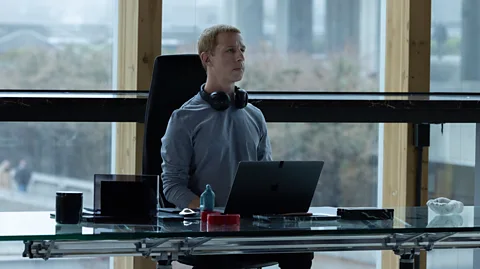
This is a breakdown of what in The Social Reckoning is true and what’s false. Aaron Sorkin took a number of liberties, just like he did in the screenplay for The Social Network.
Yes. Haugen joined Facebook as part of its Civic Integrity team in 2019. In her 60 Minutes interview, Haugen shared that part of her motivation was knowing someone who became a conspiracy theorist.
In a recent interview with The Verge, Haugen confirmed that she has a circulatory condition and wears wrist warmers because of it.
She currently lives in Puerto Rico with her husband and daughter.
Yes. Horwitz is real. He joined The Wall Street Journal in 2019. He developed Haugen as a source and worked with her to create The Facebook Files. In 2025, he left WSJ for Reuters, where he won the 2026 Pulitzer Prize for new investigations into Facebook.
Talking about the film, Horwitz shared that he asked Sorkin not to manufacture a romance subplot between his character and Haugen’s. For two reasons: he’s married, and it would be incredibly unprofessional.
You better not be wondering this.
Bill Burr’s character is a fictional version of Roger McNamee. Roger really was an early investor and informal advisor. Then, in 2019, he published an entire book called Zucked: Waking Up to the Facebook Catastrophe.
According to Sorkin, McNamee was okay with the film using his real name. But Sony actually had external lawyers to be extra cautious about potential lawsuits, and they claimed the fictional conversations between McNamee and Zuckerberg might be a problem.
The “White Girl Wasted” girl from the prologue is not real. In spirit, yes. Sorkin explained that Haugen told him that she decided to become a whistleblower because she “had a friend who had been radicalized by spending too much time on Facebook.” That caused Sorkin to imagine the scene.
Nope. Not Raya, the crisis manager. Not Teddy, the Facebook communications guy. Not Christina, Jeff’s editor. And not Haugen’s coworker who shares the data about Instagram. If anyone else is real, I couldn’t find confirmation.
Yes, Horwitz did join The Wall Street Journal, but his interview and hiring were fictional.
In October 2019, Zuckerberg spoke at Georgetown and defended free speech. Later that day, The Washington Post published an article about the livestream’s comment algorithm filtering out the negative messages.
But the actual data about the positive/negative ratio seems like it was made up for the movie.
The Social Reckoning places this in 2019, but Horwitz didn’t actually message anyone at Facebook until after the 2020 election. Haugen responded in December of 2020.
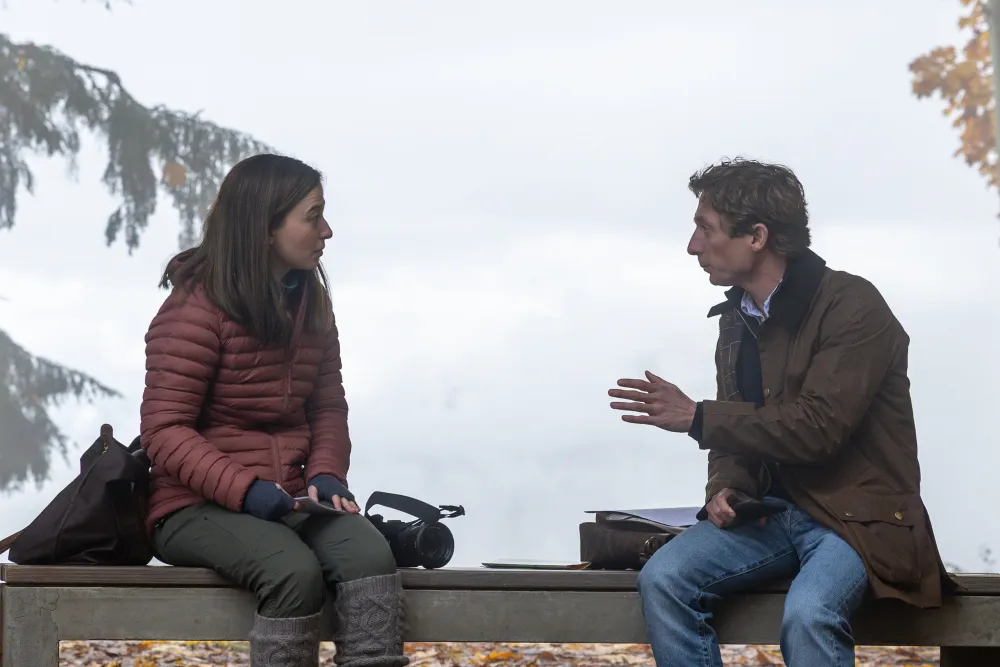
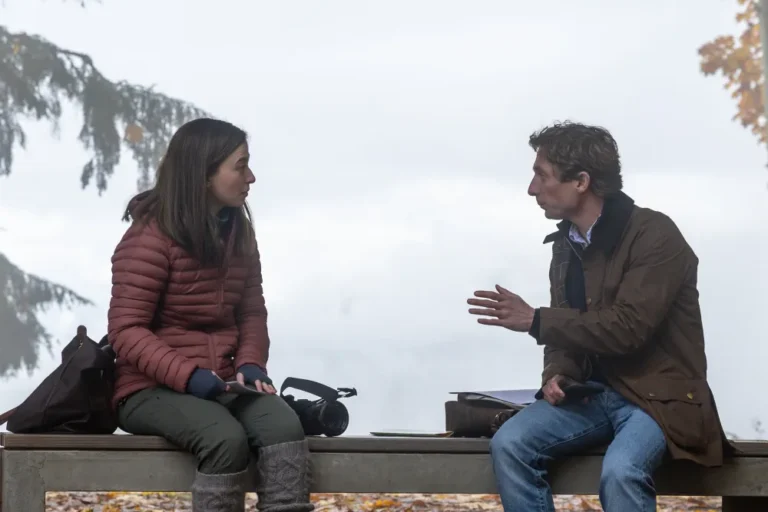
The two did meet on a hiking trail.
Yes. Horwitz and Deepa Seetharaman published the story about Facebook’s recommendation tool driving people to join extremist political groups. But Haugen was not their source. The article came out months before the two ever met.
Every 2026 movie I’ve seen, ranked. Became a dad, so catching up. Updated: October 5th
It did. Guy Rosen was (and is) Facebook’s VP of Integrity. He responded to Haugen’s testimony via a tweet.
Guy Rosen: We did not disband Civic Integrity. We integrated it into a larger Central Integrity team so that the incredible work pioneered for elections could be applied even further, for example across health related issues. Their work continues to this day.
Over 70 people commented. The kind ones only called Rosen a liar. Many called him, and Facebook, much worse.
Yes. And it did score emoji reactions higher than likes, and shares higher than emojis. The result really was an increase in engagement around misinformation, conspiracy theories, and radicalized content.
She did! In the film, she moves back because of the remote-work policy. In real life, she chose staying in Puerto Rico over working at Facebook.
He did! Haugen decided she wasn’t moving back. That meant she only had a month before Facebook would fire her. So Horwitz flew out and the two did their mad dash to collect as many files as possible. The film includes the event but sets it back in California.
Sadly. But it doesn’t seem Haugen’s coworker provided it to her. It was just part of the documents she collected.
About 22,000.
Kind of. Remember the Georgetown speech where the livestream algorithm was removing negative comments? During that speech, Zuck said that Facebook requires a government ID and proof of location in order to run a political ad. “You can still say controversial things, but you have to stand behind them with your real identity and face accountability.” Later, Zuck straight up said, “We don’t fact-check political ads. We don’t do this to help politicians, but because we think people should be able to see for themselves what politicians are saying.”
You can imagine the news cycle in the wake of that. A lot of journalists had a lot of thoughts. So the argument between Charlie and Mark didn’t actually happen but represents a larger public conversation that did.
Facebook was (and is) a breeding ground for extremist groups.
The Washington Post and ProPublica worked together on an investigation that found:
That data was just from the public groups! You can imagine the kind of stuff said in the private groups.
There were extremist groups that used Facebook to coordinate and others that merely used it as a way to announce their presence.
Facebook wasn’t the only platform the rioters used. It wasn’t solely responsible for the Capitol attack. But it’s not innocent, either.
The real timeline of the events that take place in The Social Reckoning:
The Social Reckoning’s timeline:


Film Colossus Supporters get access to the Frameshift and Active Viewing courses, an ad-free site, the Watch More Films newsletter, and the ability to request movies for analysis. Your support also directly keeps Film Colossus alive while I try to scale it into something sustainable, as it's just me, Chris, who does everything here.
Or create a free account. You gain access to the Active Viewing course and Watch More Films.
Join the Film Colossus community, get the newsletter, and unlock member features as they're added.