Newsletter Subscribe
Enter your email address below and subscribe to our newsletter
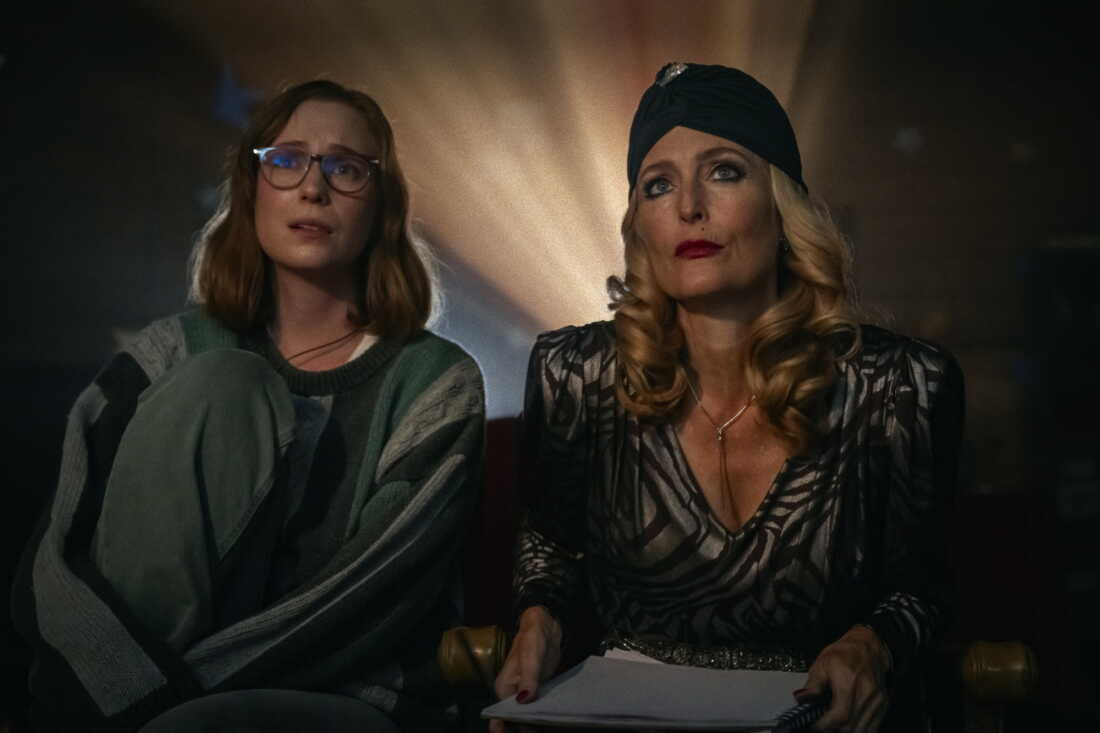
The first half of Camp Miasma is grounded in the film’s reality. After Kris has the call with the studio executives, the film switches to a subjective perspective built from Kris embracing her subconscious sexual desires. For those of you who don’t know “Little Death” is a euphemism for an orgasm. If you keep that in mind and rewatch the movie, it will make a lot more sense.
What really happens after the call is that Kris drives back to Billy’s, they talk, then Billy guides Kris through a roleplay experience built around Kris’s desire to be a victim in a Camp Miasma movie. We see her climax as Little Death impaling the women. And her demise is nothing more than falling asleep. When Kris and Billy wake up the next morning, still covered in red, it’s like they’re still basking in the glow of what happened last night.
Kris’s partner and Thor were never there. The agent was never there. The studio executives weren’t there. No one was harmed. The old movie characters weren’t in the gas station. It was just all part of the role play. That’s why there are portions of the scene where Billy and Kris talk through what will happen. They’re just making it up as part of Kris’s fantasy.
If you’re like, “Chris, are you sure?” Remember this dialogue:
You know how there’s that trope where someone gets lucky and then it cuts to them having a pep in their step, whistling, with this immense sense of positivity for life and the world? It’s known as the “afterglow”. In a grounded story, you show that afterglow through relaxation and positivity. In a fantastic story like Camp Miasma, it’s shown by still being covered in “blood” and walking around like a final girl. We’re witnessing the subjective reality of the characters and how they feel, as opposed to the objective reality where they’re probably dressed normally and totally cleaned up.
Hopefully that gives you a broad understanding of Camp Miasma. If you want to stick around for the deeper thematic analysis of Little Death, repression, cinema, and more, keep reading.
The Matrix appealed to popular audiences because it focused on the broad idea of identity repression and the wish most people have to be more than a cog in the machine. Underneath that was the personal story that reflected the trans experience of the Wachowski sisters.
Jane Schoenbrun’s second film was I Saw the TV Glow. It explores the same topic as The Matrix but makes the quiet part the loud one (and the loud one quiet). The trans experience is front and center, presented in a surreal, metaphoric way where the male protagonist lives in a mundane “real” world but feels drawn to a female character and the world of her TV show. Eventually, the protagonist has a choice between staying himself or becoming the female TV character. Will they choose repression or embrace their true identity?
While some reduce TV Glow to only being about transness, it really does speak to the larger idea of identity repression. “I want to be this, but I don’t feel like I can be.”
With Camp Miasma, Schoenbrun returns to the topic of repression, changing the conversation from “I want to be this” and what happens when fear wins to “I want to do this” and the process of breakthrough.
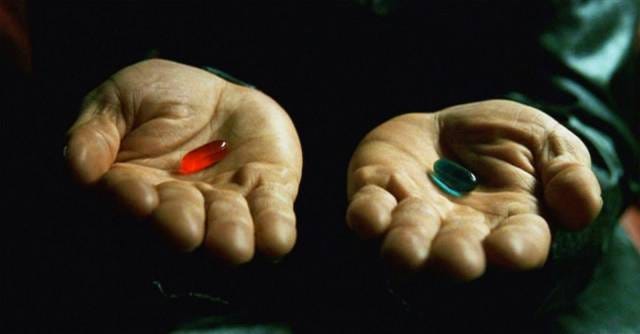
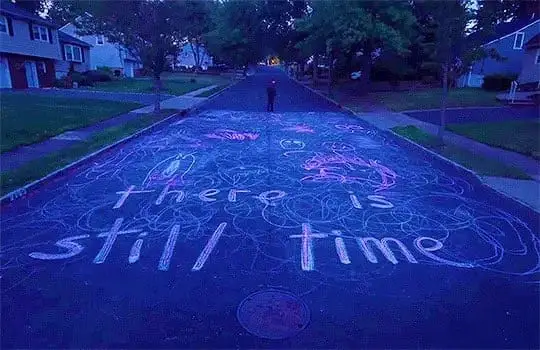
The term Little Death, Petite Mort, was originally associated with dizziness and faintness, referring specifically to the momentary loss of consciousness. Over time, writers, poets, and people used it euphemistically for the loss of awareness that accompanies an orgasm. That’s now the primary definition.
In Camp Miasma, Little Death lives under the lake, beneath the rest of the world. Why? Because extended metaphors like this have to visually represent their ideas. So if you’re talking about desire as part of our subconscious, you wouldn’t put Little Death in the sky or mountains or roaming in the woods. None of those places represent “subconscious” in a strong way. A hole at the bottom of a lake does.
Think about that in terms of Kris. Kris is a progressive, queer woman. But her desire is rooted in penetration inspired by misogynistic horror cinema. If she could consciously choose what turned her on, it probably wouldn’t be the penetrative acts of misogynistic horror cinema. She doesn’t get a say. She doesn’t have final cut.
In the movie world, “final cut” means who has control of the edit of a film. Filmmakers want it because they can keep the movie true to their vision. Without final cut, the studio can do whatever they want. Terry Gilliam was tricked into giving up final cut of Brazil. A studio executive then not only chopped the picture from 132 minutes to 94 but also filmed an entirely different, happier ending. Gilliam had to wage a very public battle to get his version of the film released.
So that’s what Kris means by final cut—control. In that call with the studio executives, she has the breakthrough that Little Death is the one in control.
Translating that to real life gets at how our subconscious desires influence our actions. If willpower and logic had final cut, the world would be a very different place. We’d all eat healthy, never waste time, and achieve every goal we’ve ever had. But we don’t do those things. Because desire steers us in ways that go against what we consciously want for ourselves. Desire is what makes diets so difficult and routines fall apart. Because, ultimately, our subconscious drives can override what we consciously intend. We feel them rising up from the depths of our brain, as if from the depths of a lake, to seize control of us.
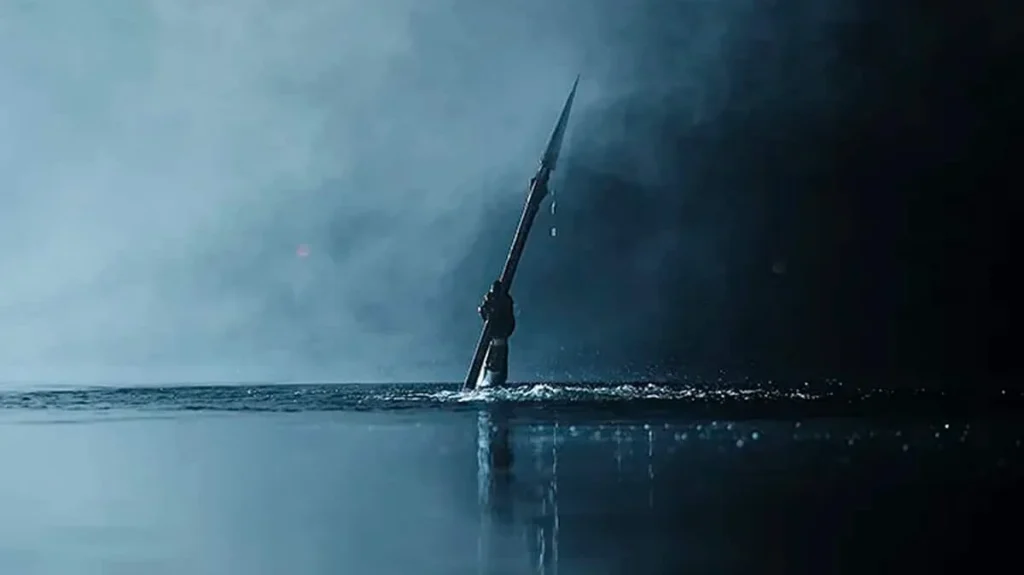
Here’s the dialogue from Kris:
Kris: Okay. So… Lake Miasma. That iconic lake viewers know so well. But there’s something viewers don’t know about what’s lurking there underneath the water. A hole. There is a hole at the bottom of the lake where the movies come from. It’s not meta. Not New Nightmare by Fright Master Wes Craven. It’s real. Okay? Like, actually real. It’s realer than this call. It’s not a movie.
If anything, this is a movie. You all are characters in a movie. Okay? Okay. Listen to me. Listen to me. There is a hole at the bottom of the lake where the movies come from. It has been there since before the first movie. Okay? It has been there since before the murders that inspired the first movie.
Little Death is down in there. Alone. Waiting. He doesn’t need his mask in the hole under Lake Miasma. He doesn’t need clothing at all. When he gets bored, he has his entertainment. And that’s where we come in. This is the great trick he plays: convincing us that we made him, when really he made us. That we watch him, when really he watches us.
Do you understand? We’re his little playthings. We are an itch for him to scratch. We are a movie for him to edit. And he has final cut. Oh, my God. He has final cut. Oh, my God. It’s happening. It’s happening again. Can you feel it? Oh, my God. He’s hungry. He’s racing to the surface now. He’s ready. He’s ready to make a new movie. And he’s coming for us all.
When Kris says “He’s racing to the surface now” what she means is that she’s finally feeling the kind of sexual desire that she typically represses. It’s Billy who broke the seal and has Kris feeling rather than thinking. To express rather than repress.
Every 2026 movie I’ve seen, ranked. Became a dad, so catching up. Updated: October 5th
Subconscious desire is the simple, one-dimensional way to view Little Death.. But Schoenbrun adds additional layers, if you want to dive into those as well.
Little Death’s backstory in the first diegetic Camp Miasma film is, in the words of Kris, transphobic. Sitting around a campfire, a character tells the tale of this “freak show” boy who had bunks in both cabins, boys and girls, and how on Sundays, Tuesdays, and Thursdays, he was a boy, but on the other days he’d act like a girl. And how he had parents who embraced gender duality and taught their son the same and how they were all messed up because of it. Ultimately, other kids drown Little Death in the lake.
I love that Little Death is trans as it adds to the larger reading of subconscious desire. Too many people still think sexuality and gender are choices people make. But they’re not. They emerge from biological and developmental factors that exist way beyond what’s conscious. Every single person’s identity has aspects that are categorized as masculine and aspects that are categorized as feminine. But, really, those aspects aren’t either one but just human.
You can repress the parts of you that you feel are “masculine” or “feminine” the way the protagonist does in I Saw the TV Glow. But if you do that, what kind of life are you living? It’s the same with desire. Kris doesn’t identify with being the helpless, hyper-feminized victim of a misogynistic slasher, yet that’s the role her fantasy keeps returning to. The cognitive dissonance had always been too much for her, until Billy’s able to recontextualize it into something that transcends the reductive binaries of masculine and feminine.
Little Death’s transness unifies the oppositional concepts of man and woman into the singular, infinite human. The “monster” isn’t something to run away from.
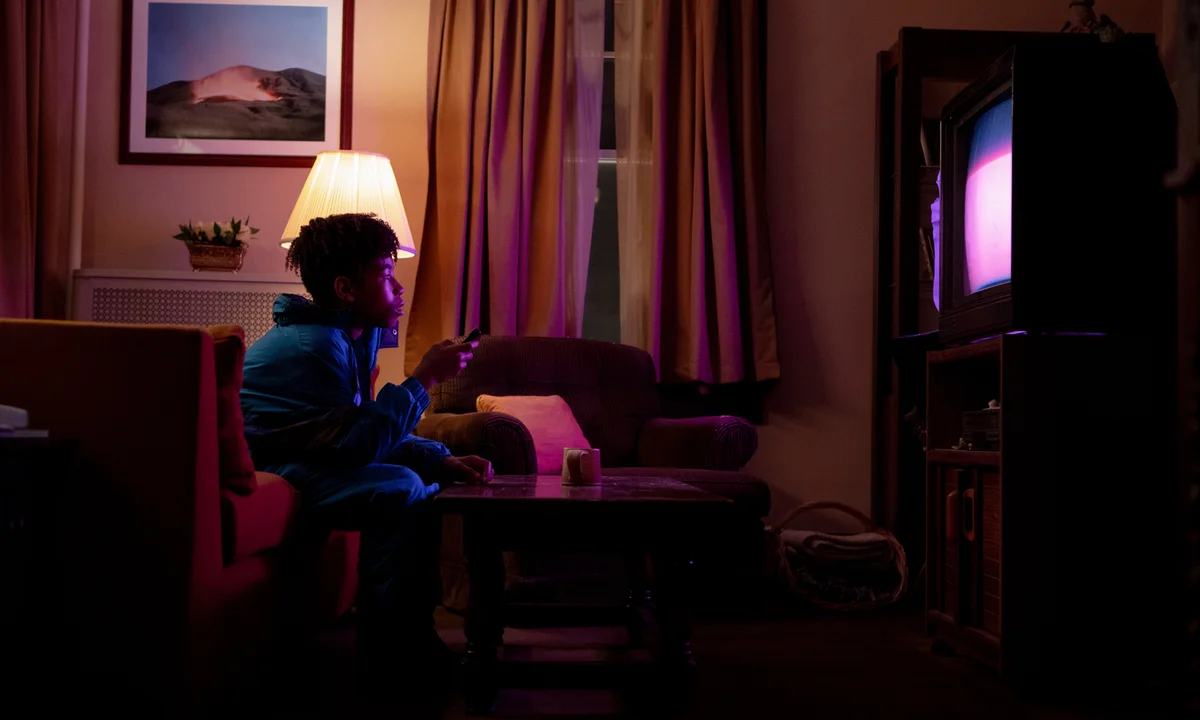
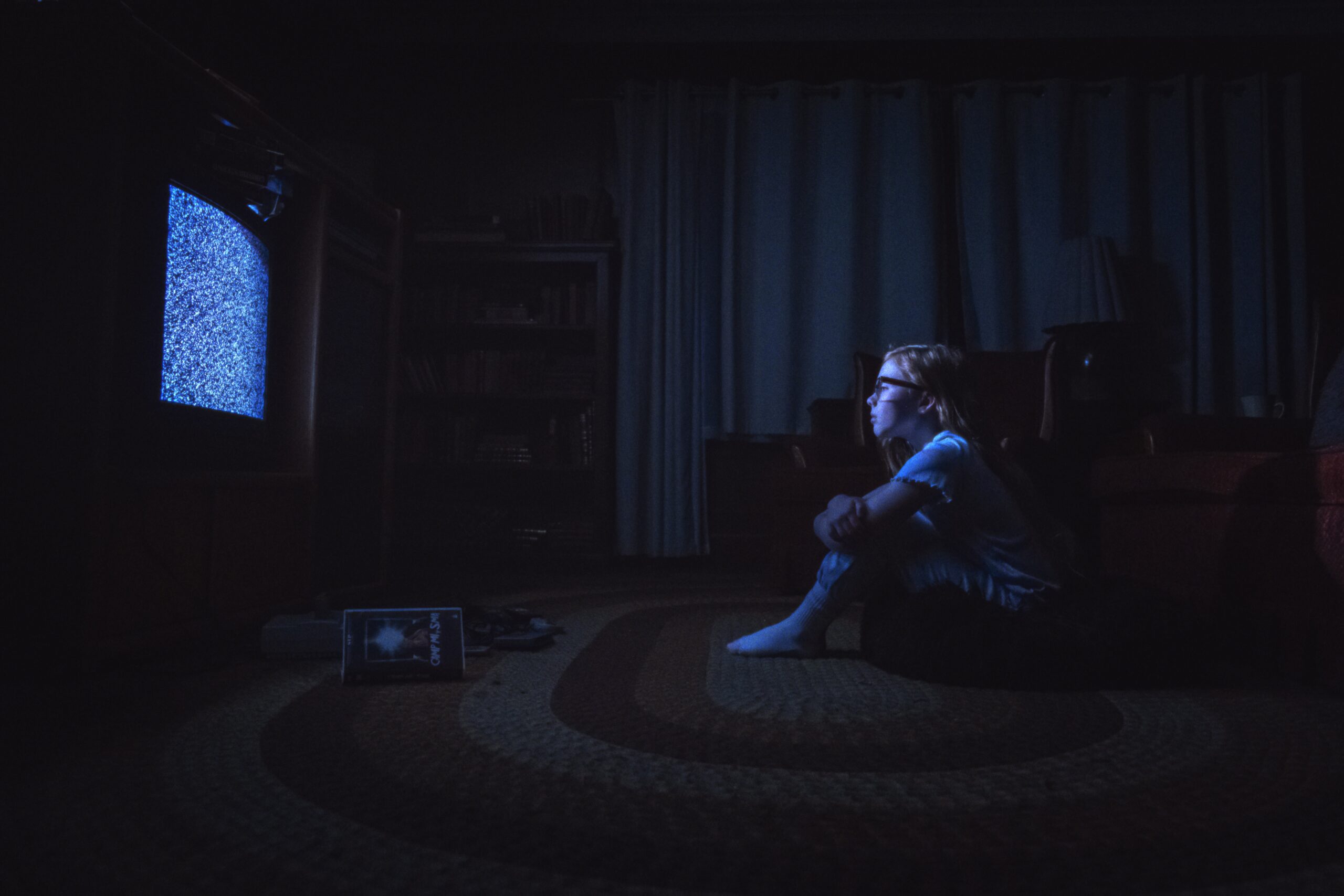
In TV Glow, the TV is a conduit. Through the TV, the protagonist encounters people, places, and ideas that are incredibly different from the mundanity of the American suburbs. Those experiences make the protagonist aware of alternatives. For a time, they’re inspirational, aspirational. The protagonist’s best friend embraces that inspiration, says no to repression, and finds freedom.
I think the safe interpretation is something like “Schoenbrun’s exploring how media shapes identity”. But my feeling is they aren’t saying we’re clay shaped by media so much as media is a mirror that lets us see who we are and what we look like.
And media is a byproduct of both the conscious and subconscious. For example, if you watch a few Spielberg movies in a row, you’ll notice that many of his plots involve a strained relationship between a child and parent. Sometimes that’s from the perspective of the child, other times the perspective of the parent. It’s there in Jaws, as the police chief, in the parental role, stresses over how to protect the community he’s responsible for from a rampaging shark. It’s more direct in Close Encounters of the Third Kind where three kids struggle to comprehend the behavior of their disconnected father. E.T., Indiana Jones and the Last Crusade, Hook, Jurassic Park, Schindler’s List, Lost World, A.I., Minority Report, Catch Me If You Can, and on and on.
Nearly 50 years after his first feature film, Spielberg finally made The Fabelmans, a movie about his own childhood and the strained relationship he had with his father.
It’s possible that Spielberg consciously included that strained parent-child dynamic. But it’s far more likely that his subconscious caused him to say yes to projects that had that dynamic or modify them to include it. In Michael Crichton’s Jurassic Park novel, there was no subplot about Grant not liking kids then having to take care of the kids who are at the park. That was made up for Spielberg’s film.
So who had final cut? Spielberg or his subconscious?
With that in mind, re-read what Kris says to the executives:
Kris: If anything, this is a movie. You all are characters in a movie. Okay? Okay. Listen to me. Listen to me. There is a hole at the bottom of the lake where the movies come from. It has been there since before the first movie. Okay? It has been there since before the murders that inspired the first movie.
The subconscious is what’s responsible for art. And art can be more truthful than the real world because in the real world many of us are performing. Look at the executives on the call with Kris. They speak in platitudes and carefully selected phrases. They’re trying to play a part, to keep up appearances of what’s expected of the role. Meanwhile, Kris is embracing the chaos of her feelings and riffing in a way that goes against her normally curated self. Is it crazy? Hell yeah. It’s also authentic. And it’s that authenticity that allows her to race back to Billy and have a truly meaningful romantic experience.
All of that is why Little Death wears a helmet that resembles a camera’s viewfinder. The monster is a point of view, a lens through which to see the world. When Billy finally stopped thinking about the movie and started seeing herself through the movie, everything changed for her. The same thing then happens for Kris. She’s no longer the filmmaker constructing the thing but a participant who gets to experience the film and by doing so finally can step outside of herself and see herself through Little Death. Conscious and subconscious merge in a way that’s healthy and transcendent.
Little Death isn’t a monster to run away from but a reflection of the subconscious. And some people won’t see themselves in it at all. Which is fine. But, for others, Little Death is the mirror they need to see themselves through. That’s why Kris describes the diegetic Camp Miasma as her “queer awakening”. It didn’t turn her queer. The film gave her images and characters that allowed her to recognize what was already inside of her.
And, ultimately, Kris goes from someone who thinks about movies to someone who feels movies. Schoenbrun builds the form and function of the film around that concept, which is why the audience also starts off in the objective, omniscient perspective before the film switches to Kris’s subjective perspective during the roleplay. And that’s why the final portion can throw so many people off. Because it’s no longer logical. It’s visceral.
I just want to include this because I can imagine people complaining about the Counting Crows sequence where Little Death rampages through the camp. It’s excessive and raw and fun. But some will try to argue that it doesn’t move the story forward in a meaningful way and that means it’s unnecessary and indulgent.
Remember, Little Death is a subconscious desire. A longer, indulgent sequence that doesn’t necessarily serve the plot is there because it reflects the desire of the slasher audience to see a sequence like this. It’s part of the film letting go of story logic and embracing the visceral experience.
Schoenbrun described the scene to Letterboxd:
I feel like we spent as much time in pre-production on that sequence as we did the rest of the movie. It’s right at the halfway point, and the movie is structured to be moving towards these multiple climaxes, to put it in the parlance of the female orgasm. Perhaps this is our first of those climaxes, or it’s the moment that the movie starts to really bathe in what it wants to be showering in. It’s supposed to feel like it felt for me as a ten-year-old to watch Evil Dead II.
I just read the rest of the interview Jane did with Letterboxd. I want to be clear that I wrote this entire explanation thus far without looking anything up. So it’s very validating to do that then read this:
Schoenbrun: Anyway, it’s not really Kris’ choice that her fantasy that she’s ashamed of, and doesn’t want to actually articulate because it goes against all of her values, is misogynist. What matters is that it’s her fantasy and that to not explore it would be repression, and to pretend that it isn’t there doesn’t make it not be there. In fact, we as a culture in 2026 would be a little bit healthier if we’re a little less puritanical and a little more open about these things.
Our relationship to sex as a culture is so unhealthy. So, of course we try to compartmentalize it or keep it on our browser window and never share it with another human being or whatever. But I don’t think that is serving us as a people. I think that repression is the enemy and especially the enemy of the artist and this is a movie against repression.
Boom.
Oh, and for the cherry on top, here’s Schoenbrun on the “hole at the bottom of the lake”: But before I had built that mythology out to explain the line in narrative terms, I really did just enjoy the line as an idea. I’m talking about the subconscious, right? Whether it’s sex or desire or dreams or cinema, the really potent thing isn’t the story that your conscious brain creates. It’s the libidinal drives lurking under the water.
I think we’re done here.
It was just the conclusion to their roleplaying. In the fantasy, yes. But in the real world of the film, no.
Because the film switches from an objective perspective to a subjective one. Specifically, the world we see is now part of the roleplay fantasy between Billy and Kris. So the camp transforms because Kris and Billy are pretending they’re in the original, diegetic Miasma film. In the film’s real world, it’s still winter and they’re just in bed together, talking through the fantasy.
It’s part of the film’s commentary on the relationship between the subconscious and artistic creation. Because Little Death is the personification of subconsciousness, it’s Little Death who “makes” the film.
Kris’s character arc is that she starts the movie as a logical thinker. And she wants to approach making her Camp Miasma film through an analytical lens. Just like she made a movie about Psycho from the perspective of the curtain shower. That kind of film is thoughtful but in direct opposition to the “flesh and fluids” of something like the diegetic Camp Miasma.
Over the course of the film, Kris learns to embrace her feelings and subconscious. And the film she’ll eventually make won’t be born from the analytical lenses she talks about early on but from the raw depths of her subconscious.
The post-credit scene features Rudolph and Anthony in the gas station. Rudolph had been in previous diegetic Miasma films and talks about how he never thought he’d do another one of these but other opportunities never came along.
This could just be an industry joke and a nod to how underappreciated horror actors are, that they get overlooked for future roles.
But it could point to the fact that Kris really does go on to make her version of Camp Miasma. We first see Rudolph in the gas station, after Kris gets off the call with the executives. She’s already started her roleplay fantasy, even before making it back to Billy. Which is why the dialogue she has with Rudolph is so stylized and cliche.
While Rudolph could have just been part of the fantasy and never really there, there’s the implication that parts of what we see in roleplay fantasy are what will eventually become Kris’s Miasma film. So because she “saw” Rudolph in the fantasy, she ends up bringing him back for the film.
The implication there is the payoff on what Kris said to the studio executives: This is the great trick he plays: convincing us that we made him, when really he made us. That we watch him, when really he watches us.
Kris leaned into her fantasy and if she turns that fantasy into her version of Camp Miasma then it can provide the kind of revelation for someone else that the original did for her. That’s the cycle of art.


Film Colossus Supporters get access to the Frameshift and Active Viewing courses, an ad-free site, the Watch More Films newsletter, and the ability to request movies for analysis. Your support also directly keeps Film Colossus alive while I try to scale it into something sustainable, as it's just me, Chris, who does everything here.
Or create a free account. You gain access to the Active Viewing course and Watch More Films.
Join the Film Colossus community, get the newsletter, and unlock member features as they're added.