Newsletter Subscribe
Enter your email address below and subscribe to our newsletter

There are a few layers to Companion. Remove all the conversation around technology and artificial intelligence, and you have a straightforward story about the dynamics between men and women, specifically toxic masculinity and control.
Companion explores similar territory to recent films like Blink Twice and Heretic. Immaculate is about female autonomy, though more focused on the church than “men” in general.
From this perspective, the sci-fi aspects of the movie are simply ways to defamiliarize the act of control. A grounded story would have Iris be a normal person who has been manipulated into a state of submission, like Elisabeth Moss’s character in Invisible Man. But, instead, that concept’s refreshed by having the control be through an app on a phone. Same topic, but the film can explore it in its own, unique way that differs drastically from how the other aforementioned movies went about it.
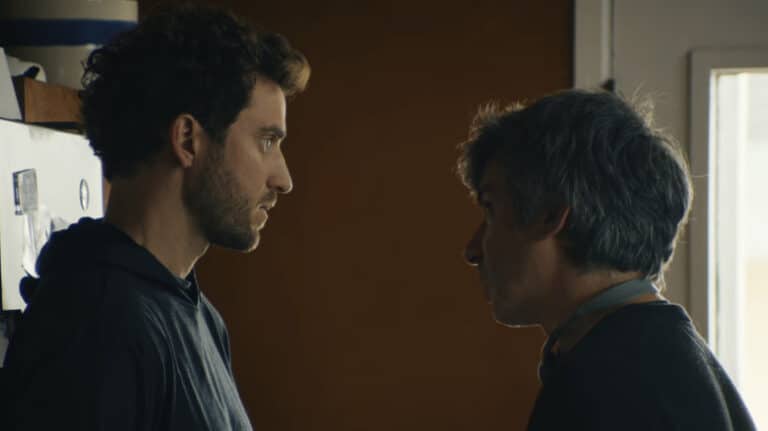
You see this grounded style of manipulation in practice near the end, when Iris, fully independent, confronts Josh. She points a gun at him and keeps threatening to pull the trigger. This is the dialogue:
At this point, Josh has turned into a physical manifestation of Iris’s trauma. Even though Iris is, technically, free of Josh (we see that the phone no longer works as a remote control), this confrontation, narratively speaking, is existential. It’s about having closure and emotional freedom. Think about the many people, of all genders, who are victims of emotional and physical abuse. Even after they’re technically safe and in the clear, the trauma can live on, as part of the person, continuing to haunt them.
Iris could have left after Teddy gave her autonomy. Instead, she confronts Josh in order to take her power back.
In a novel, the author could describe what Iris is feeling and show her dealing with trauma and finding closure through internal monologue and omniscient description. In film, that kind of interiority doesn’t really exist outside of voice overs that are usually cheesy. So everything is externalized. That conversation that precedes the final fight between the two is the movie expositing to the audience that this is now about total closure.
Companion’s final shot embodies Iris’s journey. On the road, she pulls up next to a car with a couple. The man’s driving and yapping about something. The woman, from the passenger seat, looks over at Iris. And Iris is the one driving herself. And you get the sense that the other woman sees something she wants—freedom, independence, the power to take the wheel and steer.
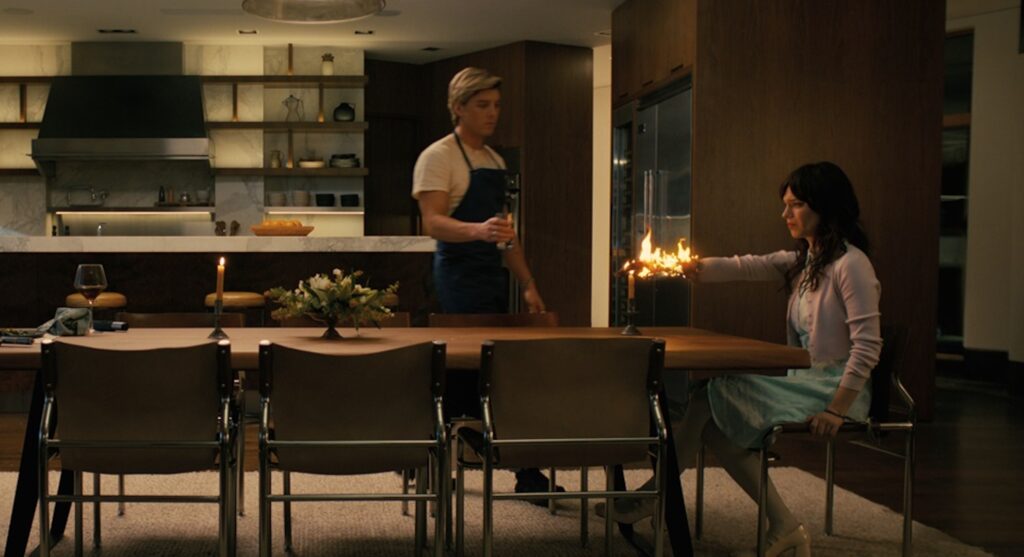
Iris starts and ends the movie with a speech about awareness. Quote:
I think Drew Hancock wanted to prod viewers into self-reflection. That’s why he had Iris use third- and second-person. “We’re all just stumbling around.” “You see the world for what it really is.” I think Hancock is legitimately asking you if you have a Josh in your life. And it doesn’t have to be a significant other. It can be your phone, a video game, a job—anything that robs you of your sense of purpose.
Every 2026 movie I’ve seen, ranked. Became a dad, so catching up. Updated: October 17
Look at Josh. He has a big speech about how he deserves more. How it’s unfair that he has a one-bedroom apartment and doesn’t make a lot of money and isn’t successful. He couldn’t even get a real girlfriend. So what does he do? He resorts to an AI girlfriend. He has a self-driving car. He plans to murder and rob Sergey.
He’s a perfect example of someone who has lost their sense of purpose and uses technology to take the easy route. Technology has become for him, for Eli, a crutch. Kat’s doing something similar with her relationship with Sergey. It’s not meaningful, but something she does because it allows her access to superficial pleasures.
You don’t have to be like the humans in the story. They’re negative examples. You want to be like Iris. Someone who fights to regain agency. This is your one life. In the words of Shawshank Redemption: get busy living or get busy dying.
That’s why “Emotion” plays at the end. Look at the lyrics:
The song is from the perspective of someone in a state of dependence. The emotion has taken over. It’s used ironically. Iris, at the end, is someone who battled those emotions and won. She’s no longer tied up in sorrow or lost in her soul. She’s free.
Companion also contains commentary on technology as a tool. Kind of like how Jurassic Park makes a case that it’s not the science that’s wrong, necessarily, but capitalism rushing to utilize science before it’s tested and best practices can be put into place.
Here, it’s not that technology is wrong, but people utilizing technology in ways it’s not supposed to be used, ignoring safety guidelines. Time and time again, Josh thinks he’s concocted some great plan, only for the technology to not work how he expected it to. Like when he takes control of Patrick and turns Patrick’s aggression up to 100%. In the moment, he doesn’t think anything of it. But it results in Patrick murdering both Deputy Hendrix and Kat, much to Josh’s chagrin.
When used responsibly, technology can be a book to someone’s life. Look at Eli and Patrick. They genuinely loved one another. When used irresponsibly, calamity can occur.


Film Colossus Supporters get access to the Frameshift and Active Viewing courses, an ad-free site, the Watch More Films newsletter, and the ability to request movies for analysis. Your support also directly keeps Film Colossus alive while I try to scale it into something sustainable, as it's just me, Chris, who does everything here.
Or create a free account. You gain access to the Active Viewing course and Watch More Films.
Join the Film Colossus community, get the newsletter, and unlock member features as they're added.