Newsletter Subscribe
Enter your email address below and subscribe to our newsletter
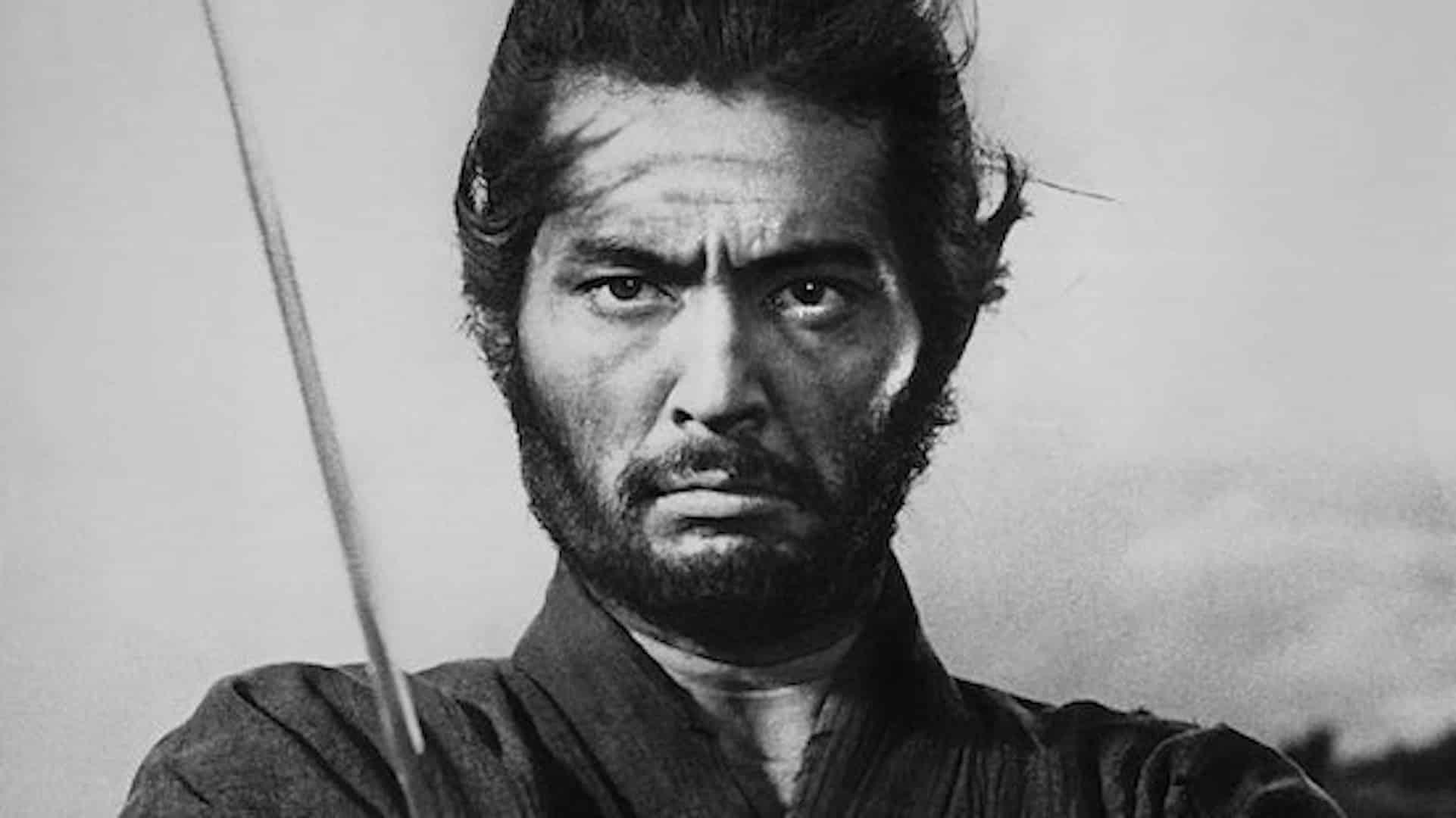
Harakiri is, as of writing this, the highest rated movie on Letterboxd. For good reason, it’s a gorgeous, thought-provoking film that has a lot to say about the world.
I think most people who write about the movie will focus on events in the context of when they occurred. By that, I mean they’ll look at the story as critiquing Japan in 1600. I’m going to argue that it’s actually critiquing Japan of the 1940s, 50s, and 60s.
It’s not like I have a doctorate in Japanese History. But a few years back, I read a lot of Kenzaburō Ōe, one of Japan’s three winners of the Nobel Prize in Literature. And one thing he discussed in great detail was the pivot that occurred when Japan surrendered in World War II. Oe actually wrote about this whole experience in a famous article for the New York Times. It has the best title. “The Day the Emperor Spoke in a Human Voice”.
Oe describes how he grew up in a small settlement in the forest of a remote valley and how it shattered everything he knew when the Emperor’s voice came across the radio. Forgive me if the sampled portion is a bit lengthy, but I love Oe’s writing so much and I’m hoping you’ll enjoy it too and read the whole article (maybe a novel of his or two…). But it also sets the stage for my main point.
The Emperor’s radio broadcast happened on August 15, 1945. And everything in the country quickly changed. For centuries, Japan had been about tradition and hierarchy. The individual did not matter. But they had just lost a war to a nation founded on “we hold these truths to be self-evident, that all men are created equal, that they are endowed by their Creator with certain unalienable Rights, that among these are Life, Liberty, and the pursuit of Happiness….” America now occupied the country and it had a democratic constitution.
How could the art not reflect such upheaval?
Many of Japan’s greatest films came out in the 50s and 60s, the decades immediately reacting to postwar shift in culture. Ugetsu, Rashomon, Seven Samurai, Sansho the Bailiff, Godzilla, Late Spring, Ikiru, Tokyo Story, Sword of Doom, The Human Condition Trilogy, and Harakiri. To this day, you still see this reckoning between past and present, obedience and self-interest, across manga, anime, video games, and film.
Many of these works use Japan’s past as a means to comment on the present and future. And Harakiri is the perfect example of that.
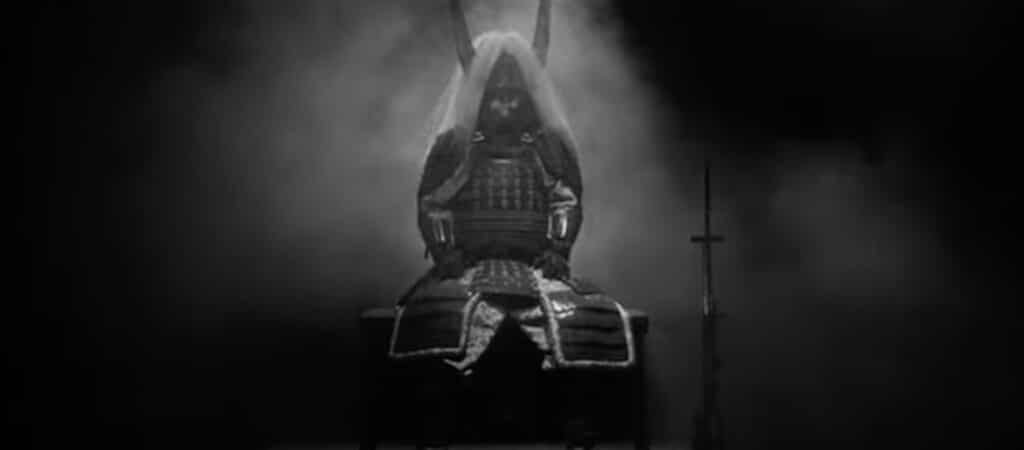
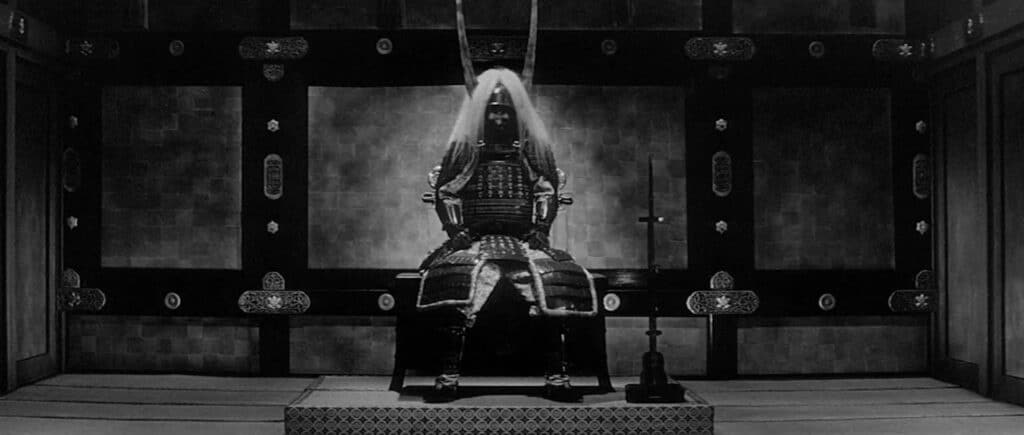
Harakiri opens with this awe-inspiring, honorific display of the House of Iyi’s ancient samurai armor. Smoke fills the frame, seemingly out of nowhere, adding a sense of mysticism and power to the armor’s presence in this pitch black space. It’s as definitive as it is infinite.
The movie ends with another shot of the armor. Except, now, there is no smoke. The room is fully lit. The difference in the cinematography and mise-en-scene reflects the fact that the viewer, having watched the movie up to this point, should have a new perspective on what the armor represents. At the start, we saw it as a symbol of power. At the end, we’re supposed to understand that symbol was based on a false perception, and the armor actually represents a lie.
That’s why Hanshirō’s final stand progresses from the courtyard, through the building, to the armor room. His whole character journey is exposing the House of Iyi for the honorless liars that they are. They say they uphold the high-standards of samurai tradition, but it’s all propaganda.
Look at how the duel ends. No one can best Hanshiro in the swordfight. When he picks up the armor, it symbolizes how he’s the one who truly embodies the samurai ethos. And then what happens? More Iyi warriors arrive. But they don’t have swords. They have rifles. These Western artifacts. Instead of dying to bullets, Hanshiro throws down the armor and does the traditional samurai thing—commits harakiri.
With everything we’ve talked about in mind, pay attention to the final dialogue:
Every 2026 movie I’ve seen, ranked. Became a dad, so catching up. Updated: October 17
The Counselor narrates from his written account of what happened:
As that final speech plays out, we witness an Iyi cleaning crew disposing of the evidence of Hanshiro’s final stand. They restore the visual appearance of the house. But we know it’s a lie. We know what really happened. The same way we know the Counselor’s account of events is a lie. But history will remember the Counselor’s fiction. And that’s why, at the very end, the smoke starts billowing around the armor. The perception of it as this meaningful thing will resume.
What the viewer experiences by watching Harakiri is similar to what Kenzaburo Oe and the entire nation of Japan experienced when the Emperor Hirhito spoke in a human voice. He was not a god. Like the Wizard of Oz, he had worn a suit of armor that made him seem more powerful than he was. That facade had lasted for generations, despite evidence to the contrary, because those with power manipulated information, just like we see in Harakiri. Having the famed samurai clan resort to rifles to win a sword fight was just such a perfect, perfect choice.
Also, I think Watchman actually takes a lot from Harakiri. Hanshiro is the Rorschach whose pursuit of the truth makes him a liability for those in charge. They sacrifice him to maintain order. But part of his work remains behind. In Watchmen, it’s Rorschach’s diary. In Harakiri, it’s the top-knot Hanshiro had taken from a premier Iyi swordsman.
After I write an explanation, I think it’s fun to read some interviews from the filmmaker and try to see if my interpretation matches their intentions. If I’m right, great. If I’m wrong, it’s a learning experience. I never sneakily go back to adjust or change my analysis.
Alright, I found an interview Peter Grilli did with Masaki Kobayashi back in 1993. It’s on a random blog.
And this is from an essay for the Criterion Collection, by Joan Mellen.
Pretty good, I think. I can’t tell you how happy I was when I saw the interviewer point out the rifles being Western. It was also exciting to see Kobayashi mention the lack of smoke in the final shot. I promise you, I don’t look up the interviews until after I write these.
There is a discrepancy with the smoke. Kobayashi seemed to imply it was part of the “distractions”. It seems he viewed the smoke as an indication that those in authority are in trouble. Where I took it as part of the mystique of authority. It’s a small difference but it changes the tone. For example, at the beginning, the smoke would show there’s unrest. And the faint wisps we see at the end would actually be hopeful, that more unrest is brewing. Where I argued that the smoke was a byproduct of reestablished control
I think both readings are fair. Because they both speak to the push-pull relationship between society and individuality. The two will always be at odds. Whenever society leans more traditional, individuals will fight for more rights. And whenever it leans more individual, others will push for more tradition. Just look at the politics of 21st century America and you’ll see the struggle between the two ideologies on full display.


Film Colossus Supporters get access to the Frameshift and Active Viewing courses, an ad-free site, the Watch More Films newsletter, and the ability to request movies for analysis. Your support also directly keeps Film Colossus alive while I try to scale it into something sustainable, as it's just me, Chris, who does everything here.
Or create a free account. You gain access to the Active Viewing course and Watch More Films.
Join the Film Colossus community, get the newsletter, and unlock member features as they're added.