Newsletter Subscribe
Enter your email address below and subscribe to our newsletter
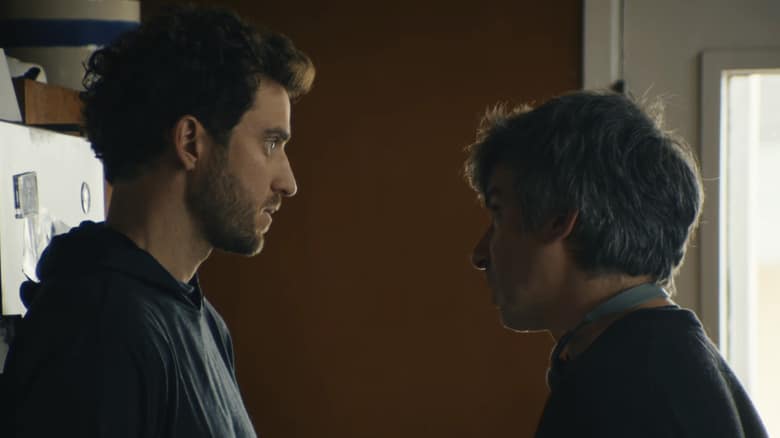
There’s a lot to talk about with You Can See Everything. I think most people will focus on the power dynamics between Elizabeth Holmes and Billy Evans. That conversation focuses on whether she’s a master manipulator or once again the victim of a controlling man.
But I’m interested in explaining the deeper themes of You Can See Everything.
And I think we have to start with the film’s ending, because that’s what everything builds up to. Do you remember the final line? Amanda Seyfried smiles at Nathan Fielder and he asks her why and she says, “It’s very complicated.” The dialogue ends there because the film wants the viewer to ask the logical follow-up: “What’s complicated?”
One of the key things to understand, right away, is that in documentaries, the filmmaker is usually not a participant. There’s that whole thing with wildlife documentarians and how they won’t interfere with nature. A turtle can be flipped on its back and all the crew has to do is give it a little push but they won’t because the crew are observers. The turtle will kick and kick until it kicks no longer. The filmmaker might be crying behind the camera but they won’t step in front of it and affect what’s going on.
When you watch Tiger King, filmmakers Eric Goode and Rebecca Chaiklin don’t have on-camera staring contests with Joe Exotic. Steve James isn’t in any of Hoop Dreams.
Of course, you have people who break that “rule”. Werner Herzog, for example. Michael Moore. Errol Morris. All legends of the genre.
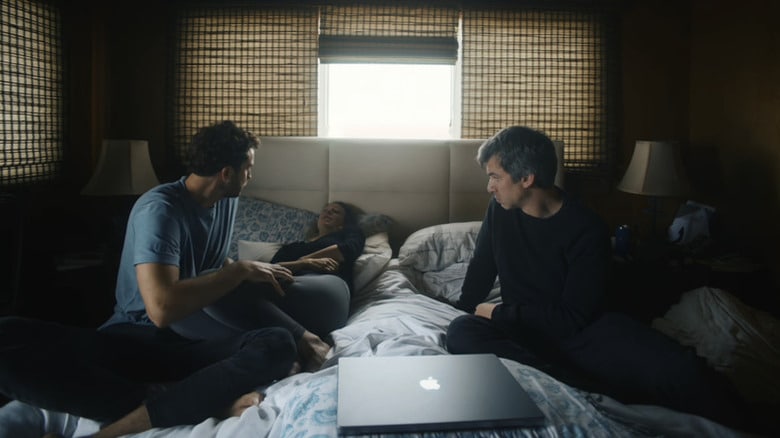
From a Q&A after a YCSE screening, we know that Nathan Fielder was initially behind the camera, simply observing. He and Oppenheim explained that Holmes and Evans would keep asking him questions and including him, to the point where they made the call that Fielder should fully engage rather than serve as a witness. You kind of see this early on, how Holmes and Evans weren’t just ignoring the crew. There’s a moment where the couple wakes up and leaves their bedroom and they greet the crew. And then, of course, the scenes where Billy complains about the equipment interfering with the Wi-Fi.
In that first hour, we think we’re watching Holmes and Billy, but, really, we’re watching Fielder. Because the second half of You Can See Everything isn’t really about the couple. It’s about Fielder working through his emotions and understanding of what he experienced and the connection he ended up forming with Elizabeth.
Notice that the film’s other director, Lance Oppenheim, stays behind the camera almost the entire time. His only appearance is during the recreations, when he plays himself at the meeting between A24, the filmmakers, and Evans and Holmes.
The introduction of Amanda Seyfried into the film is used for amazement and laughs. She played Holmes in the Hulu series The Dropout. We watch Holmes, Evans, and Fielder watch episodes from the show. So when Seyfried actually participates in the documentary, it’s this amusing meta-layer.
There’s more going on, though. Let’s look at the conversation that ends the film. Seyfried and Fielder are talking about his visit with Holmes at the prison. And “Elizabeth” just delivered this terrifying speech about how she talks to Billy in her head, from her prison cell, and she can feel him with her, and how they’re building monuments of love for each other. That culminates with Holmes saying: “Ever since Billy has come into my life, I’ve become convinced that our idea of what we believe to be God is actually love.”
That’s when the final exchange between Seyfried and Fielder happens:
- Seyfried: I mean, I don’t know if this is like…a Stockholm Syndrome symptom?
- Fielder: I don’t know. I guess, in the moment, I thought it was, like, kind of nice.
- S: Are you kidding me?! He’s the most selfish—He’s a narcissist.
- F: Well, I think the love is, like, real. I did not sense duress. I did not sense fear. I sensed just complete, unbridled, genuine love for this man.
- [A scene from the recreation plays where Fielder, at the prison, decides to leave the visitation to give Evans, Holmes, and their kids time together]
- S: I’m just curious.
- F: Yeah?
- S: There were moments, or was a moment, when you guys were alone, in the prison, and I’m just wondering if there was, maybe, a moment where she was being deceitful or manipulative, and you’re not including it because you’re…being protective of her.
- F: Why would you think I was doing that?
- S: I don’t know.
- F: Well, what do you mean?
- S: I don’t know.
- F: It’s coming from nowhere?
- S: No, I just feel like maybe you’re just…don’t want to portray something that might hurt her.
- F: Why would I not want to portray something that might hurt her?
- S: Because you care about her.
- F: I’m not putting, I’m not really putting my feelings into this, or I’m trying not to. I’m just trying to be accurate. You know?
- [Seyfried smiles]
- F: Why are you smiling?
- S: It’s very complicated.
It’s at this point that the film cuts to Fielder and Holmes back in 2023, before she went to prison. They’re swimming in the ocean together, laughing, having a good time.
That might seem innocent enough, but it’s actually a pretty massive twist. Much earlier in the film, during the 2023 segment, Holmes and Fielder are talking.
- Holmes: It’s always felt free to me, being in the water: It’s, like, so vast and beautiful and untamed. It clears your head, it resets you. Come jump in with me, hm?
- Fielder: You’re asking me to go?
- H: Yeah.
- F: Um…Yeah, I’m normally afraid of cold water.
- H: Okay.
- F: I could break the rule, but, yeah.
- H: No pressure.
Up to this point, Fielder has mostly played the role of the interviewer. He’s asked questions, challenged, poked, and prodded. He’s been friendly but never a friend. He’s a professional conducting an investigation. When he says he could break the rule, maybe he’s referring to his personal rule of being afraid of cold water. But it feels like an acknowledgement of the journalistic rule. Can he, as the documentarian, go so far as to hang out with his subject? Does that cross a line? It’s too intimate. Right?
His rejection of the offer feels like him setting a boundary. Then the film quickly moves on to a new scene.
Except, at the very end, after Seyfried questions Fielder’s feelings about Liz, we jump back to 2023 and see that he did swim with her. Not only did they swim, he looked genuinely happy.
This is where the whole thing starts to come together. Fielder spends the movie trying to understand Holmes. Is she honest or not? Is she so sincere and literal that she doesn’t get the humor of Abbott and Costello’s “Who’s on First?” bit?
If that’s true, does that mean she’s so sincere and honest that she genuinely believed what she was saying about Theranos’s box? Does Holmes just see the world differently? Is that how her brain works or is it a byproduct of the trauma her dad starts to talk about but never gets to elaborate on? Or. Or…is she playing oblivious in order to trick and manipulate everyone?
How could Holmes be smart enough to build Theranos up to the point she did but so disconnected from reality that she doesn’t understand what went wrong and why she’s in legal trouble? It’s hard to reconcile. And we see Nathan struggle with that exact thing. He spends the entire first hour trying to figure Elizabeth out. Is she showing him everything or not?
Jump to the end of the film, and Seyfried directly introduces the idea of Fielder having a bias. And then the film formally reinforces that by showing us the swimming scene, a moment it had, until that point, withheld. That begs the question: did we, the viewer, see everything? How much has the film manipulated our perception? Can we trust the presentation of events? Can we trust Fielder?
References to The Dropout feel natural. It made a splash in the cultural zeitgeist and defined, for many people, the perception of Elizabeth Holmes and the story of Theranos. It’s one of the reasons Holmes and Evans approached A24 about the documentary in the first place. Everyone has already seen the fiction, why not give them the real person?
If you know anything about Nathan Fielder’s HBO show The Rehearsal, bringing Amanda Seyfried into the doc feels almost inevitable. It’s exactly the kind of meta thing Fielder would do.
Every 2026 movie I’ve seen, ranked. Became a dad, so catching up. Updated: October 5th
But step back for a second and think about the function of The Dropout and Seyfried in the documentary. They introduce conversations around fact and fiction, what’s real and not real, what’s true and not true. And wasn’t that tension at the core of the project? Who people think Holmes is versus who she really is?
In the second and third hours, Holmes is gone, and we have both Fielder and Evans playing with her image. Evans speaks as her on Twitter and creates an AI of her where he can control what she says and does. That disgusts both Fielder and Seyfried. Fielder even calls out Billy for allowing the billboards with the image that “Liz” said she hated. He makes a point to stand up for what she had expressed.
Except Holmes had also expressed her dislike of The Dropout. And when Fielder made her watch it, she became so overwhelmed that she asked to turn it off then cried in Billy’s arms. Yet Fielder brings in the actor who played Holmes, Amanda Seyfried, and has her resume playing Holmes. And we, the audience, love it, right? How ridiculous! How amazing! We like Fielder, so this is okay. We don’t like Billy, so what he did is wrong.
But aren’t they both wrong?
Fielder, like Evans, recreates Holmes. And then presents a version of her to us and wants us to take his word for it that this is an accurate representation of who she is and what she said and did. Seyfried does a great job. But she’s still not Holmes. And as honest and truthful as her portrayal might be, it’s as fake as the AI.
When Seyfried’s confronted with Holmes saying Seyfried made everything worse for her because people believe The Dropout is a documentary, she responds as defensively as Billy. “I didn’t do that to her. She did that to herself.” When Holmes calls the show full of lies, Seyfried says “Those aren’t lies. It’s f***ing TV, you know.”
And while the initial recreations with Seyfried are based on recordings, his conversation with Holmes in the prison is from memory. He didn’t have a camera or a recording device. Think about that. When Seyfried’s Holmes says the line about “building monuments of love for each other,” we cut to Seyfried, out of character, reacting by saying Holmes has Stockholm Syndrome. Maybe Holmes said that and Seyfried’s reaction is valid (it was my first thought, too). But maybe Holmes didn’t. Maybe she said something close to it and Fielder filled in the gaps.
Much earlier in the film, Billy says that Liz “says that every action she takes for as long as she lives will be building monuments of love to me.” If you’re like me, you recoiled when you heard that. It couldn’t possibly be a real quote? He had to have been making it up. Billy’s unhinged, right? But then it’s seemingly confirmed by Fielder in the recreation of his visit. But, again, it’s a man saying that Elizabeth Holmes said this. Not Elizabeth Holmes saying it.
And by Fielder writing it, Seyfried has a visceral reaction where she judges Holmes for something Holmes may or may not have said. Does that sound familiar?
With everything going on in You Can See Everything, it’s easy to forget about the whole New York Times thing. But it comes up at the very beginning, is immediately brought up again after the jump to 2025, and it closes out the film.
This is what’s in the 2023 NYT article:
Ms. Holmes has not spoken to the media since 2016, when her legal team advised she go quiet. And, as the adage goes, if you don’t feed the press, we feed on you. In Elizabeth Holmes, we found an all-you-can-eat buffet. It had everything: The black turtlenecks, the Kabuki red lipstick, the green juices, the dancing to Lil Wayne. Somewhere along the way, Ms. Holmes says that the person (whoever that is) got lost. At one point, I tell her that I heard Jennifer Lawrence had pulled out of portraying her in a movie. She replied, almost reflectively, “They’re not playing me. They’re playing a character I created.”
So, why did she create that public persona? “I believed it would be how I would be good at business and taken seriously and not taken as a little girl or a girl who didn’t have good technical ideas,” said Ms. Holmes, who founded Theranos at 19. “Maybe people picked up on that not being authentic, since it wasn’t.”
Every time someone references the quote in You Can See Everything, we come back to the fact that neither side provides proof for their version. Holmes and Evans say they recorded everything, so they know Holmes never said that line, at least verbatim like that. “You probably said ‘character that they created,’” is how Billy explains it. To which Holmes agrees.
Except the couple never produce the recordings. And when Fielder pushes, Evans says he hasn’t had time to go through all of them, but he just knows. Likewise, the interviewer, Amy Chozick, never proves her version of the quote. Fielder says that the Times “just say that they stand by the reporting.”
The last words on-screen, before the film goes to credits, are from that quote: They’re not playing me. They’re playing a character I created.
Yes, the quote is relevant because the film is concerned with the “idea of Elizabeth Holmes” versus the “truth of Elizabeth Holmes”. Is she or is she not playing a character? Is she manipulating everyone? But it goes deeper than that. It reminds us that both sides claim something different happened and we don’t have the evidence to believe either one.
According to Holmes and Evans, the reporter misunderstood what was said and published something different. Again, I ask, does that sound familiar?
During the prison reenactment, Fielder confronts Holmes about whether she knew Billy negotiated with A24 to get paid for the film. This dialogue occurs.
- Seyfried (as Holmes): Well, I knew he was talking to you about it.
- Seyfried (as herself): So she knew that when she went upstairs, to check on the kids, that the money stuff was gonna be discussed, ‘cause she’s telling you she knew. And that clarifies the fact that she had knowledge of the deal, which is very strange. And it’s starting to feel like she is just trying to keep her hands clean.
- Fielder: ‘Cause it’s interesting, ‘cause when she said that to me, I didn’t instantly receive it as…. Or she must be deceiving me so…. Maybe she didn’t actually say it like this, I’m wondering. Maybe she said, “Well, I knew he was talking to you about something.” Not “it”.
- Seyfried: Well, those are two different words, for sure.
- Fielder: And, yeah, I feel confident about that. Can you change that in your script, actually? Would you change it to “something”?
The reenactment resumes with Seyfried, as Holmes, using the new line. The one that makes her look innocent rather than guilty.
It’s the same situation as the New York Times interview.
- They’re playing a character they created.
- They’re playing a character I created.
- I knew he was talking to you about something.
- I knew he was talking to you about it.
One word makes all the difference in how you perceive what’s said. If Holmes said “they” instead of “I”, she comes off way more innocent, just like if she said “something” instead of “it”. In both cases, the interviewer stands by their reporting. But in both cases the audience is never offered proof about what was actually said.
Does Fielder believe Holmes said “something” rather than “it” because he’s biased in favor of her, the person, and wants to show she’s innocent?
Did the Times reporter hear “I” instead of “they” because of a critical bias?
You Can See Everything is ultimately about the limitations of portrayal through media and how those portrayals affect the perception of someone.
Print, television, and film have all attempted to show us who Elizabeth Holmes is. And each creates a different version of her that captures some of the truth but not all of it. And the truth is framed by both the medium and the speaker. The journalist has their bias. The TV writers have theirs. The actor has hers. Fielder has his.
Billy is the crudest version of this phenomenon. And when he does it, it’s clearly ridiculous and ugly. He uses Holmes’s account to swear at people, call them names, and talk about things that Billy cares about. Except when an institution does something similar, we don’t have the same reaction. Maybe it’s the trust society tells us to place in such institutions? Maybe it’s the authoritative gloss that comes with being in a publication like the New York Times, a prestige TV show, a prestige film, an award-winning non-fiction book, etc. Society validates these mediums and thus we trust what they tell us about events and people. But You Can See Everything challenges that concept by revealing that we did, in fact, not see everything. Even this film that claims authenticity and honesty has its secrets and biases. And that extends to Fielder. And Evans. And, yes, Elizabeth Holmes. None of them are as guilty or innocent as the film makes them seem.
And I don’t mean that in a totally cynical way where we should question everyone and everything. Don’t point the finger at others. The intent here is to make us aware of our own limited perception. You might as well add a question mark to the title and read it as sarcasm. “You can see everything?” Because the moment that turns into a statement, I guarantee you’re missing something.
Let me put this in more direct terms. We don’t know as much as we think we do. And we should be more aware of how much we judge others based on what’s often partial information that someone else has framed for us. Even if they have good intentions, even if they are, like Fielder, “just trying to be accurate,” it’s not usually that simple.
There’s that famous idiom: never meet your heroes. The idea is that we build a hero up and think they’re perfect, only for the person to be more flawed, even terrible. Look at Ellen DeGeneres. For decades, the public thought she was this kind, full-hearted person who was a genuine ray of sunshine. Then it came out that she was very mean to pretty much everyone. Her crew, celebrity guests, non-celebrity guests, and so on and so forth. There was a day on Twitter where people in the industry shared story after story of Ellen being dismissive and corrosive and emotionally destructive. It was so bad she ended her show and went into pop culture exile.
Ellen was on television constantly for 20 years. All media coverage reinforced the positive image of her. Then, one day, the switch flipped and all the coverage turned negative. Again, the takeaway isn’t that we shouldn’t trust the media. We need to be aware of our own limited knowledge about a person.
Sometimes meeting your hero is wonderful. Sometimes it’s not. Sometimes the person you thought was awful turns out to be awesome. Did the hero construct the heroic idea you hold or did you? Did Elizabeth Holmes create a character? Or did we?
It’s complicated.
I’ll leave you with a passage from a commencement speech author David Foster Wallace gave at Kenyon College.
But most days, if you’re aware enough to give yourself a choice, you can choose to look differently at this fat, dead-eyed, over-made-up lady who just screamed at her kid in the checkout line. Maybe she’s not usually like this. Maybe she’s been up three straight nights holding the hand of a husband who is dying of bone cancer. Or maybe this very lady is the low-wage clerk at the motor vehicle department, who just yesterday helped your spouse resolve a horrific, infuriating, red-tape problem through some small act of bureaucratic kindness. Of course, none of this is likely, but it’s also not impossible. It just depends what you want to consider. If you’re automatically sure that you know what reality is, and you are operating on your default setting, then you, like me, probably won’t consider possibilities that aren’t annoying and miserable. But if you really learn how to pay attention, then you will know there are other options. It will actually be within your power to experience a crowded, hot, slow, consumer-hell type situation as not only meaningful, but sacred, on fire with the same force that made the stars: love, fellowship, the mystical oneness of all things deep down.
Not that that mystical stuff is necessarily true. The only thing that’s capital-T True is that you get to decide how you’re gonna try to see it.


Film Colossus Supporters get access to the Frameshift and Active Viewing courses, an ad-free site, the Watch More Films newsletter, and the ability to request movies for analysis. Your support also directly keeps Film Colossus alive while I try to scale it into something sustainable, as it's just me, Chris, who does everything here.
Or create a free account. You gain access to the Active Viewing course and Watch More Films.
Join the Film Colossus community, get the newsletter, and unlock member features as they're added.