Newsletter Subscribe
Enter your email address below and subscribe to our newsletter
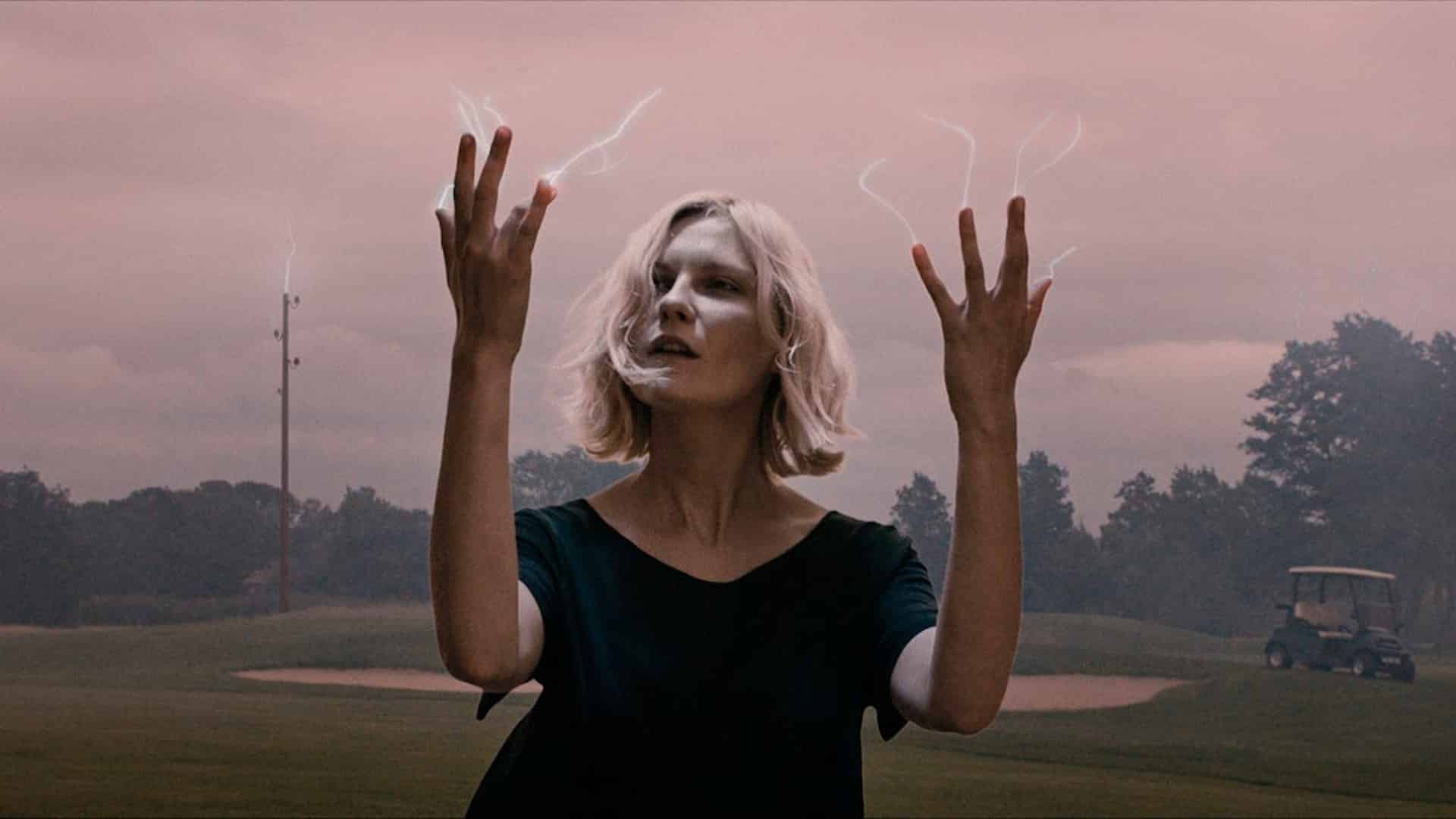
Melancholia has two layers. One is more obvious and familiar and shouldn’t surprise you in any way. The other is a bit more abstract and you’ll have to bear with me. The good news is, you’ll come away from this article with a far better understanding of Melancholia. That I promise you.
Let’s dig in.
So, the obvious interpretation of Melancholia is that the rogue planet is a metaphor for Justine’s mental health issues. Think of the Earth as the life she’s trying to live. And the rogue planet as a depressive episode that blows up her life. That’s exactly what you see in Part One, right? Initially, Justine and Michael seem happy, in love, excited to start this new chapter as a married couple. But throughout the reception, Justine’s mood changes. She grows more distant and distraught. Eventually, she blows it all up. Her marriage, her career, her future. Part One is a grounded, realistic demonstration of the way a depressive episode can impact someone’s life.
Part One treats the viewer as an observer. We witness what it’s like to see someone go through an episode like this. Part Two tries to make the viewer feel what it’s like to go through an episode. The sense of anticipation and dread. The denial. The false hope. The acceptance. Part Two is an existential, dramatized version of events. It’s one thing to hear Justine describe what an episode is like. It’s another to show it, to quite literally have “Melancholia” crash into the Earth and destroy the world.
The science fiction elements that suddenly make the movie surreal actually allow the viewer to feel something closer to the truth of the experience. You go from clinical to poetic. From outside to inside. Throughout Part Two, you should be asking yourself, “How would I feel in this situation?”
The supporting characters mirror this experience. In Part One, they watch Justine go through what she’s going through. But in Part Two, they have to go through it as well. Claire’s no longer the superior sister who pities her poor, unwell sibling who struggles to live a normal life. Melancholy is something that can hit any one of us. And it sucks. Until you’ve experienced it, it’s hard to understand just how overwhelming the emotions are.
My impression is that von Trier’s asking the audience to reflect on their own emotions and have more awareness of and empathy for the emotions of others and what they might be going through. Claire’s husband, John, is the antithesis of that. He’s patient with Justine for the sake of Claire, but, really, he’s kind of a narrow-minded jerk who eventually abandons his family. He acts high and mighty when his mental health is fine, but crumbles as soon as he encounters the melancholy that had affected Justine.
That, to me, speaks directly to the idea that people who haven’t had a depressive episode shouldn’t judge or look down on those who have. It can render you helpless. Which von Trier captures in that final moment when Justine, Claire, and Leo can do nothing else but sit together as the planet explodes.
In Part One, the performative nature of everything is part of what triggers Justine’s episode. She can’t easily accept the rituals and routines of society and calls out their artificiality. Claire finds comfort in those things. Losing them, her husband, her child, the life she enjoyed, sends her reeling much in the way Justine had. We see her breaking down as Melancholia arrives.
Justine, in those final moments, is calm and ready, because the performance is finally over. All the artifice is gone.
I will say, though, that as bleak as Justine’s world view is, I do think there’s something bittersweet at the end. Justine and Claire had been divided by their differing worldviews. Justine couldn’t respect Claire’s playing into the performance of society, while Claire could be condescending of her sister’s inability to do the same. At the end, Claire’s no longer performing and Justine’s no longer rebelling. The audience is gone. The stage is gone. The show is over. That allows Justine to finally find calm, and it allows Claire to let her emotions out. Justine, for maybe the first time ever, gets to be the caring sister, the supportive sister.
In a world stripped of its artifice, Justine finally finds something real. Be with the people you love, until you can’t.
In an interview with Nils Thorson, von Trier was pretty open about the creation of Melancholia. Here are some select quotes.
Underneath the more obvious discussion about mental health, von Trier uses Melancholia to talk about the artistic process. That’s why the very beginning of the movie is so painterly. Let’s go shot by shot through the opening scene and see how von Trier builds the film’s foundation.
While those shots might seem random, they’re carefully selected to convey the film’s major thematic concerns.
Every 2026 movie I’ve seen, ranked. Became a dad, so catching up. Updated: October 17
5-15 all repeat topics introduced in 1-4. Human action and emotion take on the look and feel of art. Claire’s attempt to run away with Leo, to save him from something that’s impossible to run from. The horse’s demise. Justine floating in her wedding dress is a reaction of the famous depiction of Ophelia by John Everett Millais.
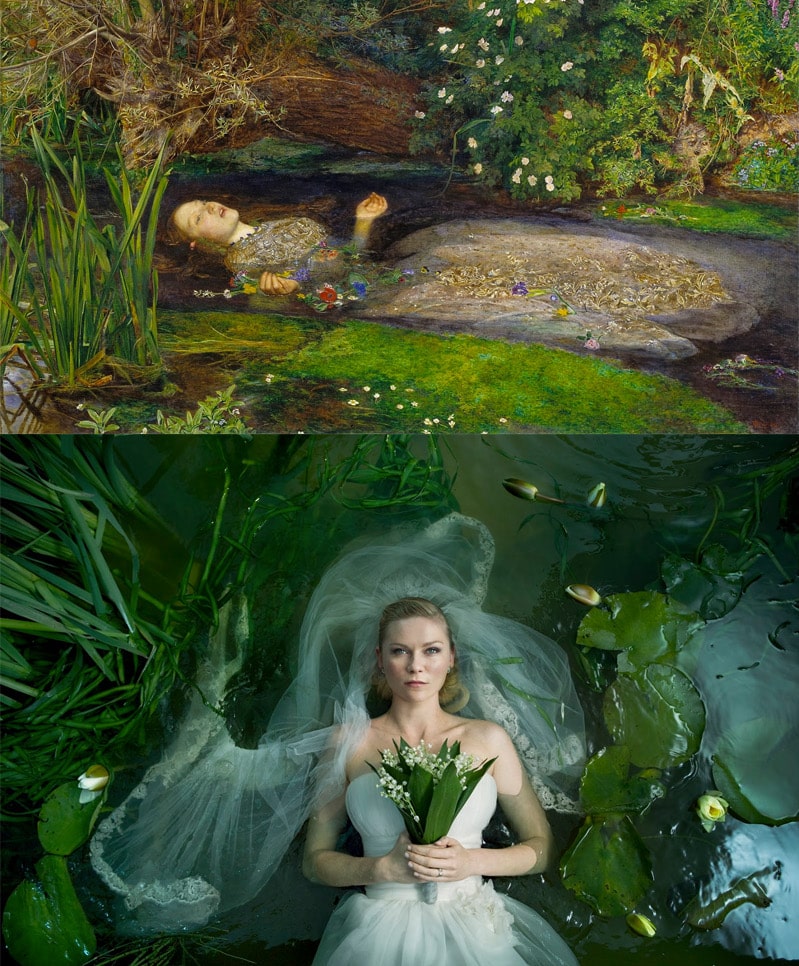
Von Trier never shows us another literal painting like Return of the Hunters because the shots themselves have become the paintings.
This early introduction of the relationship between human emotion and art positions Melancholia as a meta commentary on the artistic process. It’s not just a movie about depression. It’s also about expression.
For example, I’d argue you can view Justine’s wedding to Michael as not just a wedding to Michael but the early stages of an art project. You’re excited about it. Committed to it. You think it’s going to be this wonderful, life changing thing. And then it takes a turn. The process becomes complicated, ugly. What you thought you were going to make doesn’t come to fruition. The work stalls. You quit altogether.
Through this lens, I think Part Two is actually kind of triumphant. Melancholia’s collision with the Earth is a kind of breakthrough, like when a long-gestating idea finally arrives.
This is anecdotal, but it’s not uncommon to start a work from a theoretical place via a superficial concept. Like, “Oh, it would be cool to write this story about a treasure hunter!” You start. Things are going well, but you have to start answering questions. What’s the main character’s motivation? Why are they a treasure hunter? What does finding this treasure mean to them? What are they afraid of? What do they hope for?
To answer for the character, you have to answer for yourself. And that can churn up very real, very complicated emotions. In order to do your best work as an artist, to really do the work, you have to have these self-examination and confront emotions you may have otherwise avoided.
Think about the movie Up. It could have started with the idea that this grumpy old man flies off in a balloon house and learns to have fun again. But you have to eventually establish why he’s a grumpy old man. You start writing about his backstory and him meeting the love of his life and the years they had together and it’s beautiful and lovely. Then you realize his wife has to die. That’s what made him grumpy. Death. Loss. Grief. To honestly depict that, you have to feel those things. Work through your own relationship with death, loss, and grief. Your own bitterness about the past. Your own anger at what you’ll never get back. You come to realize that you’ve also, without even realizing it, become more cynical than you were 5 years ago, 10 years ago, 20. That you, just like the character, need to do some work on your relationship with joy.
Honestly, as I was writing all of that, I started to feel it. Like, I legitimately have tears in my eyes right now because I’m not writing about Up anymore, I’m writing about myself. I did not intend for that to happen. I intended to provide a thoughtful, academic example of how the process of creating something can turn introspective, heavy, and challenging. In doing so, I found myself becoming introspective, heavy, and challenged.
Ultimately, the process is cathartic. Whenever I write an explanation like this, I feel it. When I wrote my first novel, I felt it. When I wrote my second novel, I felt it. When I finish a poem, I feel it. Etc. etc.
When you create something, you inhabit a world. And when you finish that creation, you leave that world. It’s a complicated moment. Because the ending is the culmination of everything. You’re swept up and swept away. You feel a wonder and a rush that’s incredibly unique each and every time. There’s an immensity to concluding. It’s the end. All your time and all your effort. It finally amounted to this tangible thing. You’ve turned time into a sundial. Depression into a killer rogue planet. The glob of feelings you had at watching a movie into a 3,000 word article. It feels like you can shoot electricity from your fingertips.
As amazing as that is, it’s also not. For many reasons. The work is done and you’re back to the normal world as you know it. You’re back to real world responsibilities and commitments. No longer being so deeply connected to the concept or the characters or the emotions can be lonely. And what will come of it all? Will anyone read what you wrote? See what you painted? Hear the music you created?
Once you make the art, can you, will you, should you, turn it into a product? If you don’t, then what was the point? But it’s also infuriating. Distribution is dependent on gatekeepers. A movie needs a distributor. A novel needs a publisher. An album needs a record label. A painting needs a gallery. You can try to self-distribute, but that’s like a tree falling in the woods and no one being around to hear it.
You pour your soul into something, have this tremendous experience, and the end result is often a void. You might as well have done nothing. It’s depressing. Even for someone as acclaimed as von Trier. He still had to, has to, jump through hoops to get funding, distribution, etc.
Maybe I’m reaching too much with this one. There’s no interview quote to back it up. But I feel like it’s one of those situations where I just know. Game recognizes game, as they say.
Over 2000 years ago, in the BC years, during the early days of organized medicine, there existed the idea of “humors”. The famous Hippocrates, the father of medicine as we know it, wrote in On the Nature of Man:
The Ancient Greek for “black bile” was melas kholé. So if someone had too much “black bile” they were “melancholic”. He associated melancholy with sadness, fear, depression, suffering. etc. Over the centuries, as medical science refined, humors lost their practical merit but gained in poetic appeal. It’s similar to how the practice of alchemy was really popular for about 600 years, was proven to be completely absurd, but remains, as of 2025, an alluring mainstay of fantasy stories and conspiracy theories.
Around the 1600s, melancholy became an aesthetic, a key theme in poetry, fiction, theater, etc. Shakespeare’s Hamlet? Melancholy. Dracula? Melancholy. Gothic art? Melancholy. Romanticism? Melancholy. One of the most famous poets of all time, John Keats, wrote a poem called “Ode to Melancholy.” One of the most famous philosophers of all time, Friedrich Nietzsche, wrote a poem called “To Melancholy”.
As of the 21st century, no one uses the word “melancholy” in casual conversation. “How was my weekend? Man, so melancholic.” It’s archaic, like someone saying “betwixt” or “yonder” or “forsooth”.
But just because words like that don’t work in day-to-day dialogue doesn’t mean they’re dead. Nocturne is a word, like melancholy, that is alive and well in the arts. Here are some artists who have used “nocturne” in a song title:
Lars von Trier would absolutely be aware of context and subtext around a word like melancholy. Given the other references to art and artistry that appear throughout Melancholia, I just can’t help but think the relationship between the depressive mode and the artistic process was something he had in mind while making the film. And it’s something you see him continue to explore in films like The House that Jack Built.


Film Colossus Supporters get access to the Frameshift and Active Viewing courses, an ad-free site, the Watch More Films newsletter, and the ability to request movies for analysis. Your support also directly keeps Film Colossus alive while I try to scale it into something sustainable, as it's just me, Chris, who does everything here.
Or create a free account. You gain access to the Active Viewing course and Watch More Films.
Join the Film Colossus community, get the newsletter, and unlock member features as they're added.