Newsletter Subscribe
Enter your email address below and subscribe to our newsletter
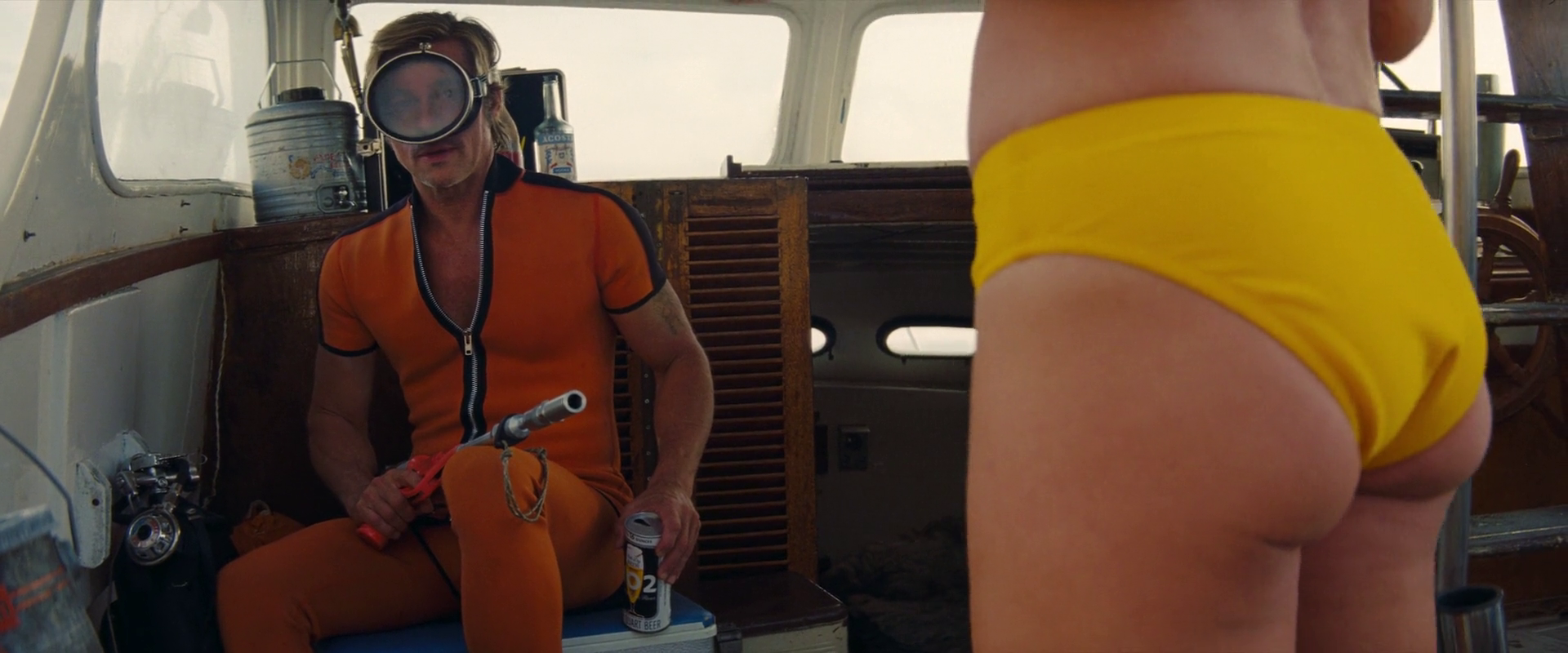
Yes, Cliff Booth (Brad Pitt) took his wife’s life in Once Upon a Time in Hollywood. While the 2019 movie leaves the details of Billie Booth’s (Rebecca Gayheart) demise ambiguous, Chapter 10 of Quentin Tarantino’s 2021 novel confirms that Cliff shot her with a shark gun aboard their boat. However, did Cliff do it…on purpose? This remains a more complicated question.
The details surrounding the “accident” reveal some interesting aspects of his character and provide important context ahead of David Fincher’s The Further Mis-Adventures of Cliff Booth. In that novelization, Tarantino devotes an entire chapter to Billie’s death, detailing Cliff’s immediate remorse, his desperate attempts to save her life, and how he was able to avoid going to jail.
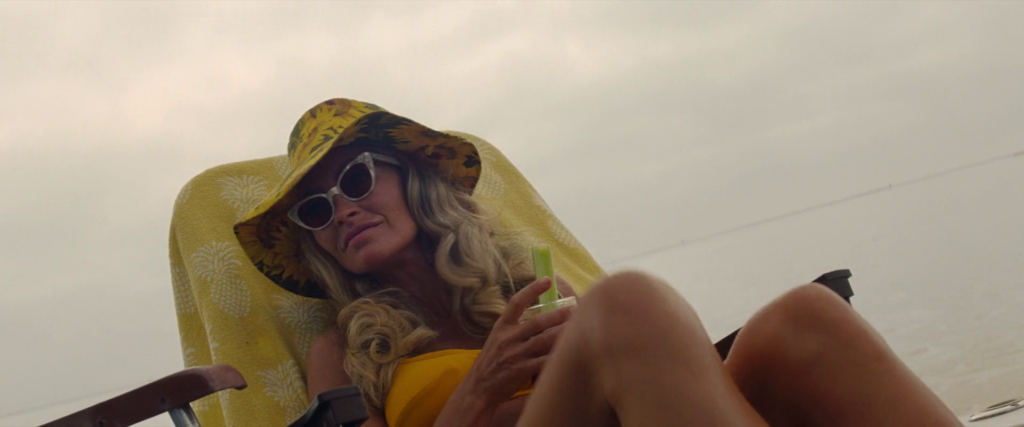
We first learn about Cliff’s troubled past during a conversation between Rick Dalton (Leonardo DiCaprio) and Randy Miller (Kurt Russell). Rick is attempting to get his longtime stunt double a job on the set of The Green Hornet, but Randy, the show’s stunt coordinator, is reluctant to hire Cliff because he and his wife, Janet (Zoë Bell), believe Cliff murdered Billie.
We then get a brief flashback to that fateful day. Cliff drinks a beer aboard a boat while Billie berates her husband and complains about their marriage. A shark gun pointed in Billie’s direction rests across Cliff’s lap. As the boat rocks in the water, Tarantino cuts away from the scene without showing whether Cliff fires the weapon.
This is where the mystery rests in the film: Cliff either intentionally shot Billie, or he accidentally fired the harpoon gun when the boat rocked. Tarantino never returns to the scene, leaving only the rumors that circulate Hollywood.
In June 2021, Tarantino published a novel of the same name that goes further into Cliff’s backstory. The chapter we’re most interested in is Chapter 10, titled “Misadventure,” which opens with a definitive statement:
The minute Cliff shot his wife with the shark gun, he knew it was a bad idea.
But wait: some ambiguity will soon be introduced—although it’s important to note that the narration of this very short chapter appears to adopt Cliff’s perspective. The chapter continues:
It wasn’t like he plotted her murder. It was practically the accident he claimed it was. When his finger pulled the trigger, was it a conscious decision?
Not exactly.
One, it was a hair trigger. Two, it was more instinct than a decision. Three, was it a pull…or was it closer to a twitch? Four, it wasn’t like anybody was gonna miss Billie Booth.
What you’ll notice here is how dramatically the fourth explanation differs from the first three. While the first three elaborate on whether Cliff was conscious of his actions, the fourth concerns the perceived value of Billie’s life. You could argue that his explanation for the shooting becomes a justification for it.
…or you could argue the shooting was more instinctive than intentional.
…or you could argue that Cliff chose to believe this to rid himself of guilt.
Ultimately, the novel characterizes Billie’s death as a murder. Whether Cliff consciously intended to end her life, however, doesn’t receive an outright answer from an omniscient narrator.
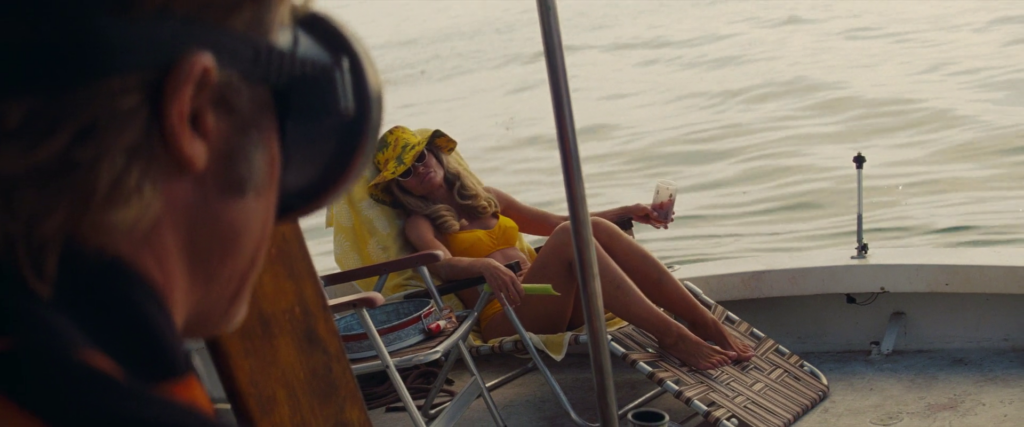
This is where Tarantino adds a bit of humanity to Cliff that could prove important in The Further Mis-Adventures of Cliff Booth. It appears that Cliff indeed—almost immediately, in fact—regrets shooting Billie. As soon as the gun is fired, Tarantino writes that “years of ill will and resentment evaporated in an instant.”
Every 2026 movie I’ve seen, ranked. Became a dad, so catching up. Updated: October 17
For the next seven hours, Cliff desperately tries to hold Billie’s severely injured body together, afraid to leave and contact the Coast Guard because she might fade away. Here, Tarantino observes:
If he hadn’t shot her in the first place, the effort would have been heroic.
To keep Billie from fading away, Cliff encourages her to talk about their life, the good times. The couple recounts their love story. Tarantino writes:
As the Coast Guard ship finally approached, somewhere around hour six, the husband and wife were communicating in baby talk like two helplessly-in-love fourteen-year-olds away at summer camp. Each trying to outdo the other in a game of remembering the smallest detail of their first meeting and first date.
Cliff repeatedly assures Billie that she’s going to survive, and even convinces himself of the possibility. But as the Coast Guard transfers Billie to the dock, she loses her battle.
So while Cliff’s remorse doesn’t establish whether he intended to shoot Billie, it does establish that his hostility toward his wife doesn’t tell the whole story, that he still had feelings for her buried deep down.
Despite his remorse, Cliff never seriously considers turning himself in and accepting criminal punishment for Billie’s death. Tarantino writes:
Cliff felt real bad about what he did to Billie. But as much regret and remorse as he felt, it never occurred to him not to try to get away with murder.
This portion of Cliff’s backstory provides some important context for the new film. Instead of going to prison, he believes he can adequately punish himself for his actions. He even goes as far as to rationalize Billie’s death, in a rather strange moment, by weighing her life against the lives of the American soldiers he saved during World War II.
The authorities, unlike Cliff’s colleagues in Hollywood, aren’t familiar with his violent tendencies. Elsewhere in the novel, Tarantino reveals that Cliff has committed several other murders, including those of two men in Cleveland and his fellow stuntman Buster.
Earlier in the chapter, Tarantino also establishes that Cliff admitted to the authorities that Billie had been drinking at the time of the supposed accident. But still, his account of what happened seems plausible to the authorities: that Billie’s death was the accidental result of mishandling diving equipment. Because nobody else was aboard the boat, investigators cannot disprove his story, and Billie’s death is officially classified as misadventure.
Taking place in 1977, eight years after the events of Once Upon a Time in Hollywood, David Fincher’s The Further Mis-Adventures of Cliff Booth follows Cliff as he works as a Hollywood fixer.
Interestingly, we know that one of Cliff’s assignments involves helping an actor whose wife has been threatened. Given what Tarantino revealed about Cliff’s marriage in the novel, this provides an inherent irony that, I’m sure, will further humanize his character.
However, nothing in the early coverage of the sequel indicates the circumstances surrounding Billie’s death will be revisited in substantial detail. As far as we know right now, Tarantino’s novel remains the most comprehensive account of what happened on that boat.
Now let’s think about Cliff’s character ahead of his new standalone film. Thinking back to Once Upon a Time in Hollywood, it’s notable how easily we forget that he might have murdered his wife. It might be because he rarely outwardly acknowledges the emotional toll of Billie’s death.
Compare him with Rick, who’s constantly worrying about his career and how other people perceive him. Cliff, conversely, keeps his feelings to himself and appears remarkably comfortable with who he is. He trusts his instincts, rarely hesitates to act, and doesn’t spend much time second-guessing his decisions—the sort of qualities that save lives at the end of Once Upon a Time in Hollywood.
But…these are also the qualities that make Cliff dangerous. So perhaps the most telling insight from Tarantino’s novel isn’t that Cliff took his wife’s life—it’s that he’s capable of reconciling that awful act with his perception of himself as a decent person. He might carry the guilt and remorse of taking Billie away from this world, but he also believes he’s entitled to determine his own punishment, and takes it a step further by rationalizing Billie’s death through his military heroism.
The ambiguity surrounding Cliff’s intentions makes it easier for us to do exactly what Cliff does throughout the novel: justify his behavior. Now that may be challenged further in The Further Mis-Adventures of Cliff Booth.


Film Colossus Supporters get access to the Frameshift and Active Viewing courses, an ad-free site, the Watch More Films newsletter, and the ability to request movies for analysis. Your support also directly keeps Film Colossus alive while I try to scale it into something sustainable, as it's just me, Chris, who does everything here.
Or create a free account. You gain access to the Active Viewing course and Watch More Films.
Join the Film Colossus community, get the newsletter, and unlock member features as they're added.