Newsletter Subscribe
Enter your email address below and subscribe to our newsletter
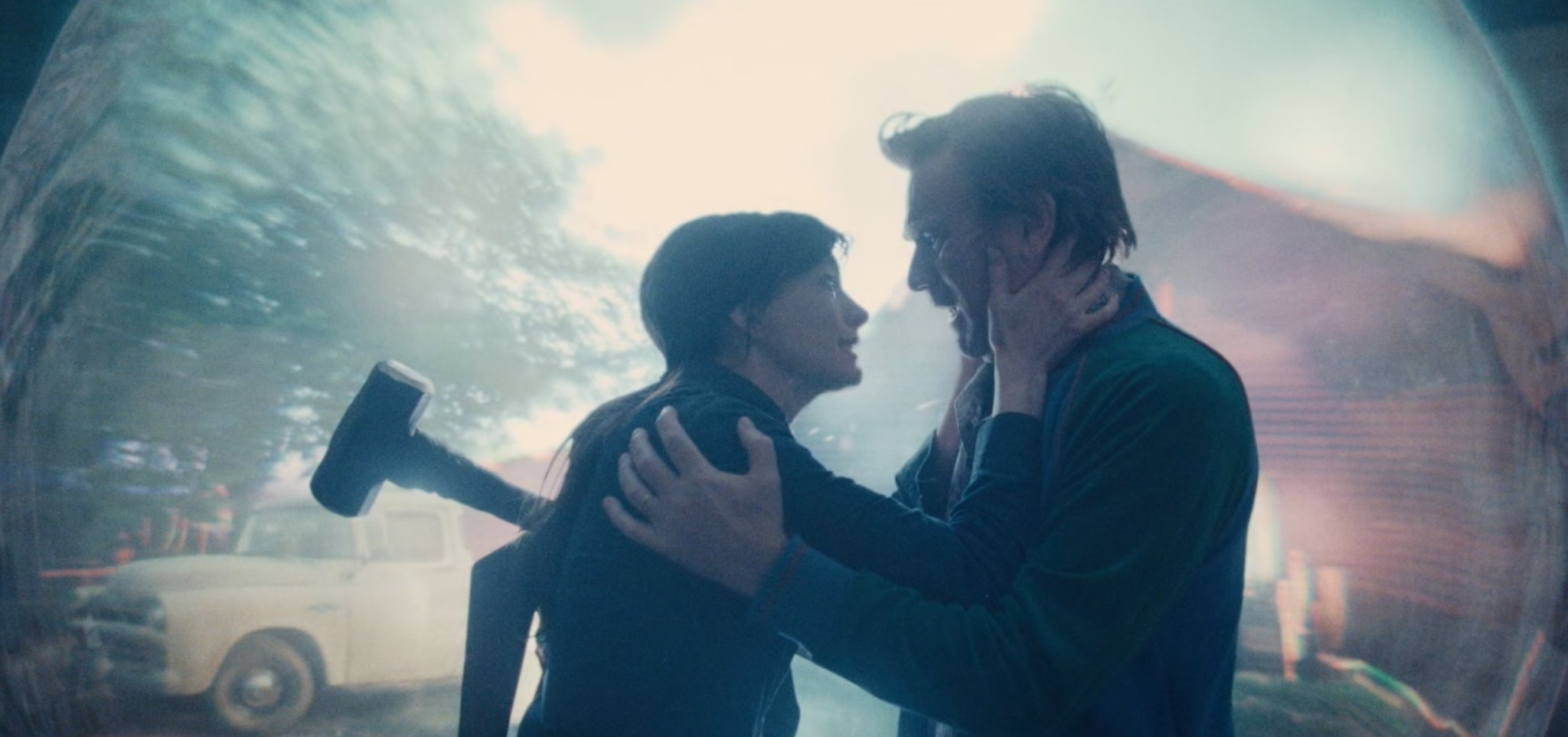
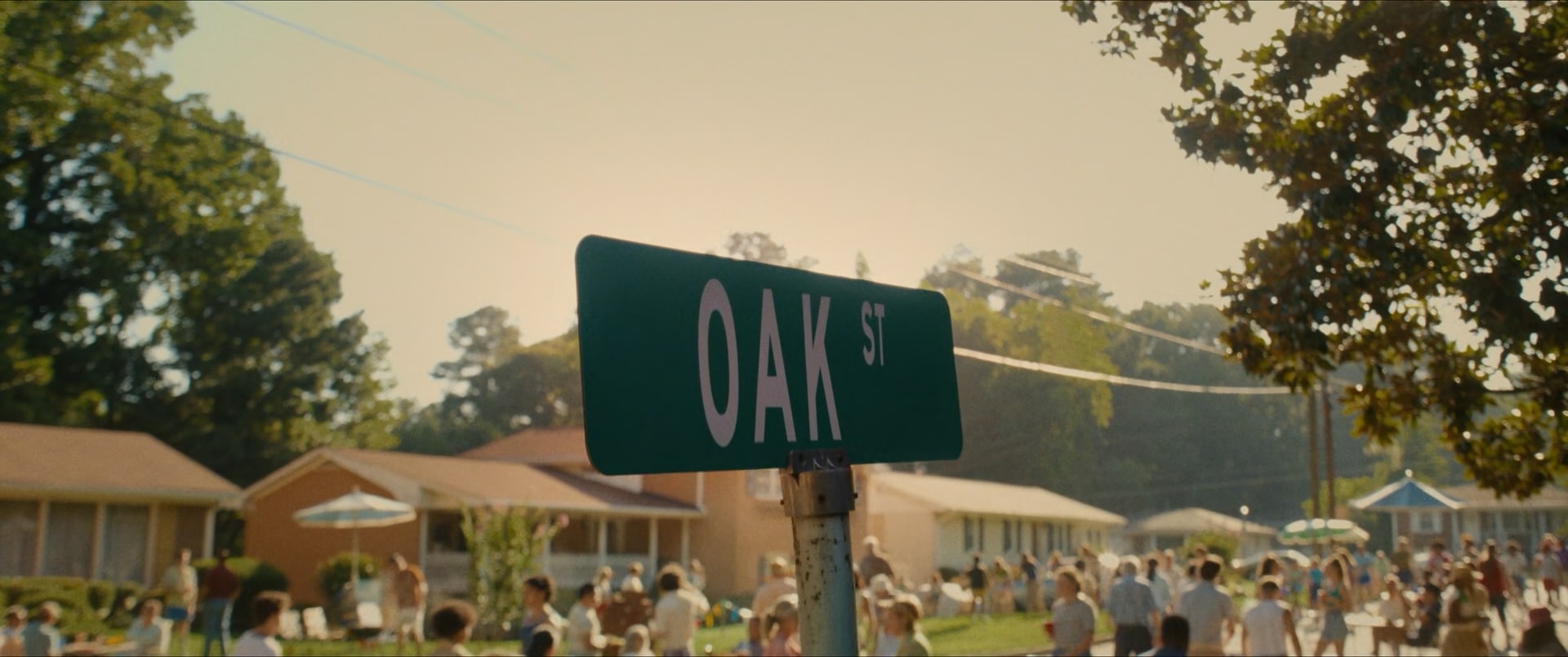
The End of Oak Street takes place in 1982, in (the fictional town of) Flowervale, Michigan.
There are three reasons we’re in 1982.
Narratively, setting the film in the 80s simplifies the characters, their drama, and what happens when the family returns from prehistoric times. Cell phones, social media, and the internet would have made the ending a lot more complicated.
Conceptually, Oak Street is a throwback to the Spielberg/Amblin style of movies from that decade. We’re talking Gremlins, The Goonies, Back to the Future, and Who Framed Roger Rabbit. They include a strange mix of innocence, fantasy, and anxiety that are ultimately crowd-pleasing.
And then thematically, Oak Street is a commentary on perception and the idea that things aren’t usually as idealized as we remember them. For example, a lot of people, especially of a certain political ideology, have nostalgia for the 1980s and what they consider “traditional” American life in the suburbs. But life back then still had problems. You just didn’t know as much about your friends and neighbors as we do today. If you want to read more about this, check out my thematic breakdown.
Okay, so, Oak Street doesn’t have any dialogue or anything about how many millions of years the characters went back in time or what time period they’re in.
But! I found an interview with two of the film’s Visual Effects Supervisors. Both work at Industrial Light & Magic (ILM). In the interview, one says, “There is a big hero shot at the end of that sequence where you get the reverse of [the] Platt family in the car and get to see what they’re seeing… You see in the distance this is all Jurassic period world.”
Maybe they used “Jurassic” in a generic way, referring to the general Mesozoic Era (the larger name for the Triassic, Jurassic, and Cretaceous eras when dinosaurs roamed the Earth). As opposed to the specific Jurassic Period from 201.4 to 143.1 million years ago. But I’m going to assume the team doing the visual effects made a distinct choice in order to better ground their work. So “Jurassic Period” is the answer I’m locking in.
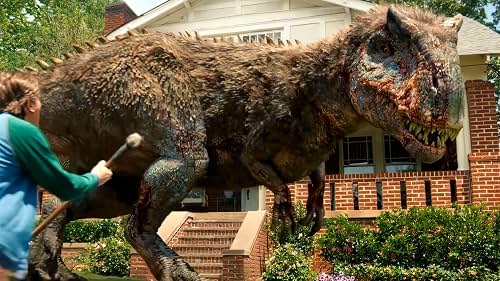
Interestingly, the dinosaurs and plants aren’t all from the Jurassic Period. The Allosaurus that eats Greg was from the Jurassic era, but the Spinosaurus that chases Greg and Denise was from the Cretaceous Period. And The Coelophysis, the bird-like thing that resembled Jurassic Park’s Velociraptor, that was from the Triassic period. The Titanoboa that freaks everyone out after Greg’s demise, is from after dinosaurs went extinct.
Every 2026 movie I’ve seen, ranked. Became a dad, so catching up. Updated: October 17
I saw some chatter online from dinosaur people who thought the film was just being lazy. But it was actually a purposeful choice.
I didn’t get the press kit for The End of Oak Street, but SYFY did and noted that, “Per the production notes, Mitchell enhanced the mystery by including dinosaur species from different eras, ‘reinforcing the idea that creatures from across millions of years of Earth’s history have been pulled into the same neighborhood.’”
The implication there is that the wormholes are appearing in different years and dropping random living things into that Jurassic Period. From 1982, it’s Oak Street. From 50 million years ago, it’s the Titanoboa. Maybe if someone could survive for long enough there would eventually be a city block from 8,000 years in the future?
They return to 1982, just 20 minutes before the big time-space event that caused Oak Street to go back in time.
This opens up a whole conversation about timelines. Because when the Platts return to the future, they create an entirely new timeline by saving the people they save. In the original timeline, the neighborhood vanishes and all those people essentially cease to exist. But now the Platt family continues on, you have the two Jeanettes, etc.
There’s also a whole logic breaking thing in the sense that if Oak Street went back millions of years, then it’s now part of the history of the world leading up to 1982. Except it’s not because the land that replaced it is the land from millions of years ago.
Imagine you had a time machine and an unripe apple you just bought. If you went back in time three days, dropped the apple off, then returned to the present, the apple should be where you left it, except three days older and ready to eat.
In Oak Street, it doesn’t work like that. It’s like in order to send the apple to the past, you have to swap your refrigerator from today with the one from three days ago. You put your apple in the fridge, the swap happens. You look around the room for your apple, except it’s not there. The fridge is your fridge from three days ago, before you brought the apple. But if the fridge with the apple went into the past, and no one did anything to it, shouldn’t it be somewhere in the present? How could the past fridge that came into the future occupy the same space as the present fridge that went to the past?
It hurts my brain. The good news is that the movie is ultimately representative, not literal. So figuring out the mechanics of time travel aren’t as important as what the time travel means for the characters.
It’s two years later, so 1984. The Greg that’s with the family isn’t technically the Greg who went to the past with them. It’s the Greg who would have gone into the past with them, except Denise saved him by having him deliver a pizza up the hill.
We also see both versions of Jeannette at the family BBQ. Jeannette is the only one in the world with a living duplicate.
And obviously people don’t think Denise and her kids are crazy because the prehistoric area and dinosaurs were something the world could see for themselves. The TV report makes it clear that this wasn’t some quick thing that no one outside of Flowervale would ever believe. There’s media coverage, video evidence of the dinosaurs, and the government had to do a whole operation to contain the area.


Film Colossus Supporters get access to the Frameshift and Active Viewing courses, an ad-free site, the Watch More Films newsletter, and the ability to request movies for analysis. Your support also directly keeps Film Colossus alive while I try to scale it into something sustainable, as it's just me, Chris, who does everything here.
Or create a free account. You gain access to the Active Viewing course and Watch More Films.
Join the Film Colossus community, get the newsletter, and unlock member features as they're added.