Newsletter Subscribe
Enter your email address below and subscribe to our newsletter
Welcome to the Cinephile’s Guide to Film Noir. Here, you will find all the essential details about film noir for any budding cinephile who’s looking for more information on the film movement.
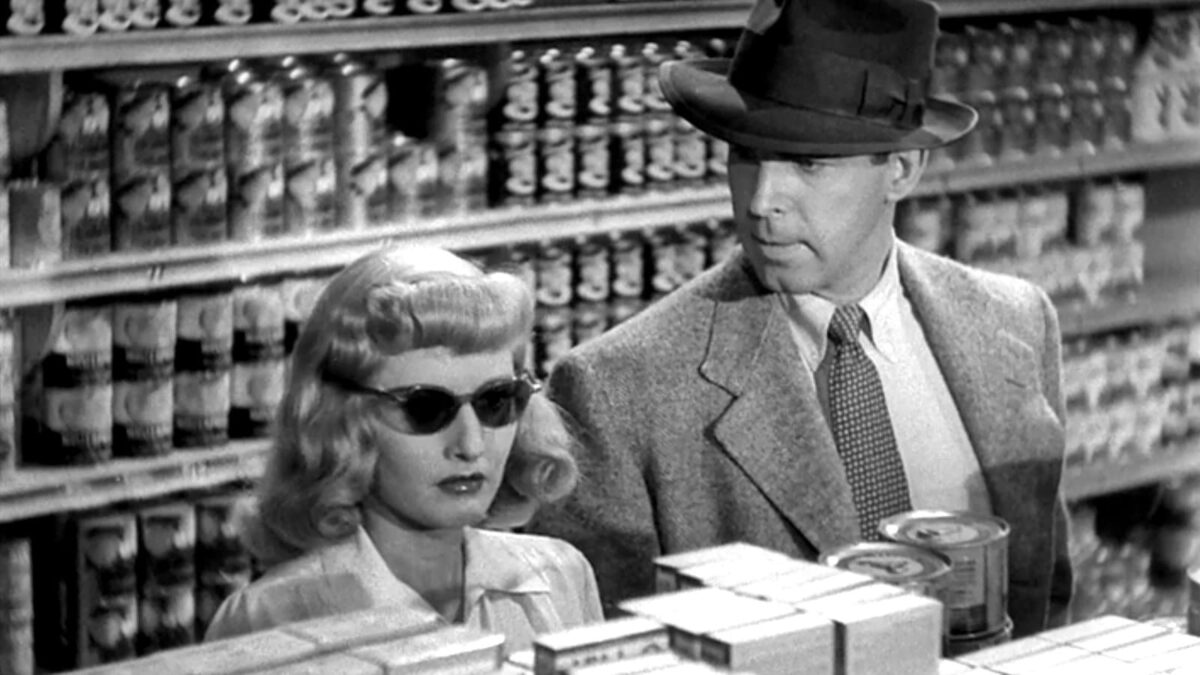
French for “black film,” film noir is a very specific genre/style of filmmaking that occurred during the 1940s and 1950s. While many films have been influenced by this style post-1960, this specific period of time encompasses what we now refer to as the classical period of film noir. These particular films reflect the post-World War II anxieties that permeated those years, such as urbanization, nervousness about the economy, and shifting gender roles. There’s a clear delineation between the social disillusionment portrayed in film noir and the optimistic narratives that pervade the silent and early sound pictures. These films focus on corruption, moral decay, and the fragility of the American Dream.
It’s impossible to encompass every stylistic element of every film noir in a single article. But the following features reflect the general style of the classical film noir period as we know it today. Your average film noir would look, sound, and feel like the following:
Film noirs had two main influences. The first is German Expressionism, which used high-contrast lighting, deep shadows, and distorted camera angles to reflect a very specific tone and dark atmosphere. These filmmakers, people like Fritz Lang and Robert Wiene who were mostly active in Germany during the 1910s and 1920s, were reacting to political upheaval of their own country. The second influence is hard-boiled crime fiction. These stories, popularized by writers like Raymond Chandler, Dashiell Hammett, and James M. Cain, used the typical sorts of morally ambiguous plots and archetypal characters that became synonymous with film noir.
Every 2026 movie I’ve seen, ranked. Became a dad, so catching up. Updated: October 17
The film noir movement had its biggest impact on crime movies and thrillers. The neo-noir movement, which includes movies like Chinatown (1974), Blade Runner (1982), and Drive (2011), was a continuation of film noir. While these movies were no longer reacting to the specific anxieties of the 1940s and 1950s, they embraced the mood and tone of their parent genre through stories about crime, social upheaval, and existential discomfort. Back in the days of classical film noir, the movement’s elements would appear in Japanese yakuza films, French policiers, and Italian giallo thrillers. In films throughout history post-1960, the visual elements of film noir, from chiaroscuro lighting to the presentation of urban landscapes, have been utilized and referenced quite often.

Film Colossus Supporters get access to the Frameshift and Active Viewing courses, an ad-free site, the Watch More Films newsletter, and the ability to request movies for analysis. Your support also directly keeps Film Colossus alive while I try to scale it into something sustainable, as it's just me, Chris, who does everything here.
Or create a free account. You gain access to the Active Viewing course and Watch More Films.
Join the Film Colossus community, get the newsletter, and unlock member features as they're added.