Newsletter Subscribe
Enter your email address below and subscribe to our newsletter
What happens to Celeste is buried in the credits. What we see is that Cyrus offers her a deal to stay quiet and relocate. Which seems pretty nice after what Cyrus offered the guy at the gas station (doom). Celeste says she’s ready for a move. Then the movie ends.
So if that’s all you see, it really does seem like Celeste will probably move to wherever her ex is moving to, allowing her to stay close to her daughter, Daisy. Happy ending, all things considered, right?
But the credit sequence actually has a bunch of additional contextual material that frames the flow of names. Maps, reports. Eventually “Missing person” posters for both Celeste and Daisy. Then a map that implies the two are stashed in Alaska.
Maybe that’s going great for them. Alaska does have a lot of natural beauty. But they may also be living like prisoners. Unable to go anywhere, have contact with anyone, etc. Is that really the best life for Daisy? Is Celeste satisfied with that?
And with Celeste having defeated the super soldiers, you can imagine that Hanna Kammler probably wants to use Celeste in some way for super soldiers 2.0.
As seemingly positive as the ending was, there is a much darker undertone that squashes the positivity. If you simplify it to “mom and daughter get to stay together” then, sure, it’s a good ending. But Celeste even admitted her ex is a good father. Can we really say it’s positive when Daisy may never see her father again?
I do like the idea of information being tucked away like this. It turns the movie into a bit of a game for people who want to go the extra mile. There will be some viewers who think “Oh, it’s a happy ending.” And others who discover Celeste’s fate might be more tragic than it seemed.
Okay, onto the larger analysis.
Onslaught opens with Adria Arjona’s Celeste out in the desert, shooting pumpkins. She’s accurate and proficient. Until she hears the whirring of a distant military helicopter. Then her hand starts to shake and she has PTSD-laced flashbacks to her time as a soldier. She finally calms herself, steadies her hand, and continues firing.
Starting with a grounded example of PTSD allows Onslaught to use the super soldiers as the physical manifestation of her trauma, meaning that Celeste’s external battle with them becomes a representation of her internal struggle with the unresolved emotions that have limited her life since returning home.
Celeste’s conversation with her ex-husband is a twist on the traditional “call to action” where the hero is given an opportunity to do something but rejects the call. In this case, it’s to move somewhere new and restart her life. The ex-husband says Celeste had initially said moving to the trailer park was a short term move but it’s been 4-5 years now. Her response? “I feel good here. It’s safe.”
Celeste feels safe in the middle of the desert because it’s away from everyone and everything. You can read this as someone with PTSD who is purposefully limiting their life because they don’t feel equipped to deal with the largeness of the world (Wingard talks about this). It’s similar to the film Gravity, where Sandra Bullock’s character being lost in space is symbolic of her grief and the distance grief has created between her and the world. Bullock’s battle to return to Earth is a visual representation of her internal struggle to work through her depression. It’s the same in Onslaught.
That’s why Celeste’s final line is “I think mommy’s ready for a move.”
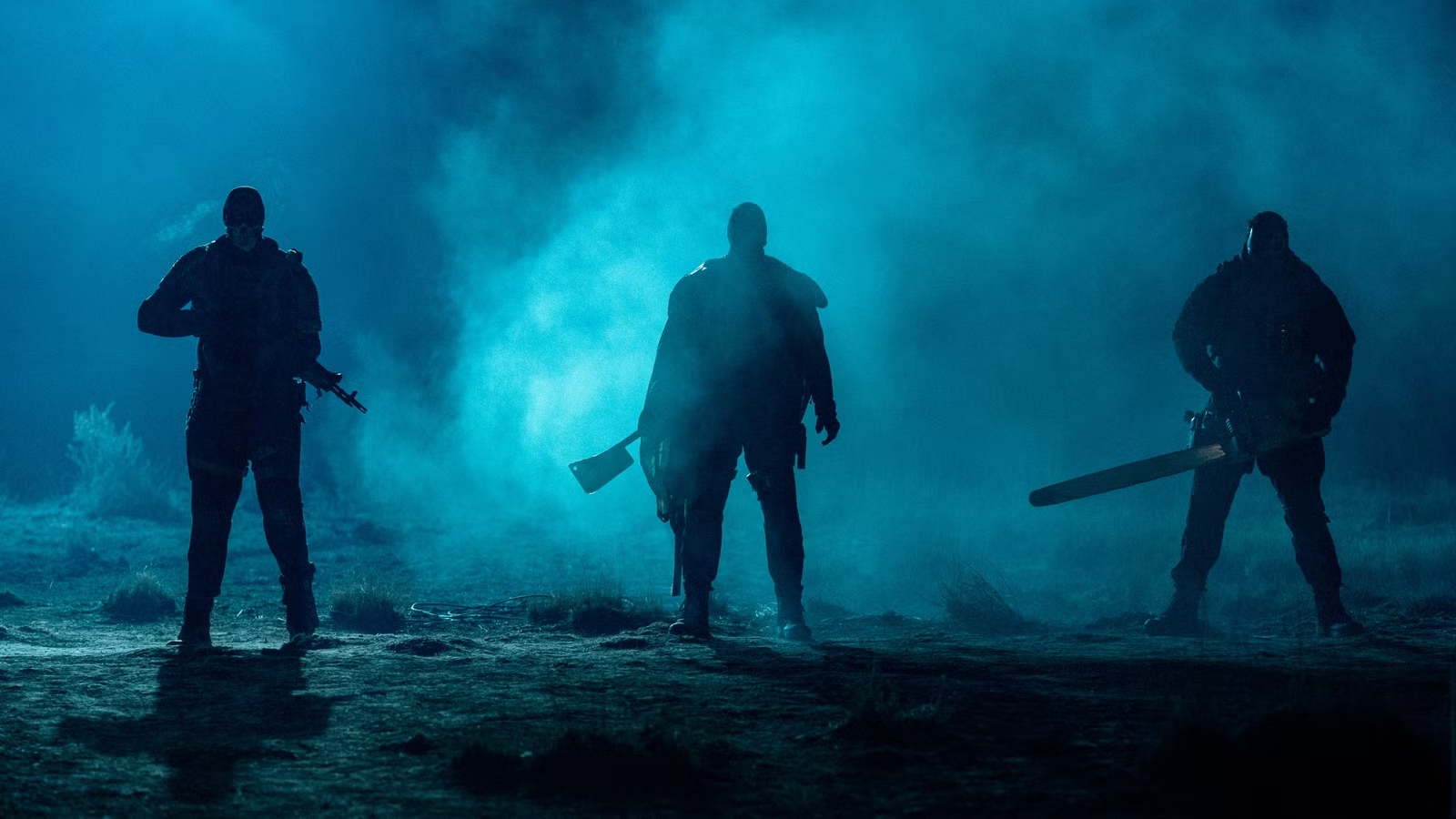
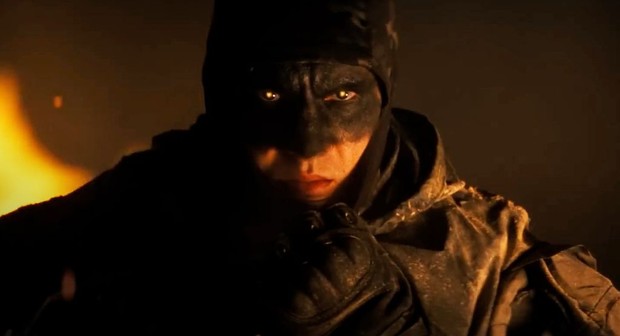
That’s also why one of the super soldiers, Butcher, is someone from Celeste’s time in the army, someone who was present at the battle that haunts Celeste to this day. If it was just a random super soldier, the metaphor still works but is less clear. You solidify the connection to Celeste’s PTSD by having it be the very guy Celeste boxed and whose death is part of her unwanted visions. He comes to represent everything from that day. When she defeats him, she gains relief. Which is why she’s finally ready for a move, ready to resume her life rather than hiding away.
(I wrote more about themes of PTSD in my explanations of Godzilla Minus One, In a Violent Nature, and Civil War)
Every 2026 movie I’ve seen, ranked. Became a dad, so catching up. Updated: October 17

I found myself really fascinated by how Onslaught had this motif of domestic military baggage. Like, Celeste fought overseas but everything she experienced didn’t stay there. She returned to the States with an injury and trauma. Butcher was an overseas casualty but the US brought him back and turned him into a weapon. Same with the other super soldiers, Cockroach and Crybaby.
Reginald Veljohnson’s character, Josiah, served in the Vietnam War and lost his leg. Even though he lived, he himself is a physical reminder of what was lost in that campaign.
And then we have Dr. Hans Kammler. Cyrus explains that the European Union wanted to arrest Kammler for violations against humanity because of his experiments. This was a dangerous man doing dangerous things. And the American government not only gave him sanctuary within the country but funded his abominable research.
The unifying theme I see there is that Onslaught’s American government makes choices that hurt its citizens because they view humans in terms of their usefulness to the state and not as worthwhile individuals. In case there was any confusion about this, we find out the super soldier program wasn’t about creating soldiers to fight external enemies but for domestic population control. Literally soldiers that would use lethal force on their fellow countrymen. Kammler’s terrifying wife, Hanna, says this explicitly: “We set out to create a military faction without conscience, to be deployed against the domestic populace.”
I think it’s probably a bit reductive to view Onslaught as a simple critique of the military or only about the plight of veterans. There’s a larger commentary about the way the government dehumanizes individuals. Those in the military that it uses then fails to properly support, yes, but also the civilian population. That’s why we have the slaughter at the gas station. Everyone there was just living their lives and this government project gone wrong shows up and wipes them all out. And the government’s response is to cover it up, by any means.
That even comes through with the Cyrus character. He is off-duty, trying to have what seemed like a very interesting night at a BDSM joint, when the government representatives show up and demand he get to work.
That does it for the major interpretation.

Kind of. It’s not the conventional post-credits scene but at the start of the credits information keeps popping up along the side. Photos, newspapers, documents and the like. Each piece adds context to something we saw in the film. For example, one newspaper is about the FBI raiding the club that Cyrus was at with all the masked women. The big information is that Celeste and Daisy are officially missing and seemingly stashed up in Alaska.
Celeste tells the story about how her platoon was stationed near another one and the two decided to have an amateur boxing match. This big guy from the other platoon challenged Celeste. So she said yes and the two squared off. Once the match started, she didn’t actually box him but gave him a swift kick between the legs. They laughed about it.
Later, in the midst of combat, Celeste saw that guy mortally wounded. His death has stuck with her for a long time. That might be why she still had a picture of him in her trailer. Instead of a burial, it seems the government brought that guy’s body back to the states for Dr. Kammler to experiment on. Brought back to life as a super soldier, he became the Butcher.
There’s that one moment where he recognizes himself in the photo with Celeste.
Hanna Kammler: War is needed to keep the populace obeisant. But prolonged exposure breaks the mind. My husband’s great dream, and that of his ancestors, was to resolve that conflict, to create an ideal combatant. We set out to create a military faction without conscience, to be deployed against the domestic populace.
So the point wasn’t to deploy these soldiers against external enemies but to use them for civilian control. The implication is quite nasty. You could imagine a corrupt government using the super soldiers to silence political opponents and quell any countermovements.
Kammler believes humans are worse as soldiers because they have emotions and that replacing them with something soulless will bring better results. Celeste is a bit broken due to her exposure to war. The Butcher is Kammler’s ideal brought to life. But who wins? The human.
Honestly, there’s part of me that wants to imagine Onslaught is an anti-AI film. The super soldiers are AI and Celeste and Josiah represent the everyday people who use experience and emotion to win the day. Do not take that as a primary reading! I just think it’s a fun conversation.
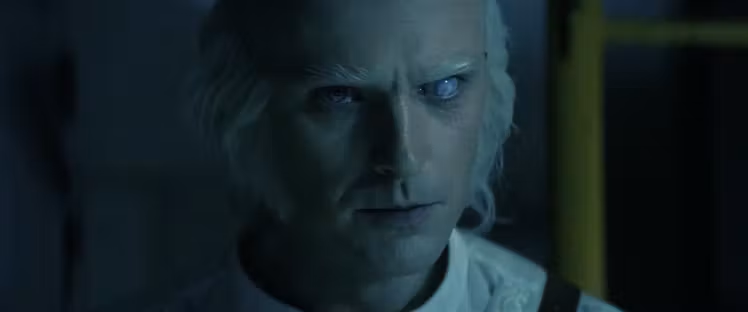
I was surprised when Hanna became the big bad and was telling Cyrus what to do. It seemed like Hans Kammler was important given his work but not necessarily politically powerful. Yet as soon as he’s gone, Hanna takes control and is politically powerful. I’d love to give you an answer to this but the film doesn’t really elaborate. Seems like something that will/would come up in a sequel.
Adam Wingard and Simon Barrett teamed-up for both films. Both films take place in Moriarty, New Mexico. And The Guest’s David was a soldier who the government programmed. So all the ingredients are there.
Wingard himself told Dread Central: I look at this as a cap on the trilogy between The Guest and You’re Next. It’s not like a direct sequel, in the sense that it’s a continuation of those characters, but it takes place in the same town as The Guest. The idea is that the secret programs we’re seeing going on here are other little aspects of the same thing David’s character came from in The Guest. I mean, you could actually call this technically a sequel to The Guest. It’s in the same universe.”
Dan Stevens played David in The Guest. He does not reprise his role here but transforms himself to play Hans Kammler. Maybe David was an early version of Kammler’s experiment and Butcher, Cockroach, and Crybaby are the next evolution?


Film Colossus Supporters get access to the Frameshift and Active Viewing courses, an ad-free site, the Watch More Films newsletter, and the ability to request movies for analysis. Your support also directly keeps Film Colossus alive while I try to scale it into something sustainable, as it's just me, Chris, who does everything here.
Or create a free account. You gain access to the Active Viewing course and Watch More Films.
Join the Film Colossus community, get the newsletter, and unlock member features as they're added.