
Newsletter Subscribe
Enter your email address below and subscribe to our newsletter
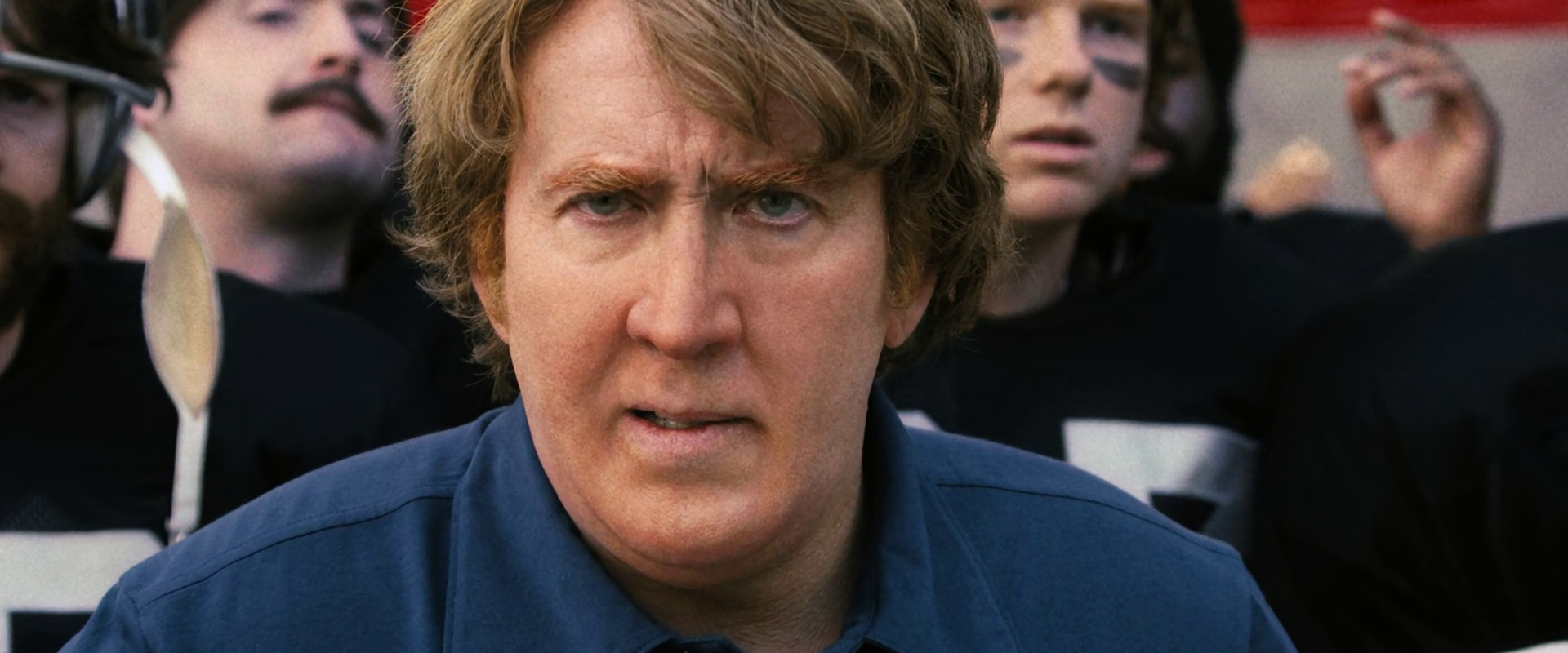
Madden (2026), which stars Nicolas Cage as John Madden and Christian Bale as Al Davis, is based on a true story. But, as the opening moments tell you, the movie is largely fictionalized: “Not all of this happened but most of it is true.”

All movies are “fiction,” of course, because even the most accurate of historical pictures has chosen a certain point of view that inevitably serves to shape how you view the material. And, as we’ll soon see, Madden takes many liberties with its story and how it portrays real-life people.
The core truth is there: Madden coached the Oakland Raiders to a Super Bowl victory, retired at 42, became a legendary broadcaster, and helped create the Madden NFL video game franchise. After that, the conversation becomes more interesting, as the movie changes important details about his relationship with Al Davis, Darryl Stingley’s injury, his retirement, his marriage, and the video game’s creation.
Here’s what actually happened.
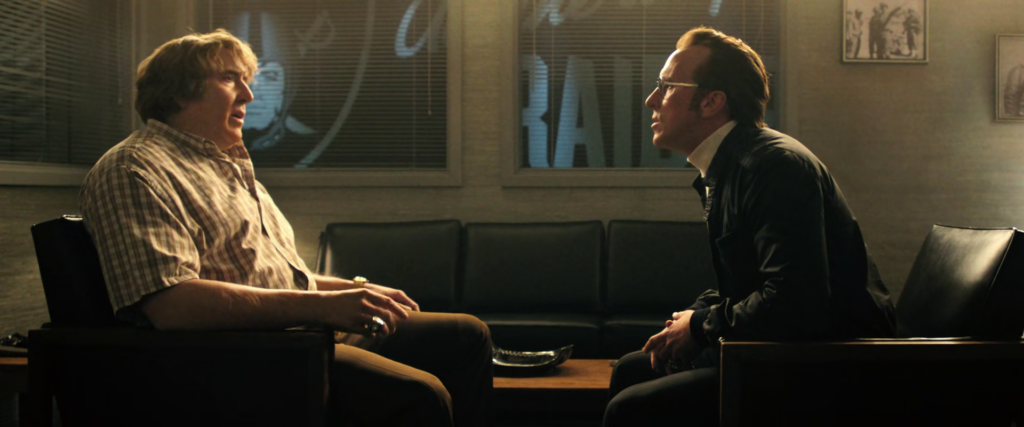
Based on everything we seem to know about Madden and Al Davis, based on first-hand accounts from people who knew them, the conflict depicted in the film between the two was greatly overblown. In reality, the men maintained a close friendship for decades, with, as you see in the movie, Madden speaking on Davis’ behalf during his Hall of Fame induction ceremony.
Davis hired Madden as head coach in 1969. After that, Madden led the Raiders to a 103-32-7 regular-season record—that’s a .759 regular-season winning percentage, a remarkable achievement for a coach with more than 100 victories. His biggest moment came with a 32-14 victory over the Minnesota Vikings in Super Bowl XI in 1977.
The friendship between Madden and Davis continued after the coach retired. Madden introduced Davis at his 1992 Pro Football Hall of Fame induction, and Davis returned the honor in 2006. In his Hall of Fame speech, Madden thanked Davis for supporting him throughout his career.
Al’s son, Mark Davis, has publicly criticized Madden for misrepresenting their relationship and portraying his father as unnecessarily cruel. He did not mince words about how the film treated his father:
“As far as representations of my dad, yeah, that hurts, and I did the best I could to protect him,” Davis said. “It’s absolutely a crime that they’re able to treat people that have passed away and characterize them in ways that are unfair, and there’s nobody around to protect their legacies. It’s just unfair. I don’t know what the purpose of the movie was to be real honest.”
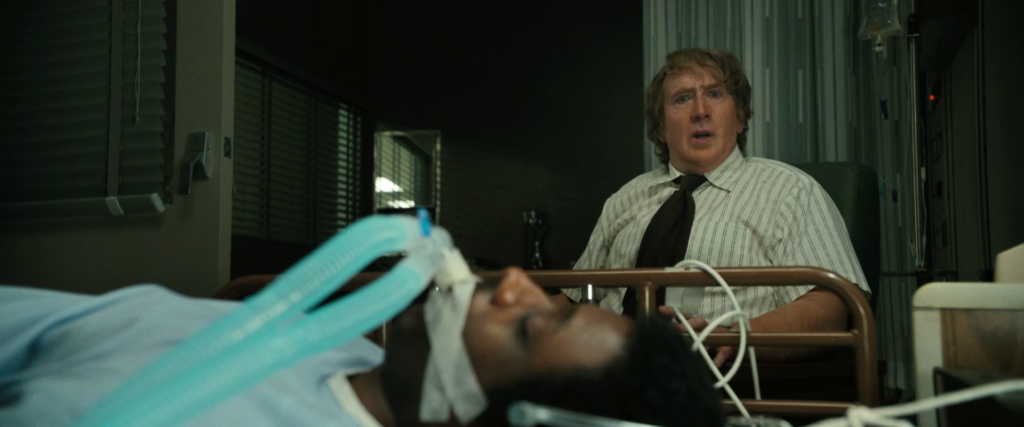
On August 12, 1978, Raiders safety Jack Tatum delivered a hit that left New England Patriots receiver Darryl Stingley paralyzed. Madden visited Stingley in the hospital and continued supporting his family as Stingley recovered. In a 2023 NBC Sports feature, Virginia Madden recalled her husband putting on surgical scrubs to visit the injured player, and Stingley’s family confirmed that Madden maintained a lasting relationship with them.
In another moment not loved by Mark Davis, the movie depicts Al Davis discouraging Madden from helping Stingley. There is no independent historical evidence confirming that conversation occurred. Mark Davis disputed the portrayal, arguing that his father regularly helped struggling players, including opponents.
The point of this interaction was purely a narrative device, an attempt to introduce a moral boundary for Madden, who spent an entire career advancing a sport of physical brutality without ever having to confront a victim of said brutality. The misrepresentation of Al Davis, it seems, is in service of further complicating these boundaries, of posing important philosophical questions to Madden, like: What happens when the pursuit of victory conflicts with our obligations toward other people? The issue becomes especially interesting when the history of the NFL and how its players play the game, particularly in regards to concussions and long-term brain injuries.
Every 2026 movie I’ve seen, ranked. Became a dad, so catching up. Updated: October 17
Madden retired on January 4, 1979, at age 42. He suffered from a painful bleeding ulcer, thanks to his deteriorating health and the intense stress of coaching. In a Cal Poly interview, Virginia Madden said she encouraged her husband to prioritize his health and family.
Madden did undergo open-heart surgery, but not until 2015, decades after his retirement.

No, Virginia never left John Madden. The movie fictionalizes the couple’s marital separation. The two married in 1959 and remained together for 62 years, until his death in December 2021. As depicted in the film, they had two sons together, Mike and Joe.
Although his coaching career strained his health and family life, Virginia maintains that she supported Madden while also encouraging his retirement.

No, it appears Trip Hawkins was nowhere near the Super Bowl party. The movie shows Hawkins (John Mulaney), founder of Electronic Arts, approaching Madden after the Raiders’ 1977 championship victory.
Hawkins was still a college student in 1977. He founded Electronic Arts (EA) in 1982 and first met Madden aboard a train in 1984, after an agreement to collaborate had been arranged.
In a 2026 Den of Geek interview, Hawkins confirmed this actual timeline.
This is true. The EA developers initially drafted seven-player teams because of imposed technological limitations. Madden insisted that 11 players had to be on each side to simulate real football. He then worked with the designers to develop the game’s plays, formations, and mechanics.
The first John Madden Football launched for the Apple II in 1988, following years of development.
According to Hawkins, who explicitly denied Davis’s involvement in securing the license, the answer to this question is “no.” The game didn’t originally have official NFL team branding. Licensed team names and logos didn’t arrive until Madden NFL ’94, which was released in 1993. Then real player’s names were used in the next installment.
The movie compresses this process and exaggerates Davis’s participation.
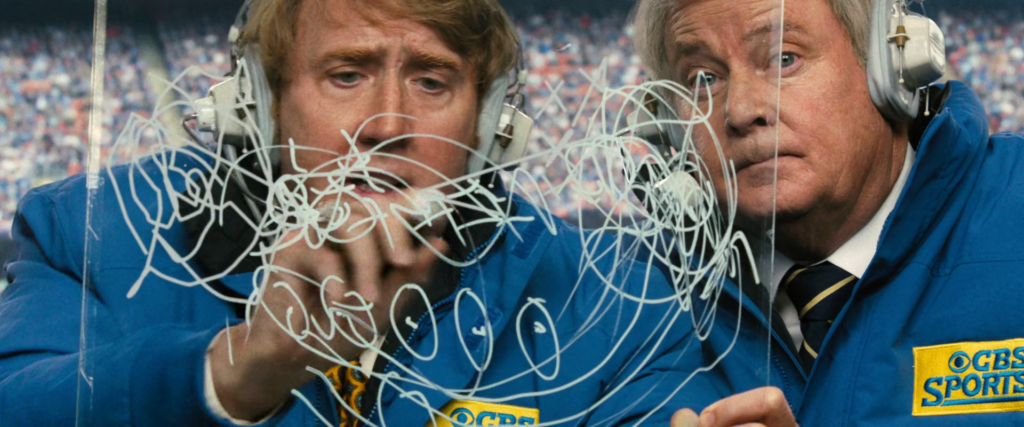
Madden joined CBS in 1979 and began working with Pat Summerall in 1981.
The movie depicts Summerall criticizing Madden to Howard Cosell. According to Rich Podolsky, author of Madden & Summerall, that confrontation never happened.
Once again, this was nothing more than a narrative device, used to depict Madden feeling out of place in the broadcasting format—he was, by the way, but his indulgent approach also became revolutionary for the sport, as he helped the layman understand the complicated strategy of football.
The movie also incorrectly credits Al Davis with informing Madden about his broadcasting opportunity. In reality, agent Barry Frank contacted Madden about the position.
Madden eventually became one of football’s most successful commentators, winning 16 Emmy Awards.
Madden’s fear of flying was real, but he denied that it resulted from the 1960 Cal Poly football team plane crash, which killed 22 people. Madden knew people connected to the team but continued flying afterward. He attributed his fear to claustrophobia.
In 1987, he introduced the Madden Cruiser bus, which became synonymous with his broadcasting career.
Nope. Vince McGary, Madden’s eccentric neighbor and Raiders fan, is fictional—completely invented, it seems, and not based on anyone. Really, the character is based on Shane Gillis, who’s there to do what he does best: provide comic relief.
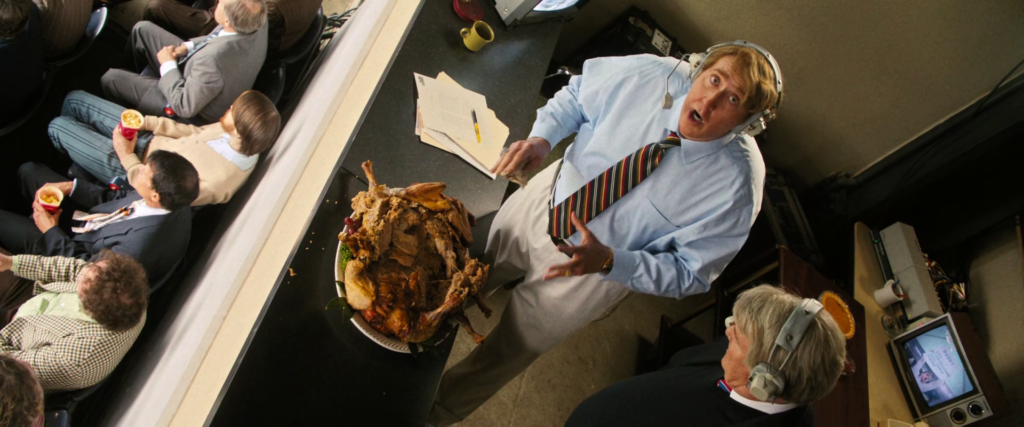
No, Madden did not invent the turducken, which consists of a deboned chicken stuffed inside a duck, which is then stuffed inside a turkey. But he help more than anyone to popularize it.
Madden first tried the dish in 1996 while broadcasting a New Orleans Saints game. His enthusiasm helped make turducken a Thanksgiving football tradition, as players from the winning team eat a turducken on camera after the game.
This one is my favorite: yes, Raiders receiver Fred Biletnikoff used Stickum, an adhesive that improved his grip on footballs. He also frequently vomited before games because of intense anxiety.
Both habits were real. Biletnikoff was named MVP of Super Bowl XI and entered the Pro Football Hall of Fame in 1988.


Film Colossus Supporters get access to the Frameshift and Active Viewing courses, an ad-free site, the Watch More Films newsletter, and the ability to request movies for analysis. Your support also directly keeps Film Colossus alive while I try to scale it into something sustainable, as it's just me, Chris, who does everything here.
Or create a free account. You gain access to the Active Viewing course and Watch More Films.
Join the Film Colossus community, get the newsletter, and unlock member features as they're added.