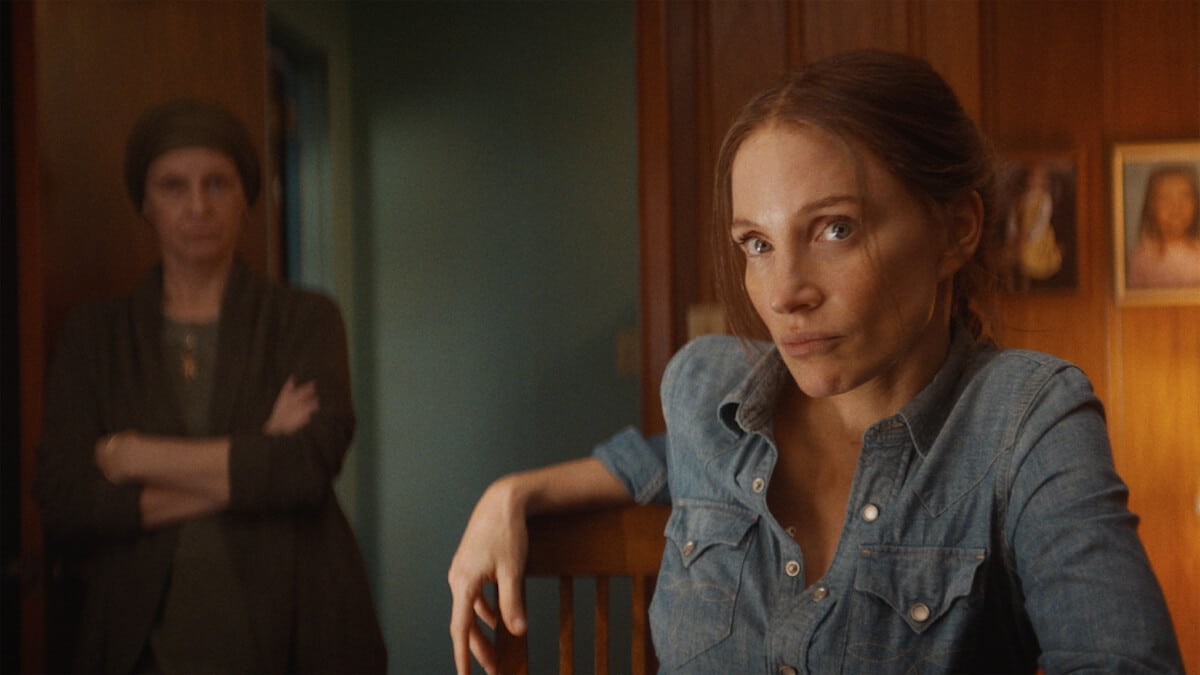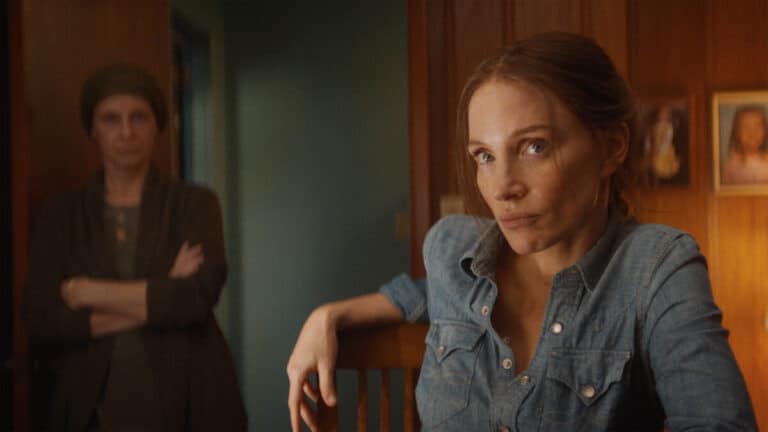
Newsletter Subscribe
Enter your email address below and subscribe to our newsletter
My first article about Heartland took a very broad approach towards the story, attempting to answer every question concerning the plot’s twists and turns. As a fan of film noir, this was fun for me, because going down those depraved paths exposes a film noir’s deeper commentary on the human condition, on how hard it is to thrive in a world that often works against us.
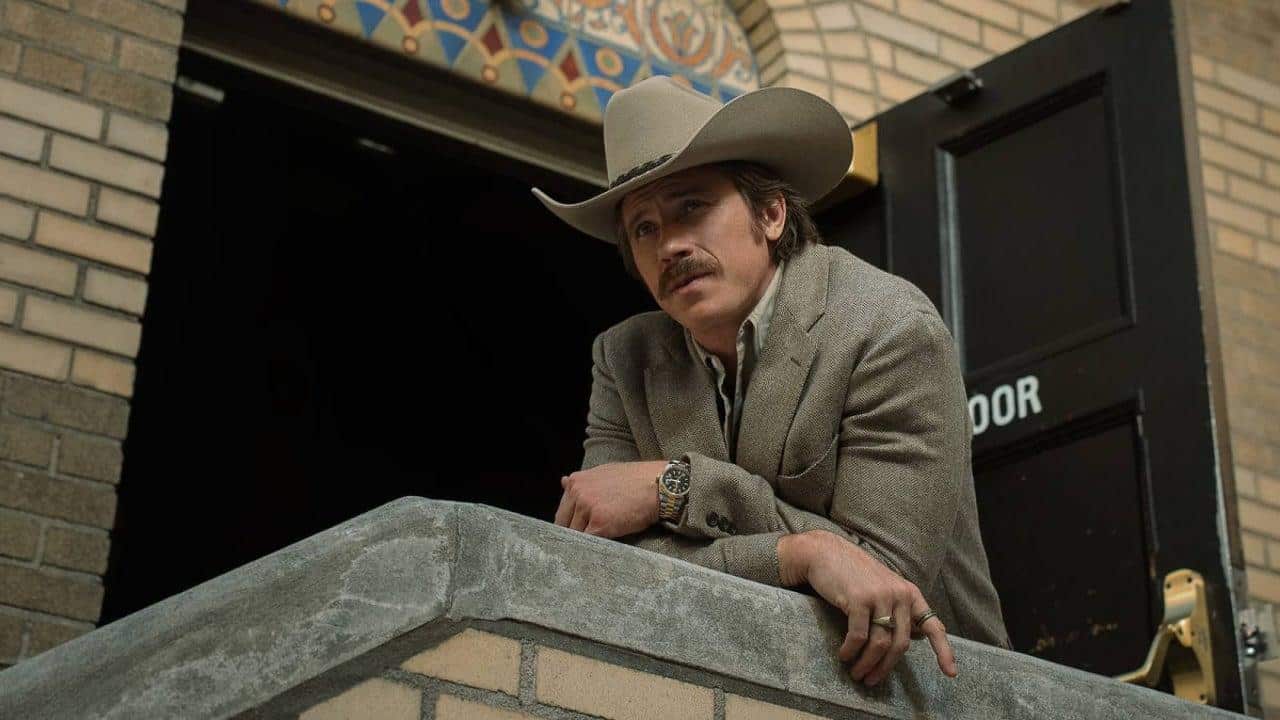
But a truly great film noir tends to have one unifying feature: the villain. And in the case of Heartland, that ominous figure turns out to be Roy Combs (Garrett Hedlund). Initially presenting himself as an ally to Misty Jones (Jessica Chastain), Roy becomes the life-threatening antagonist before long, putting both Misty and her daughter, Charlie Heart (Carter Faith), in danger.
What makes a truly great villain in film noir isn’t just their exploitative nature, their predatory instincts, their manipulative, possessive, entitled qualities—all of which Roy has in spades. No, what makes them so interesting is what they reveal about society. What does Roy ultimately represent? What figure does he embody? What familiar force does he inhabit?
In this article, we’ll review everything we know about Roy and why he did what he did to Charlie and Misty. And in the process, we’ll expose what he represents about our world and what we must battle in order to prosper, evolve, succeed.
Let’s get the straight facts out of the way before we delve into what exactly Roy represents about the real world and how he functions metaphorically in this film noir setup.
Roy Combs, a powerful record executive in Nashville who owns Live Forever Records, discovered Charlie through social media when she was just a teenager. He gave her opportunities to perform at his bar, and eventually made her one of the “Heart Sisters,” which launched her into the country music stratosphere.
But this ascension came at a price. Roy demanded physical favors from Charlie, just like he did from several other aspiring country music stars, and used compromising images and videos of his victims to maintain control and threaten their careers.
Eventually, because of Roy’s mounting gambling debts and the life insurance policy he imposed upon Charlie in her record contract, Charlie becomes convinced that Roy wants her dead. Her death would also prevent her from exposing his abuse. Because Detective White is seemingly in Roy’s back pocket, Charlie sees little hope of police protection and chooses to stage her murder, planting bloody evidence and directing suspicion toward her stalker, Jared Granger.
Misty puts all the pieces together during her investigation: the mysterious black truck that runs her off the road matches the one seen outside Charlie’s house the night she disappeared; a random note found in Charlie’s house contains some football betting odds; Jared’s apparent involvement seems less and less feasible, especially when Roy shoots him before Jared can explain himself. Eventually, Misty discovers Charlie is alive, identifies Roy’s truck, and obtains the laptop containing his blackmail material from said truck.
Charlie and seven other artists subsequently come forward with accusations against Roy, who is arrested on assault and gambling charges and faces a potentially lengthy prison sentence. He is alive at the end of the movie.
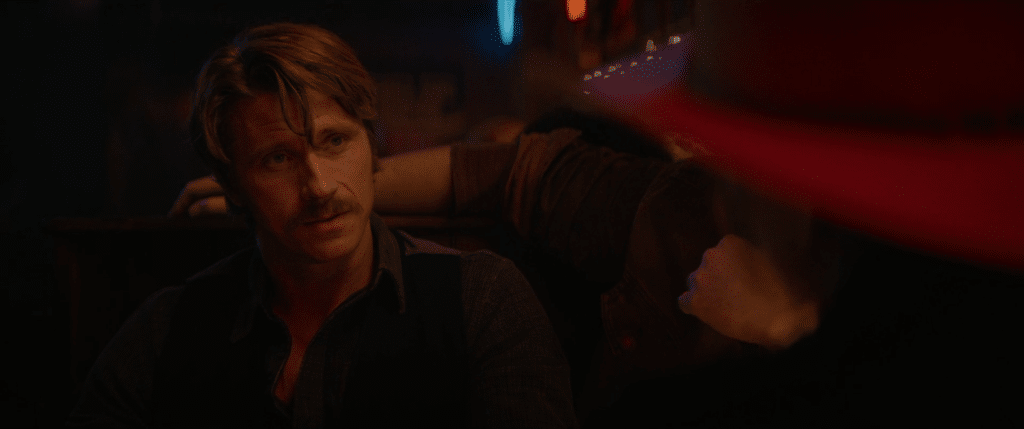
What interests me most about Roy isn’t simply what he did to Charlie, but how convincingly he disguises his predatory nature.
Think back to his first conversation with Misty. Roy reminisces about his past. While he had ambitions of becoming a great musician, he eventually realized others had more talent than him, so he found a different path: helping propel others to superstardom. Here he seemingly expresses empathy, claiming that artists need to be supported, and he could provide that support.
But once we learn what Roy has done to Charlie, his story becomes less empathetic, more unsettling. He openly acknowledges to Misty during that initial conversation that Charlie is special, that her talent would have eventually been discovered by somebody, that she doesn’t belong to him. Yet, deep down, he seems to believe that her success gives him ownership over her.
Here, my film noir brain kicks in: this is where Roy begins to resemble a figure in the real world, someone we all encounter. Someone who recognizes another person’s ambition to become something greater, their vulnerability in navigating that path, their desperation in achieving what they believe will lead to fulfillment—and uses it to establish a position of power. They offer opportunity, connection, a chance. But that assistance comes with increasingly oppressive, self-serving conditions.
As someone who never achieved fame, Roy seems to crave its rewards. Which raises two questions: When does generosity become an expectation of repayment? And what happens when someone begins creating obstacles that can only be overcome by returning to the very person responsible for them?
That provides our first important note about Roy: he may understand musical talent, but he doesn’t respect the autonomy of the people who possess it.
Every 2026 movie I’ve seen, ranked. Became a dad, so catching up. Updated: October 17
Roy’s blackmail of Charlie’s career highlights a distinction between helping someone and making them indebted to you. Roy treats his influence as an investment, one that entitles him to permanent returns on that person’s career. And when Charlie attempts to assert herself and own her talent, to regain her independence, he threatens her with everything she’s achieved.
It’s an insidious form of exploitation that mimics what we often see in real life, especially with predatory men taking advantage of aspiring entertainers—usually women. These men provide fledgling performers with “freedom,” only to use it as the instrument for captivity. The most obvious example of this in real life is Harvey Weinstein, who would promise young women movie careers in exchange for “physical” favors. The R&B singer R. Kelly did it to many women in the music industry, and in country music in particular, public relations powerhouse Kirt Webster was accused of taking advantage of a young male singer, Austin Rick. But we can go far beyond entertainment to any field, where names like Jeffrey Epstein, Keith Raniere, and Larry Nassar come up.
The key point here: power shapes the opportunities available to us, the compromises we’re expected to make, and sometimes even the desires we develop. If your goal is to achieve success—however you define that success, be it making money, or getting a promotion, or becoming part of some club or entity you believe will start you down the proper path—then there are often arbitrary rules to follow designed by those in power. Which puts a person in power in a unique position, because they no longer have to jump through those hoops—they can now design the rules.
This point isn’t an attempt to diminish what happened to Charlie or to anyone who has experienced sexual assault—Heartland is very much about those literal topics and the film does a commendable job shining a light on them. The point is to show how such predatory instincts develop, how our world enables such behavior. When people and institutions excuse abuses of power, they make that exploitation easier to conceal and repeat.
Here, once again, we see the rules of film noir coming into play, and the deeper discussion becomes more existential, universal: the most effective form of control doesn’t always require someone to enforce the rules. Often, instead, we internalize those rules until we begin enforcing them upon ourselves.
Take someone, for example, who embarks upon a career they don’t find fulfilling, whose only real reward is making money. What made them choose that path? The world made them believe this was the only way forward. By pursuing a career primarily to satisfy society’s expectations, they may have sacrificed some independence, choosing a path they might never have considered otherwise.
Or what about someone who suppresses their personality, their beliefs, all in an attempt to gain acceptance within a social group?
Or someone who remains in a destructive relationship, all because they were taught marriage represents stability and achievement?
Or someone who abandons their greatest creative passion in favor of something more stable in the eyes of their parents?
In each of these cases, people aren’t just dealing with identifiable villains—they’re pursuing constructed lives, shaped by expectations and rules they didn’t design. This is where Roy stands as more than a powerful predator, and becomes an embodiment of the forces that shape how we think and act, that dictate the paths we choose. We might become so used to those standards that we often mistake measuring ourselves against them for genuine fulfillment.

Let’s return to the character of Roy, and think specifically about the deeper implications of his relationship with Charlie, its horrifying evolution, and the spine-tingling irony behind it all: Roy first offers Charlie a path toward achieving her dreams, only for those dreams to become so dangerous that Charlie must pretend to die to escape him. Charlie first got into performing country music because it was something she loved, something that gave her life meaning. But then Roy manipulated that passionate pursuit, eventually turning it into a source of suffering. What was once supposed to enrich her existence…nearly destroys it.
Let’s extend this once again to something more universal. How often do we pursue something we believe will make our lives better, only to discover that the sacrifices required make our lives worse? Charlie’s literal coercion is, obviously, not equivalent to the struggles of everyday life. But when a movie is powerful like Heartland, it can spark those familiar feelings. And in this case, there’s a disturbing idea at play: that success can become indistinguishable from captivity.
Roy doesn’t maintain his power entirely on his own. Buck defends him through the language of loyalty and gratitude, while Detective White’s connections to Roy make it harder for Charlie to seek protection. Both men help preserve the authority Roy uses to exploit her.
But once again, let’s go deeper: why do people defend systems that harm them? Or harm others? Or, even, harm those they know and care about?
Sometimes it’s because they benefit from those systems. Or because they’ve invested so much time and energy that questioning the system would force them to question their own choices. I believe this philosophical tension happens quite often, where we don’t resist oppressive structures because those structures can become integral to our identities.
This discussion is especially relevant to any film noir, for the villain isn’t operating outside society—he’s enabled by the society around him.
What’s liberating about the ending of Heartland isn’t that Roy is exposed and Charlie is free to pursue her independence. It’s that Charlie isn’t deterred from what she truly finds fulfilling—she doesn’t abandon her desire to become a musician; she rediscovers what that desire means without Roy dictating its rewards.
Thus, the film doesn’t argue that ambition is inherently corrupting, that fame is meaningless, or that people should reject success. Instead, it suggests that the value of success depends partly on whether we can pursue it without sacrificing our autonomy.
Here, the ending gains some depth beyond what I was able to convey in that previous article, as Roy and Misty represent two competing forms of support: Roy believes helping Charlie succeed entitles him to determine her future. But Misty, despite her volatile past and complicated relationship with Charlie, helps her daughter to establish her own future. This gigantic existential undertaking? This treacherous journey Charlie has been on? That now serves as a guiding light to Misty, who herself placed herself in a prison for years—one imposed partly by a predatory society, but one also self-imposed because of her inability to deal with said society.
It all makes those final moments at the Bluebird Cafe so inspiring. Misty declines Charlie’s invitation to appear on stage with her because Misty wants Charlie to finally be free to perform her own music on her own terms. Which brings in the core lesson of the film: the person who genuinely helps someone flourish doesn’t need to possess the result. Perhaps genuine success isn’t simply achieving our ambitions. Instead, it requires understanding which ambitions are truly ours, which were imposed upon us, and which sacrifices we’re willing to make in their pursuit.


Film Colossus Supporters get access to the Frameshift and Active Viewing courses, an ad-free site, the Watch More Films newsletter, and the ability to request movies for analysis. Your support also directly keeps Film Colossus alive while I try to scale it into something sustainable, as it's just me, Chris, who does everything here.
Or create a free account. You gain access to the Active Viewing course and Watch More Films.
Join the Film Colossus community, get the newsletter, and unlock member features as they're added.