Newsletter Subscribe
Enter your email address below and subscribe to our newsletter
If you have plot questions about Paper Tiger, this is the article for you. I’m going to address as many of them as I can. If you still have a question, leave a comment at the bottom of the page. I’ll answer.
The film begins with a line written by Aeschylus, an ancient Greek playwright: “Let there be wealth without tears; enough for the wise man who will ask no further.” The line comes from the play Agamemnon, which is about the fall of Troy and how one man’s decision brought suffering to so many people. With this opening text, director James Gray paints the Pearl family’s story as a Greek tragedy tinged with irony. Irwin, a kind father with a wife and children who love him, who truly has everything outside of money, ends up risking it all.
Paper Tiger begins in Queens, New York, on Labor Day, September 1, 1986. We start on a shot of the fields with the New York City skyline resting on the horizon—this image will become very important at the end of the film, both plot-wise and thematically.
We open on Irwin Pearl (Miles Teller), who is working on the house early in the morning. This annoys his two sons, Scott (Gavin Goudey) and Ben (Roman Engel), who are trying to sleep through the final day of summer vacation. Hester (Scarlett Johansson) is in the living room folding laundry, pestering her children to get ready as the family plans to spend the day visiting her mother.
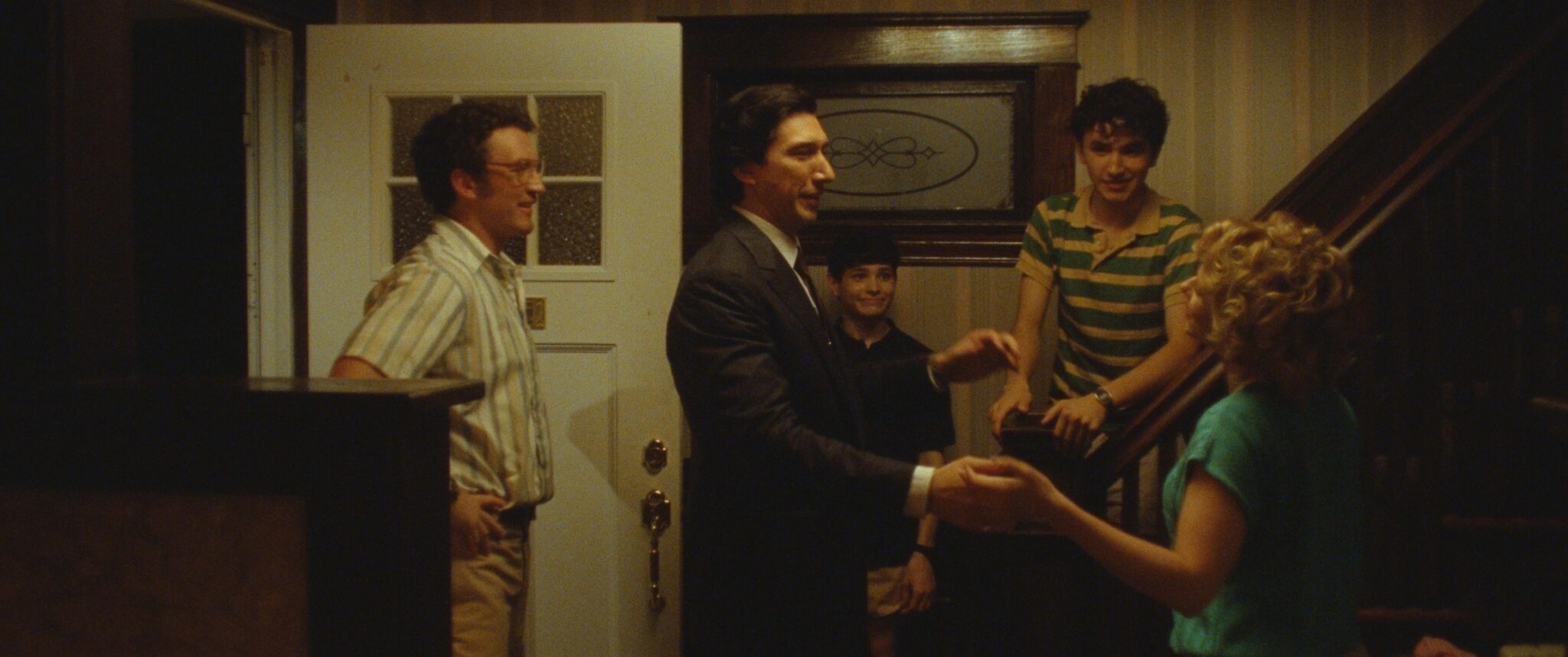
Gary (Adam Driver) visits the house that evening and immediately provides a stark contrast to Ben and Scott’s father. Irwin is only a semi-successful environmental engineer, with bachelor’s and master’s degrees from Pratt. His family lives in a small, humble house, and they regularly run into money issues. Gary, on the other hand, wears a suit, drives expensive cars, and hosts parties at his nice flat. Their father can sometimes have a monotonous personality that bores them, but their uncle shows up with steaks, does card tricks, and talks a big game. He gets to be the most exciting person in the house for an evening before driving away.
As Gary walks up, he brings with him enough food from Peter Luger to treat the family. He even brings chefs to cook the steaks. Meanwhile, Irwin and Hester are weighing whether they can afford Scott’s eighteenth birthday party and, soon after, his college tuition. Scott also fixates on the expensive car Gary drives as he pulls up to the house.
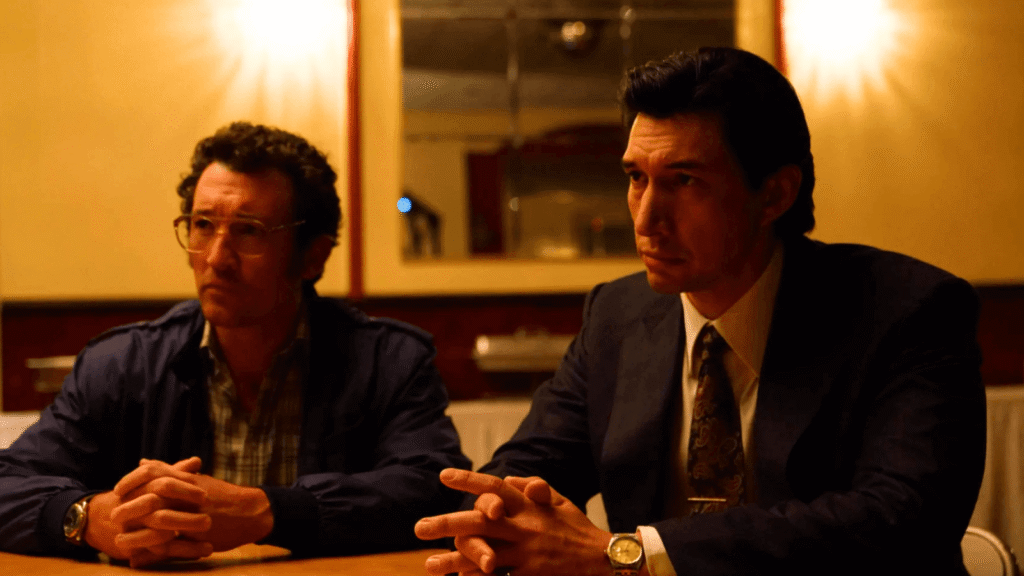
After dinner, Gary presents Irwin with a proposition to start an environmental consulting firm. In particular, Gary wants to work with a group of Russian immigrants setting up businesses alongside Brooklyn’s Gowanus Canal. Gary wants to bring clients in for them, bringing Irwin alongside him as lead engineer. Irwin, who is struggling to make ends meet for his family, agrees to meet with the Russians.
Irwin would be in charge of inspecting their properties and providing recommendations for following regulations. Their first assignment is Sheepshead Oil, where inspectors have been asking about how the company will dispose of its used oil. Irwin’s job would be to visit the property to take measurements and photographs. He would inspect the operation and point out problems.
Gary, who runs a successful business and has established connections all over Brooklyn, has the ability to initiate the meeting with Sheepshead, while Irwin can provide a reason to hire them. The problem here, as we’ll soon see, is that Irwin assumes his brother has vetted the people who run the company.
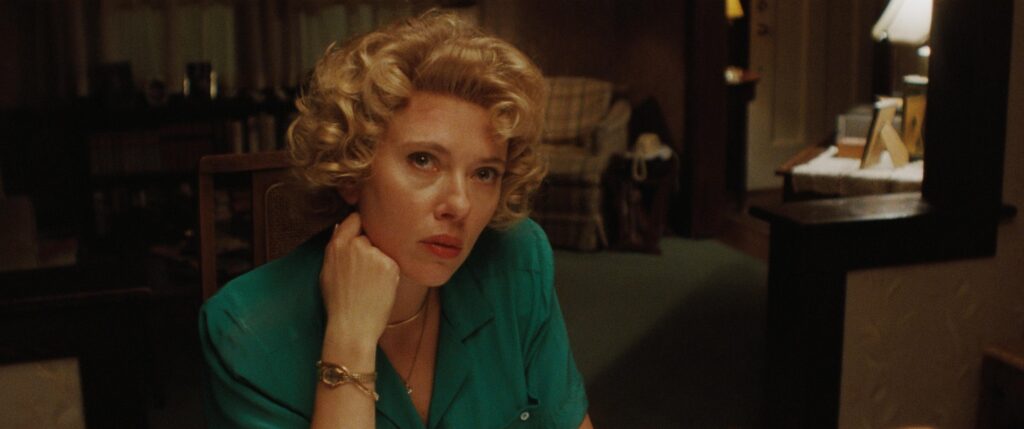
As Hester drives Scott and Ben to school, the sunlight suddenly becomes too bright and she can’t see where she’s going. She starts to swerve, a car narrowly avoids her, and she hits a tree. While she initially blames the glare, later she wakes up seeing double. This makes the crash the first sign of her illness.
Earlier in the day, Irwin is taking photographs of the canal. He speaks to a man who says Sheepshead is bleeding oil into the canal, which will end up affecting the entire eastern seaboard.
Later that night, after dinner with his whole family, including Gary and Hester’s mother, Irwin returns to the docks to conduct a nighttime hazard assessment, eager to keep the ball rolling and earn his $10,000 paycheck. He tells the boys he’ll show them how to check exit routes and spot fire hazards. Once there, he sees an excavator too close to a power line and walks over to warn the crew. This turns out to be a mistake. The Russians are immediately suspicious of him, rough him up, and demand to know why he’s there. Irwin tells them he thought he was working for them. As far as he’s concerned, pointing out the hazard is part of his job. That gives the visit an awful logic—they don’t want him to notice and record what they’re doing after hours.
Irwin is eager to prove to his boys that this job will be lucrative for their family, so he takes Scott and Ben with him to the docks that night. Because it’s late and there’s school the next day, Hester objects. But Irwin takes them anyway. Coming so soon after Gary has dazzled everybody at dinner, there’s probably some pride and ego involved here. Irwin desperately wants his boys to see their dad as a successful businessman.
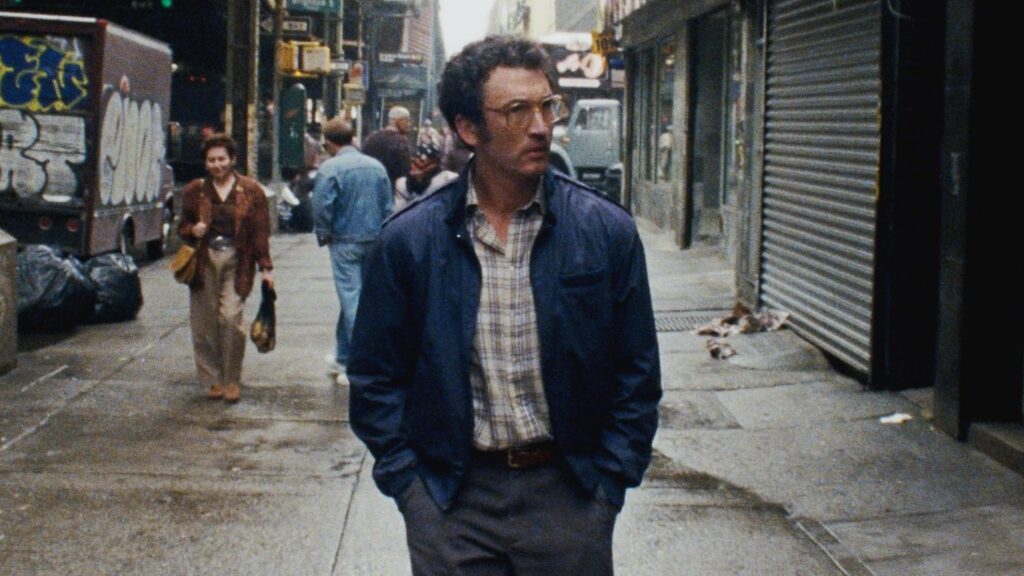
Irwin never sees the company dumping the oil, but still the men are worried about anyone going to the police. After all, Irwin has a professional understanding of industrial sites, has already taken photographs of this one, and can explain what’s wrong. So, the men slap him, threaten him by keeping his driver’s license with his address, and pull knives and guns on his sons. While the boys ask Irwin to call the police, he decides to leave the matter in Gary’s hands instead.
Irwin keeps the nighttime incident at the docks secret from Hester, telling the boys that he’ll explain everything to her once the situation has settled down. Consider what this asks of his children: they’ve been threatened at gunpoint, and now they’re supposed to come home and help their father keep their mother in the dark. Secrets, desperation, empty promises—it all starts to become routine after Gary brings Irwin into the Russian deal. You can see a shift in the boys’ behavior as they grow quieter and more withdrawn.
Simeon Bogoyavich claims Irwin scared his business partners and demands $125,000. He offers to wipe out the debt if Gary will put his contacts at the airport’s Port Authority to work for him. The offer puts Gary, a former NYPD officer with relationships around the city and access to people inside law enforcement, in an ugly position. He brought his brother into the deal on the strength of those connections—now somebody wants to buy them.
Every 2026 movie I’ve seen, ranked. Became a dad, so catching up. Updated: October 17
Because it’s a cleaner deal. A debt is attached to an actual amount of money, and Gary believes he can scrape it together to protect Irwin’s family. A job with Bogoyavich, however, might never have an end, especially if Gary can earn more than $125,000 for the Russian businessman. Plus, Gary takes pride in the fact that he stayed clean while working on the force, that he was able to go out and create a legitimate business. But, as we’ll soon see, Bogoyavich does not consider those two offers equally valuable.
A paper tiger is someone or something that looks threatening but has little real power. Gary assumes the Russians are bluffing about the $125,000. He figures they’ll settle for $60,000 once they start negotiating. There may also be a play here on paper money, since Gary thinks all they care about is getting paid.
Gary also wants Irwin to believe his old NYPD connections will keep them safe. Irwin points out the hole in that reasoning. Even if the Russians won’t touch Gary, what protection does that give his brother? Later, when Irwin berates Gary for his inability to protect the family, the term comes back around.
After waking up with double vision, Hester sees Dr. Benziger. She wonders if it’s a migraine, but he orders a CT scan and asks her to come back for the results.
After speaking at a medal ceremony, Gary meets with his cop friends. He hopes to gain their confidence and advice, only to discover they have financial relationships with the very people threatening Irwin’s family. On top of it all, several members of the force are upset with Gary, who never took bribes and made his colleagues look bad. Gary has always taken pride in refusing bribes. Now that choice has left him isolated. Still, his connections give Bogoyavich a reason to want him.
There might not be any specific reason for stacking the furniture the way the Russians did. More than anything, it seems the Russians just wanted to let the Pearls know they had broken in. They did so by making such an obvious, inconvenient mess. They up the ante by leaving photographs they took of the family sleeping in their beds—this elevates the excursion from intimidation to outright threat. It’s all in an effort to keep the Pearls silent around the cops.
After the Russians break into the Pearls’ home, Irwin is forced to tell Hester how deeply involved they’ve become with the Russians. While Hester initially argues for calling the FBI, she understands how dangerous the situation has become to not only their immediate family but Gary as well. Still, she explodes on Irwin for failing to protect their boys on the docks that night.
When Hester confronts Irwin, she’s still waiting for her scan results. At the follow-up appointment, the doctor shows her a mass on the left side of her brain. He suspects glioblastoma, an aggressive form of brain cancer, though the biopsy results are still pending. He recommends removing as much of the tumor as possible, followed by chemotherapy and radiation. Hester is practically shocked into silence.
Given the details we just discussed, Hester believes it becomes paramount to tell the FBI about the Russians in order to protect her family. Irwin won’t make the call because of what it could mean for his brother, but Hester is thinking of Scott and Ben first, as she’ll soon be too ill to care for them. Hester asks the FBI to keep Irwin out of the investigation. The agent makes no promises. To bolster her plea, Hester also tells the agents she may have less than a year to live, that Irwin could soon be raising their sons alone.
Bogoyavich soon discovers somebody reported him to the FBI and questions Gary about it. While Gary tries to convince Bogoyavich anybody could have done it, from Gary’s friends on the police force to one of Bogoyavich’s business partners, his face seems to indicate he knows that either Irwin or Hester did it. Irwin has led us to believe Gary would consider this a betrayal because it puts him in harm’s way. Gary then visits the Pearl household, where he questions Irwin, who seems quite convincing in his denial. Before Hester leaves, Gary tells her he knows what she did and understands why she’s angry with him. Their exchange suggests he’s figured out who went to the FBI.
He isn’t, really, other than Bogoyavich can use him to pressure Gary into working for him. Bogoyavich can’t make Gary, a proudly clean cop, care about earning criminal money. But he can put his little brother’s life on the line, as well as his family’s. This leads to a phone call where Gary accepts his fate: if he won’t work for Bogoyavich, then he’ll have to be terminated.
During Scott’s eighteenth birthday celebration, Hester meets with her mother and reveals the prognosis. After her mother objects, Hester gives two reasons for keeping it from Irwin. One, they will need help paying for the surgery. But Hester also notes that she needs Irwin to remain strong for their sons, especially during Scott’s final year at high school. There’s a painful echo to that request. First, it was Irwin keeping things from Hester in an effort to protect his family—now Hester is making that decision for him.
At Scott’s eighteenth birthday party, Gary tells Irwin he’s leaving his car to the boys and explains where to pick it up. Before long, Irwin senses something is off. Why give away a car everybody knows you love? Gary then reveals he’s leaving the country for “a while,” but that Irwin’s family is now safe thanks to a deal Gary struck. Irwin wants to believe his brother, and later tells Hester it sounded like Gary was telling the truth.
After he leaves the party, Gary finally lets himself cry alone in his car. He’s been telling people some version of I’ll take care of it for the entire movie—a promise we might have even believed early on in the movie. But here, in this moment, we can see the fear, the acceptance that everything might be about to end. It also helps us look past the performance he’s been putting on, to see that he genuinely cares about his brother, to see how much it hurts to say goodbye to Irwin’s family.
Gary then drives down the road and leads his followers to a field of reeds off New York’s Belt Parkway, where he hides out with his gun. This setting gives Gary a practical advantage, as it disorients his opponents and keeps him slightly hidden. He manages to shoot two of them before he’s fatally shot. Director James Gray described wanting Gary’s death to feel like a return to the natural world. We met Gary in a good suit, carrying expensive steaks, his car parked outside. The whole family was delighted to see him. Now he dies in the grass, beyond the sight of anybody who truly knew him.
Nobody really seems to know anything—which is the point. A major theme of the film is the secrets we keep from others in order to protect them. But that “protection” comes from a limited perspective, and relies on your understanding of what’s helpful and moral.
So we end the film with a collection of secrets and beliefs: both Irwin and Hester believe Gary has settled things and gone away; Irwin doesn’t know why Hester left the house that morning; he doesn’t yet know that his brother has been eliminated, or that his wife has only months left to live; Hester doesn’t know if she’ll survive, if Irwin will be able to raise the boys alone; the boys understand that their family has been in danger, but they have schoolwork to do and somewhere to be.
Then there’s the message from the Chamber of Commerce: other companies are looking for the kind of help the Pearl brothers hoped to offer. Their business idea had a future. But the call comes when the brothers no longer have one together.
Based on the suitcase she’s packed and her mother picking her up, it’s reasonable to assume Hester is off to the hospital for surgery. The note she leaves at home gives the family the impression that she’s gone to help her mother. In reality, her mother is helping her.
Irwin observes how Scott and Ben have been looking out for each other through such tumultuous times. He wants them to remember that they have each other, even when they’re grown and have households of their own. Soon, Irwin will wish he could have said more to his brother before he left, making his advice all the more poignant. This entire dynamic speaks to a key theme, that the world we build and the model we present will become fodder for a healthier future, for incoming generations.
Why do the boys’ ordinary teenage reactions matter?
Gray speaks directly to this creative choice. In this interview, Gray describes two teenagers who can barely appreciate what their father is trying to tell them. He credits Miles Teller with playing both sides of Irwin’s predicament: he wants his sons to understand how much he means this, and he’s trying to hold himself together in front of them.
At the New York Film Festival, Gray explained that he likes an ending that leaves you with the sense that the characters’ lives continue beyond the screen—not a hopeful ending, but an open one. Think back to why Irwin brought his boys to the docks: he wanted them to see what their father could do for them. But by the end, Irwin is telling his boys what he saw them do, how strong they were in such a frightening situation. He can admit that he put them in danger. He can tell them they already have something worth holding on to. And then the boys can go to school. Even though terrible things have happened, including terrible things the characters have yet to learn about, their lives must go on. And on. And on. And on.


Film Colossus Supporters get access to the Frameshift and Active Viewing courses, an ad-free site, the Watch More Films newsletter, and the ability to request movies for analysis. Your support also directly keeps Film Colossus alive while I try to scale it into something sustainable, as it's just me, Chris, who does everything here.
Or create a free account. You gain access to the Active Viewing course and Watch More Films.
Join the Film Colossus community, get the newsletter, and unlock member features as they're added.