Newsletter Subscribe
Enter your email address below and subscribe to our newsletter
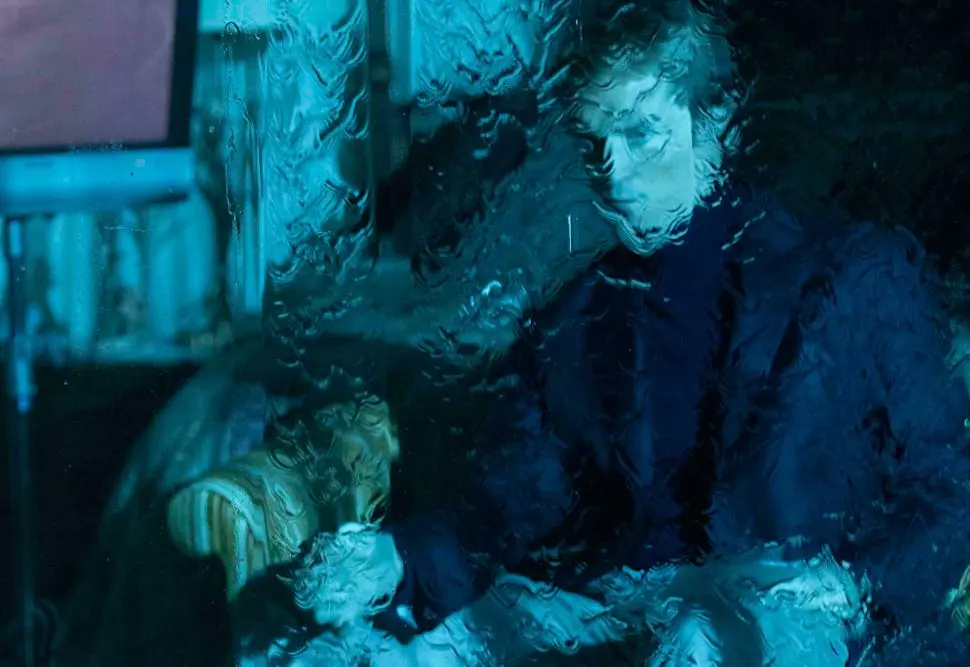
Why does Chris Hansen start seeing a monster in Primetime? It’s the byproduct of the story about India that he tells to Decoy Dan.
This is the dialogue from Primetime.
Hansen: It’s 1996. You’re in Pandalam. It’s in India. The cottage bar [?]. A few drinks in, a local approaches you and asks if you’re covering the missing children. You don’t know what he’s talking about. So he tells you… All across the southern state of India, children are disappearing at night. It’s clinical. No village ever hit twice. No suspects. So the villagers start turning on each other and the lynching begins. In the surrounding jungle, they find the children…in bits. The authorities said it was wolves. But I found a witness. Young girl who gave me that bracelet. She told me what she saw. A darkness. It cannot be understood. It exists outside of time, space. Not a man. A monster. No one believed this girl. But I did. So you can tell your friends. That’s what we’re doing. We’re cleansing the world of an ancient evil. And that evil waits for us in Murphy.
The film cuts between Hansen talking to Decoy Dan and Hansen in India. When he gets to the part about the monster, we see an Indian girl in a cave and the monster appears from behind a rock. It’s terrifying at first. But once you see the whole getup (the all-black outfit and giant mask that looks like the Babadook), it seems a bit goofy, like a generic Halloween costume.
Hansen’s India story is a demonstration of his conviction (and not what happened in reality). As obsessed as he’s been with the ratings, the ratings actually aren’t why he does this. He feels a moral imperative to, as he put it, cleanse the world of an ancient evil.
Once we have this information, it recontextualizes something Hansen asked during the first sting. “What would have happened if I wasn’t here?” Initially, we only think of that question in terms of the immediate situation: Hansen standing between a predator and its prey. But once we know the India story, the question becomes bigger. What would happen if Hansen wasn’t making this show?
When Hansen said, “that evil waits for us in Murphy,” he’s referring to the whale, the nickname the team had given to Bill Conradt before learning his identity.
Because the head of Perverted-Justice had presented the whale as potentially someone high up in the government, Hansen starts thinking about them as an important takedown. It’s not just a random guy who is a bit stupid. This is someone smart, successful, sophisticated. The others weren’t monsters but ghouls and gremlins. But a political figure? Someone with power and authority? Now that’s a monster.
But the monster actually signifies something else.
Hansen, by the end of the film, is shown to be in an increasingly frantic state over the ratings. He’s desperate for a huge get that would propel Predator over Lost. And he’s pinned his hopes on “the whale” being the thing that accomplishes this. When the leader of Perverted-Justice thinks it might be someone high up in the government, Hansen asks if it could be the president of the United States.
When he thinks they failed to get the whale, he’s so despondent that he doesn’t even go out to confront a predator, leaving Decoy Dan to do his best Hansen impression. On top of that, he’s upset about the looming National Enquirer story about his affair. The strong, confident guy from the start of the film is at his most fragile.
Every 2026 movie I’ve seen, ranked. Became a dad, so catching up. Updated: October 17
Then, right before Hansen sees the monster in the window of Conradt’s house, he has a call with his wife. She knows about the Enquirer story and has clearly given up on him. When he tells her he loves her, she hangs up. Immediately following that, a few police officers ask for a photo. And Hansen has to immediately smile and pretend to be the Savior. The cop even tells him, “You’re doing the Lord’s work.”
So it’s when he’s at his lowest mentally and emotionally that he’s reminded that he’s “doing the Lord’s work”. He’s lost control of everything else, but he can still control this, right? To Catch a Predator is an artificial reality that he constructs where he’s a hero stopping monsters. Thus, he doesn’t see Bill Conradt in the window. He doesn’t see a man. He sees a monster.
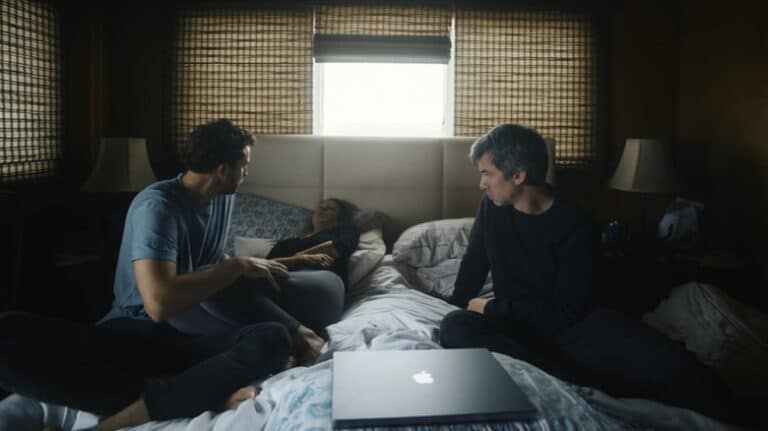
The irony is that Hansen doesn’t see how monstrous his production has become. The original decoy, Del, didn’t even come with the team because she thought going to someone was crossing the line. Dan is clearly unsettled by this as well, which is why he doesn’t want to play decoy. Dan says, “I don’t want to be a bad person.” Hansen responds, “Your definition of bad and my definition of bad are vastly different.”
Hansen, in that moment, becomes a monster himself. And the film score supports the turn in tone, taking on a racing, anxious tempo while the police sting merges with the TV production. The next time Hansen looks at the window, he doesn’t see the monster but Conradt the person. And after Conradt offs himself, Hansen’s stunned. He retreats emotionally by repeating lines from the chat logs. When the camera cuts back to him, tears stream down his cheeks. And he asks, “What would have happened if I wasn’t here?”
Then we get one final shot of the monster. It’s barely visible in the foliage.
After Hansen and the team find out Conradt’s identity, we have a quick scene of Conradt at court. He says, “Now, as district attorney, I’ve seen all sorts of horrible behavior. And I understand how people can see criminals as other than human. Despite the child endangerment we substantiated, the defendant here is not a monster. He’s a man. But he has brought a disease to our community. And by putting this man away, we send a message, a message that we like our slice of Texas just how it is. And we intend to keep it that way.”
The speech did not really happen. It’s the film’s way of explaining to the viewer what Hansen did wrong. When you label someone a monster, you give yourself permission to treat them as a monster rather than a human. Conradt’s position isn’t to go easy on the person. They still deserve punishment for what they did. He’s just cautioning against sensationalizing.
What do Hansen and everyone else immediately do? Sensationalize. And they justify this because they no longer see Conradt as a human but as a monster. That’s why the film goes to great lengths to emphasize Conradt’s humanity through the conversation with Dan and the dog and the last eye contact shared between Conradt and Hansen.
Was Conradt gross? Absolutely. Did he break the law? 100%. The cops were right to arrest him and he deserved to go through the justice system. But how they did it becomes the problem. Instead of going through the usual process, the police changed their tactics and approach to accommodate Hansen and the spectacle of TV.
That’s why the last line from Hansen is a repetition of “What would have happened if I wasn’t here?” Primetime’s version of Hansen understands that if he hadn’t been there, a man would probably be alive. Not free, mind you. The cops had the information they needed to get a warrant and arrest Conradt. But Hansen being there changed everything.
Notice the inversion. In all the other stings, the predator was the one who came to the house. But this time, Hansen and his team were the ones who got lured. They were the ones who showed up, excited for action, ready to pounce. And that’s why Hansen, at the end, suddenly feels like a monster himself.
When Hansen’s trying to get Dan to call Conradt that last time, he says, “You’re either with me or you’re with him.” That line directly echoes President George W. Bush’s address to Congress following 9/11, the one in which he announced the War on Terror. Bush said, “Every nation, in every region, now has a decision to make. Either you are with us, or you are with the terrorists.”
Primetime has Hansen echo Bush because to create a comparison between To Catch a Predator and the War on Terror. Both began from positions of enormous moral certainty. Hansen’s stopping monsters. America was fighting evil. But such moral certainty can justify morally dubious behavior. The Bush administration okayed the use of torture, secret detention, and other abuses and atrocities, compromising the moral authority it had initially claimed.
Primetime maps that same idea onto Hansen’s story. Once you’re convinced you’re good and the person across from you is a monster, you can lose sight of the moral lines you claim to defend. I think Primetime is ultimately saying the monster is whatever we tell ourselves that makes a morally questionable action feel justified.


Film Colossus Supporters get access to the Frameshift and Active Viewing courses, an ad-free site, the Watch More Films newsletter, and the ability to request movies for analysis. Your support also directly keeps Film Colossus alive while I try to scale it into something sustainable, as it's just me, Chris, who does everything here.
Or create a free account. You gain access to the Active Viewing course and Watch More Films.
Join the Film Colossus community, get the newsletter, and unlock member features as they're added.