Newsletter Subscribe
Enter your email address below and subscribe to our newsletter
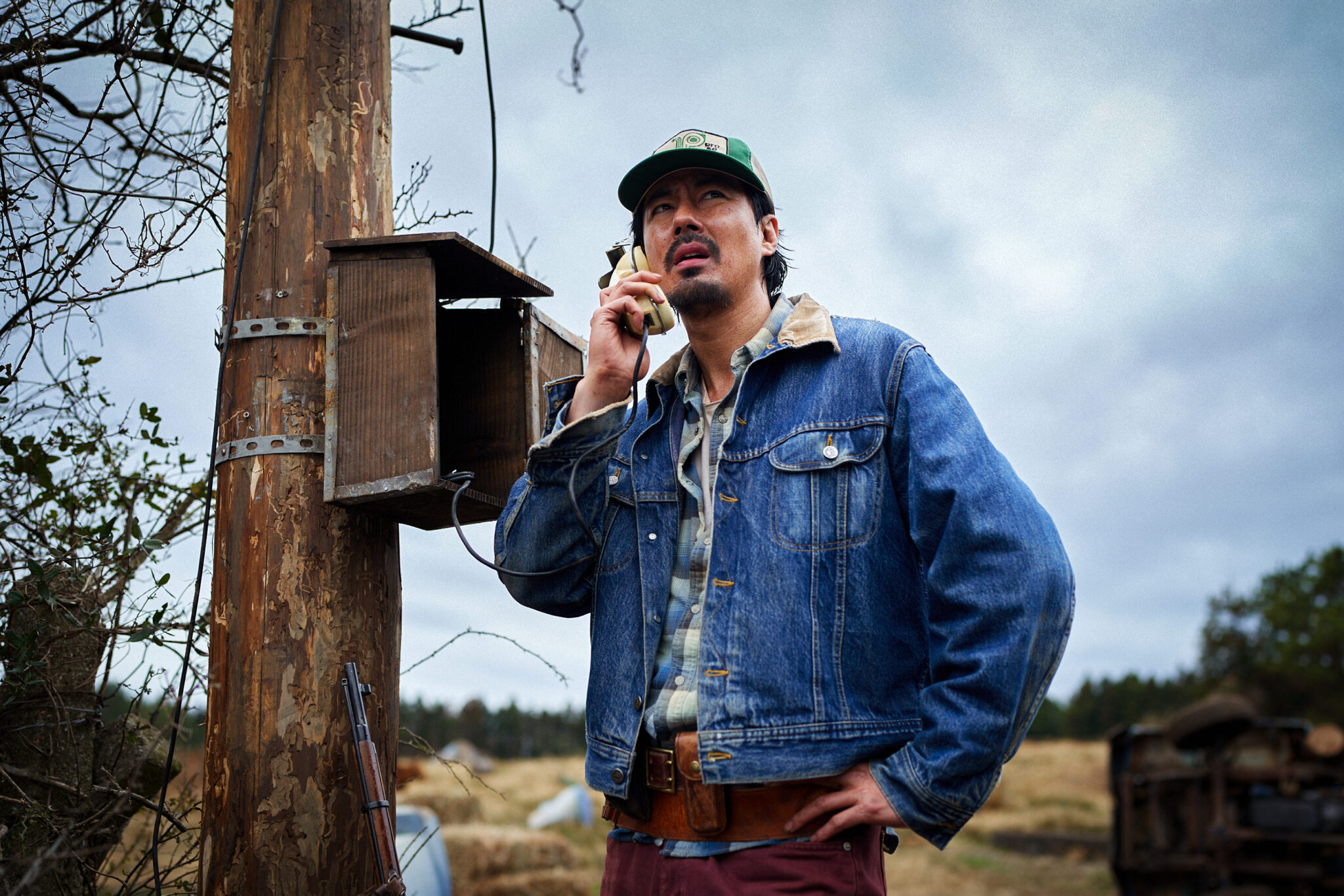
Okay, I’ve been able to closely watch what happened to Sung-ki in Hope and it’s made me even more confused about the post-credits scene.
The last time we saw Sung-ki he was hanging out the window of the car while Ma’veyyo chased the humans. He has this badass moment where he seemingly defeats Ma’veyyo and the other human characters cheer him on. Sung-ae is so impressed she says she loves Sung-ki. Then an object looms behind Sung-ki, a collision, a crimson explosion.
Bum-seok, who had been holding Sung-ki in place, is left with just an empty shoe. Sung-ae in the back seat has red splattered across her face. It’s initially unclear what happened. Did Ma’veyyo throw something? Was it another alien attack? Was there a low-hanging sign or something?
Bum-seok questions the driver, Yang-bae, who says he “turned the wheel” because a cat jumped out.
It’s a bit bizarre because we don’t see the car swerve suddenly and it’s pretty hard to tell what actually hit Sung-ki. Scrubbing through the scene, I can tell you it was a road sign for a deer crossing that goes from way on the side of the road to directly behind Sung-ki with the car seemingly never making any kind of dramatic movement.
At the speed they were going, and with the amount of red that rains everywhere, that impact seems like the kind of thing that no one could possibly survive.
Yet the mid-credits scene shows Sung-ki alive. Not just alive, but up and moving, limping down the road.
There is absolutely zero way Sung-ki could have survived the sign. We’ve all seen Hereditary, right? We know what happens when someone hangs out the window of a moving car and clips an object.
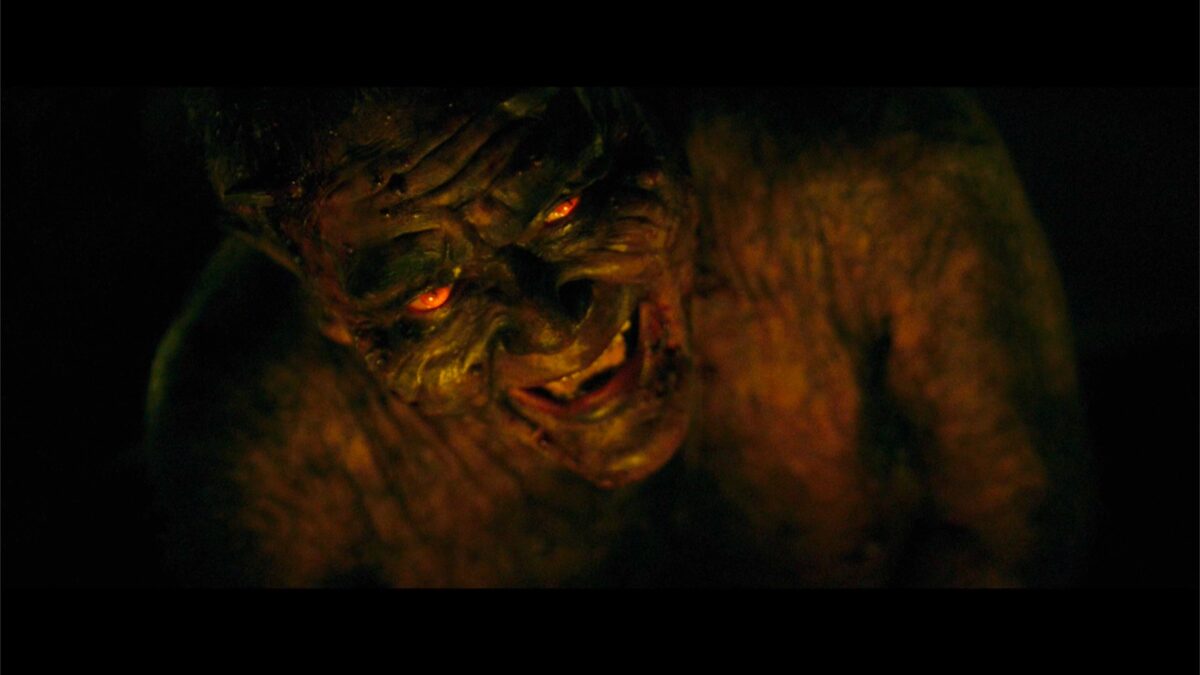
But there’s also no way he would have survived Ma’veyyo backfisting him so hard that he flew 20 feet into the air, striking a tree with enough momentum to pinball to another tree before crashing back to the forest floor. But sure, say he did. A few seconds later, Ma’veyyo flings Sung-ki like a boulder from a catapult. Sung-ki once again collides with a tree then falls 20+ feet, landing hard against a large, fallen tree branch.
One of those experiences is enough to unalive someone or leave them so broken they couldn’t move. Sung-ki survives three such events. Which raises the question: how?
Unfortunately, we don’t have a good answer. It’s not like we see Sung-ki touch something in the alien ship then say “I feel weird.” Then we could point to the alien technology imbuing him with some kind of strength.
If you’re giving Hope the benefit of the doubt, then Sung-ki’s superhuman survivability is something you’d let it address in the next film. Or you’d suspend your disbelief and chalk it up to the fact that unrealistic things happen in movies all the time.
If you’re not giving Hope the benefit of the doubt, then Sung-ki’s superhuman survivability is probably so unrealistic that it took you out of the movie. You’d maybe even label it bad writing that asks too much of the audience. We can suspend disbelief that aliens exist and that Ma’veyyo is simultaneously blazingly fast but can never catch up to anyone. But the humans have just been humans. For Sung-ki to suddenly be an anime character with extreme plot armor, that’s not something you think the movie has earned.
But neither answer explains why Na Hong-jin keeps putting Sung-ki through this.
Sung-ki was an extremely likable character, just from aura alone. When he seemingly doesn’t survive, it hurts. Especially as his “exit” happens during that big inspirational moment when the other humans think he defeated Ma’veyyo. It’s the happiest they’ve been the entire film. Then the collision happens and the wind goes right out of their sails. The giant ship emerges right then and crashes into the mountain, exploding.
For the humans, the ship is pretty much a visual representation of their morale. It feels like everything is crashing down around them, that their entire world is exploding. And they’re running, terrified for their lives. Sung-ae asks “What do we do now?” and Bum-seok says “Keep running.” The conversation continues, and when pressed about how he’s feeling, Bum-seok says, “I feel lost…and strange.”
Sung-ae then says: Sung-ki was just unlucky. And that crazy guy behind the wheel…that was just some freak twist of fate.
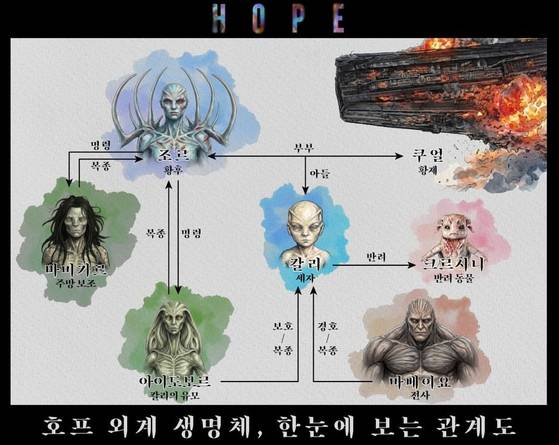
The conversation between J’aur and Ma’veyyo contrasts the one between Sung-ae and Bum-seok. Where the humans are afraid and uncertain, the aliens are the opposite. In the face of this tragedy, they vow to bring Kali back to life and change fate.
- J’aur: Ma’veyyo
- Ma’veyyo: Majesty.
- J: Do you see what I see?
- M: The Emperor’s ship is falling.
- J: What is upon us?
- J: We must reach him immediately! Are you able to run?
- M: There is no time, your majesty. Only three molli remain.
- J: The Emperor’s ship has fallen!
- M: It is a tragedy, but it is done.
- M: Falter not, Your Majesty. In the game of Gh’ertu, I shall find the Prince. I shall change his destiny. This heart will revive His Highness. Should his destiny change, so too shall all of ours.
- J: In a recent dream, the Emperor came to me.
- Ma’veyyo: Majesty.
- J: He spoke to me. He said faith is evidence of what we do not see. What I am seeing now is not evidence. What I long for has not been realized yet. Ma’veyyo…
- M: Majesty.
- J: Bring forth true fate.
So we have two groups. Both have suffered great loss. One doesn’t feel hopeful. The other does. And we, the audience, probably identify more with the humans since we’re human. When that group lost Sung-ki, we lost Sung-ki. And that sudden loss creates an emptiness that can feel a lot like hopelessness. “That character was great, and we’ll never see him again.” Especially when Sung-ae chalks it up to a “freak twist of fate”. She’s asking us to accept what’s happened.
The mid-credits scene changes that. Seeing Sung-ki still alive is thrilling. We didn’t lose him! Sung-ki’s sudden return brings with it a sense of hope for what comes next.
I think that’s why Na Hong-jin had Sung-ki get so comically beaten up throughout the film. We keep thinking “This is it for him, he can’t possibly survive.” He’s kind of the film’s damsel in distress. Except he keeps surviving the impossible, over and over again. And each time, there’s that burst of “he’s okay!” Until he isn’t. We’re convinced Sung-ki’s finally gone. How can we hope for anything else after what we saw?
So Sung-ki survives because his character arc perfectly encompasses the film’s title. We watched him make it through impossible thing after impossible thing, until finally we’re convinced he’s done. Then Na gives him back to us. And we feel how fate can change.
It also ties into J’aur’s line that faith is evidence of what we do not see. We don’t see how Sung-ki survived. Yet there he is. The film leaves the viewer to have faith in that experience or reject it.

Film Colossus Supporters get access to the Frameshift and Active Viewing courses, an ad-free site, the Watch More Films newsletter, and the ability to request movies for analysis. Your support also directly keeps Film Colossus alive while I try to scale it into something sustainable, as it's just me, Chris, who does everything here.
Or create a free account. You gain access to the Active Viewing course and Watch More Films.
Join the Film Colossus community, get the newsletter, and unlock member features as they're added.