Newsletter Subscribe
Enter your email address below and subscribe to our newsletter
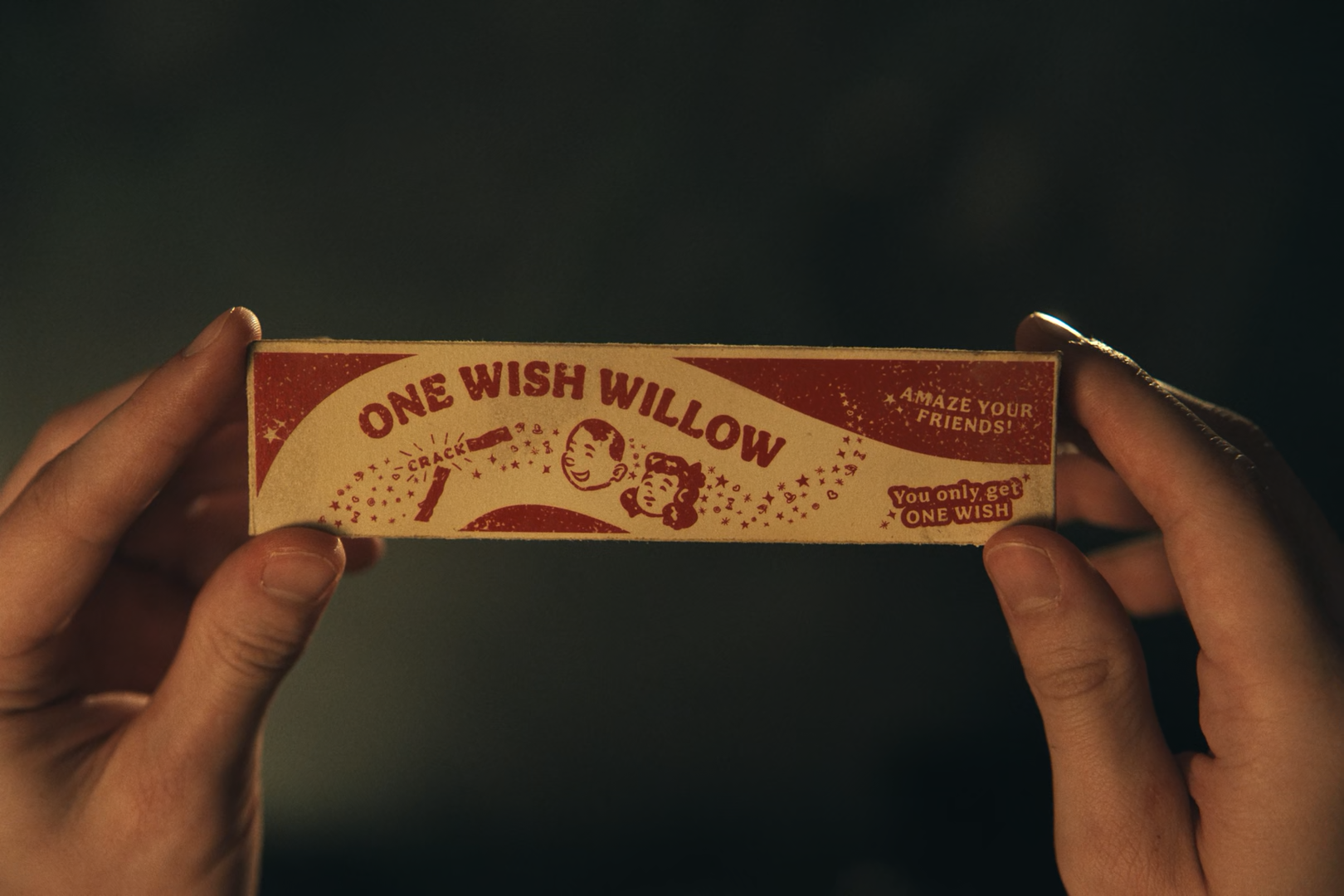
A lot of people want answers to the world-building mechanics of Obsession and what Freaky Nikki, Fake Nikki, Wish Nikki, whatever you want to call her, really is. I can give you two answers, maybe one of which you’ll like.
The simplest explanation is this: we don’t have enough information. That’s not very satisfying but it’s the reality of the situation. There’s no actual answer or right answer because the film doesn’t provide any substantive insight into who takes over Nikki.
What we know is that Nikki’s personality disappears and some other identity controls her body and seemingly has access to her memories but clearly doesn’t understand the nuances of human behavior. Where Nikki “goes” no one knows, but the customer service operator offers Bear the opportunity to talk to her. There’s a click, as if the operator added another call to the line, then we hear Nikki’s screams, but it’s unclear if she’s yelling out of pain, anger, fear, because someone’s doing something to her, etc. She could be like a genie and stuck in a little magic lamp. Or a prisoner in some version of hell. Or in the sunken place like in Get Out. The information isn’t there for us to arrive at a conclusion.
Personally, I like the sunken place concept as it would explain why she can sometimes take over and is present when Wish Nikki is asleep (which is probably why Wish Nikki doesn’t sleep).
Curry Barker has said it’s a possession movie, “but it’s a very different type of possession movie. She’s not possessed by a demon. She’s almost just possessed by her own desires and wants.” But that’s still unclear about the extent of things, because Real Nikki refers to another personality when she says things like “She’s asleep” and “don’t wake her up.”
Okay, so what about the second answer?
The second answer, the one I’d say is the real explanation, is that it doesn’t matter what Freaky Nikki is because she’s symbolic for the film’s main thematic concern.
It’s like in the movie The Babadook, someone may wonder why the monster comes from a book, who wrote the book, and all of the logistics around the monster’s existence. But, ultimately, the Babadook simply represents the mom’s grief and how she blames her son for the death of her husband (as they were in a car accident while on the way to the hospital so she could give birth). The Babadook’s possession of her is an exaggeration for how untreated grief can cause a parent to lash out. The mom’s fight with the monster is an external version, for the sake of the audience, of her internal struggle.
Or asking “What’s in the briefcase in Pulp Fiction?” The briefcase is a plot mechanism, not the point. Same with the time-travel in Primer. Primer’s really about two friends falling out because they realize they have different morals and values. The time-travel is just a fun way to tell the story.
Instead of running around in circles trying to find answers to in-world details that Obsession wasn’t concerned with, let’s step back and look at Obsession’s larger thematic concepts.
There are three core themes to talk about here.
All three eventually become the same idea: Bear doesn’t love Nikki as an autonomous person. What he loves is the idea of Nikki fulfilling the romantic story he imagined for them. The true horror of Obsession is the struggle between Bear’s fantasy and Nikki’s reality.
Zoom out. Think about Obsession in the abstract. What do you see? A man controls a woman against her will. And it’s not the experience he hoped for. There are different ways of viewing Obsession through this lens of consent and autonomy.
One way to read the film is that Bear driving Nikki home that night and using the One Wish Willow is part of the film’s allegory for sexual assault. You could imagine a grounded version of the story where Nikki’s on molly and not sober and Bear takes advantage, telling himself it’s “real” when in his heart he knows she wasn’t in a place to give consent. The rest of the movie would represent the existential control he now has over her. And Freaky Nikki represents Nikki’s struggle to cope in the aftermath of the assault.
Much of Nikki’s behavior after the wish lines up with the psychological fallout of SA. Penn State Health notes that “survivors may struggle with shame, guilt and self-blame” and lists that they often suffer from:
Nikki exhibits all of that but exaggerated to fit the fantastic nature of a horror film.
For example, this medical breakdown may sound familiar: Some survivors use promiscuity “as a means of coping with emotional distress and reclaiming a sense of control over their bodies. Survivors may grapple with a profound sense of emotional turmoil and may seek to establish a sense of connection through physical intimacy, inadvertently using hypersexual behavior as a substitute for genuine emotional intimacy.”
In the realistic version of the story, Freaky Nikki’s “obsessed” with Bear as a coping mechanism. Instead of facing the truth about what he did, it’s easier to tell herself it’s part of their love story. But the cognitive dissonance leads to all of the behavior changes that follow. Her attempts to control him are really a way for her to take back what he stole from her. But it keeps not working. And everything spirals because Nikki’s not Nikki. “Real” Nikki’s suppressed, hiding, traumatized by what happened.
There are grounded films that depict similar concepts. Like Promising Young Woman or Girl With the Dragon Tattoo, May December, or the documentary The Hunting Ground. In the film Mysterious Skin, two victims have very different responses: one sees what happened as love, the other is so dissociated that he thinks it was an alien abduction.
Watch any of those then rewatch Obsession and you can see the realistic foundation that Nikki’s exaggerated behavior is built on.
With that said, some argue Obsession’s less about SA and more focused on a controlling partner, what’s commonly known as coercive control.
A 2026 study published in Current Opinion in Psychology found that abusive relationships “foster unworthiness, self-doubt, and diminished capacity to assess the tradeoffs between relationship-vs self-preservation, thereby increasing a target’s dependence and entrapment. When leaving is untenable, targets may regulate…by redefining or reframing it – by reinterpreting, downplaying, minimizing, justifying, normalizing a partner’s behavior.”
If that sounds like what we were just talking about with the previous reading, that’s exactly right. The two readings aren’t mutually exclusive. Both are rooted in the violation of consent and autonomy.
Barker described the premise of the film in such terms: “when you take someone’s choice away, you’re taking away their autonomy.”
However you want to read it, Obsession is not about what Nikki does to Bear but what Bear did to Nikki.
Curry shows Bear’s character arc through his relationship with mirrors. It’s pretty cool.
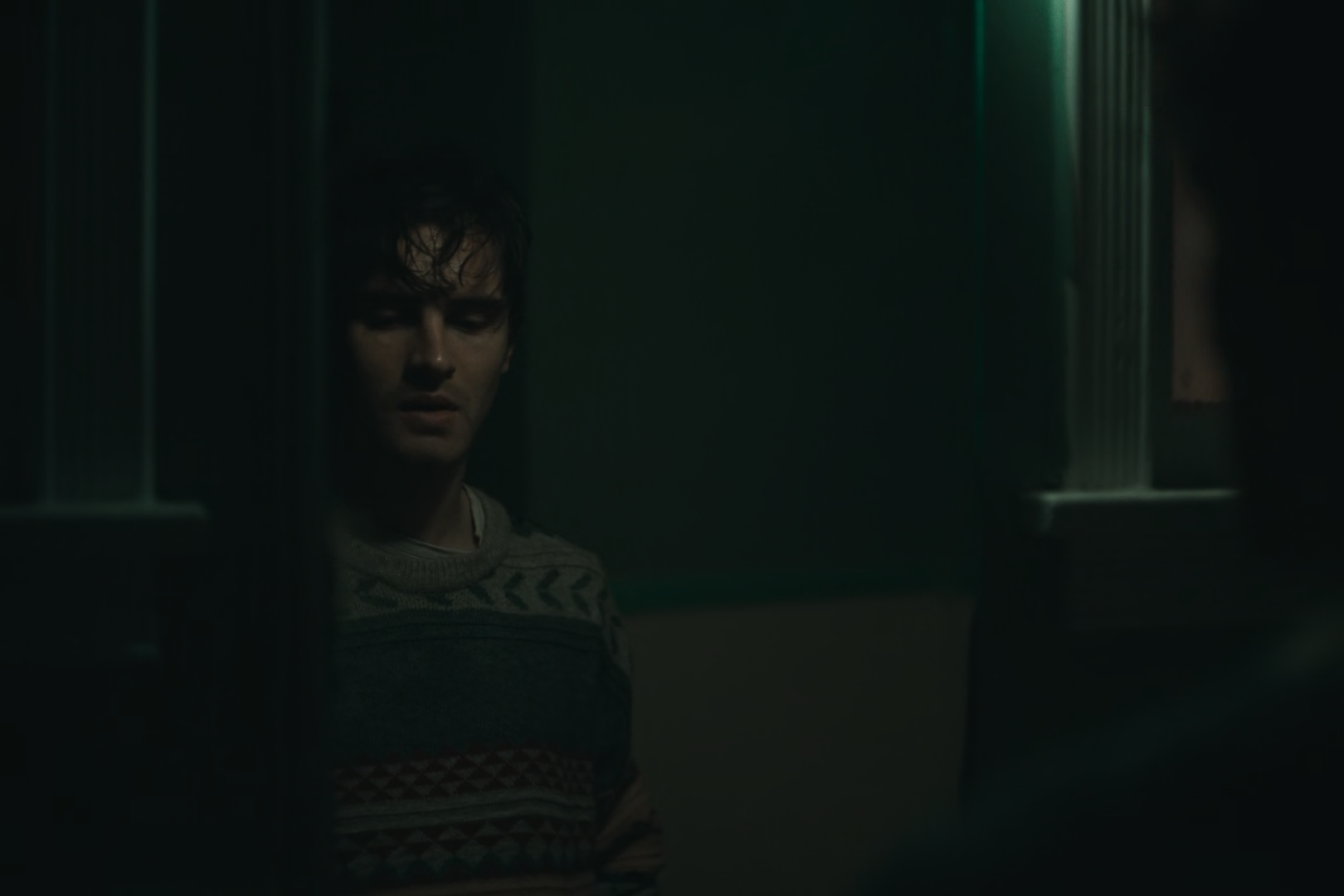
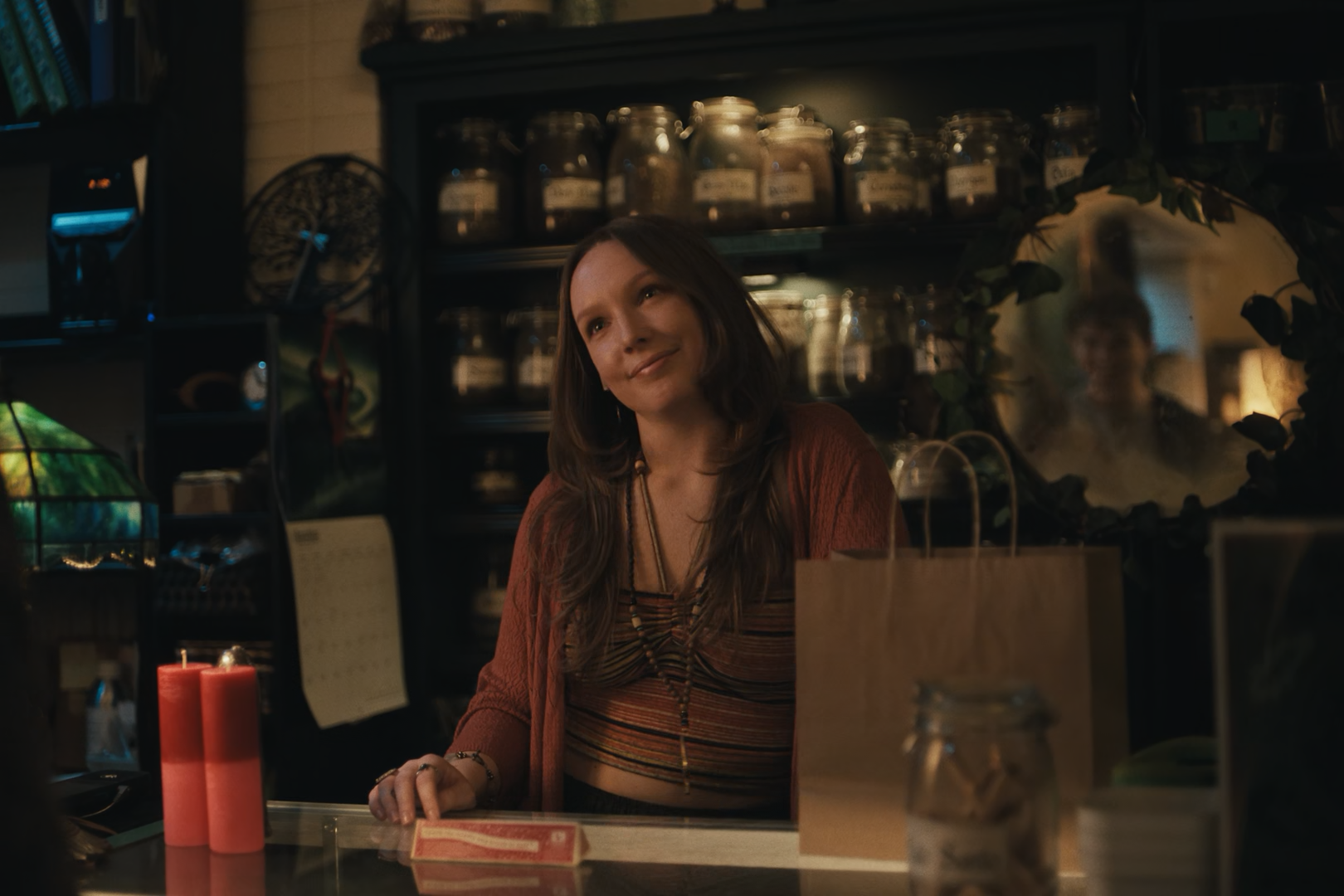
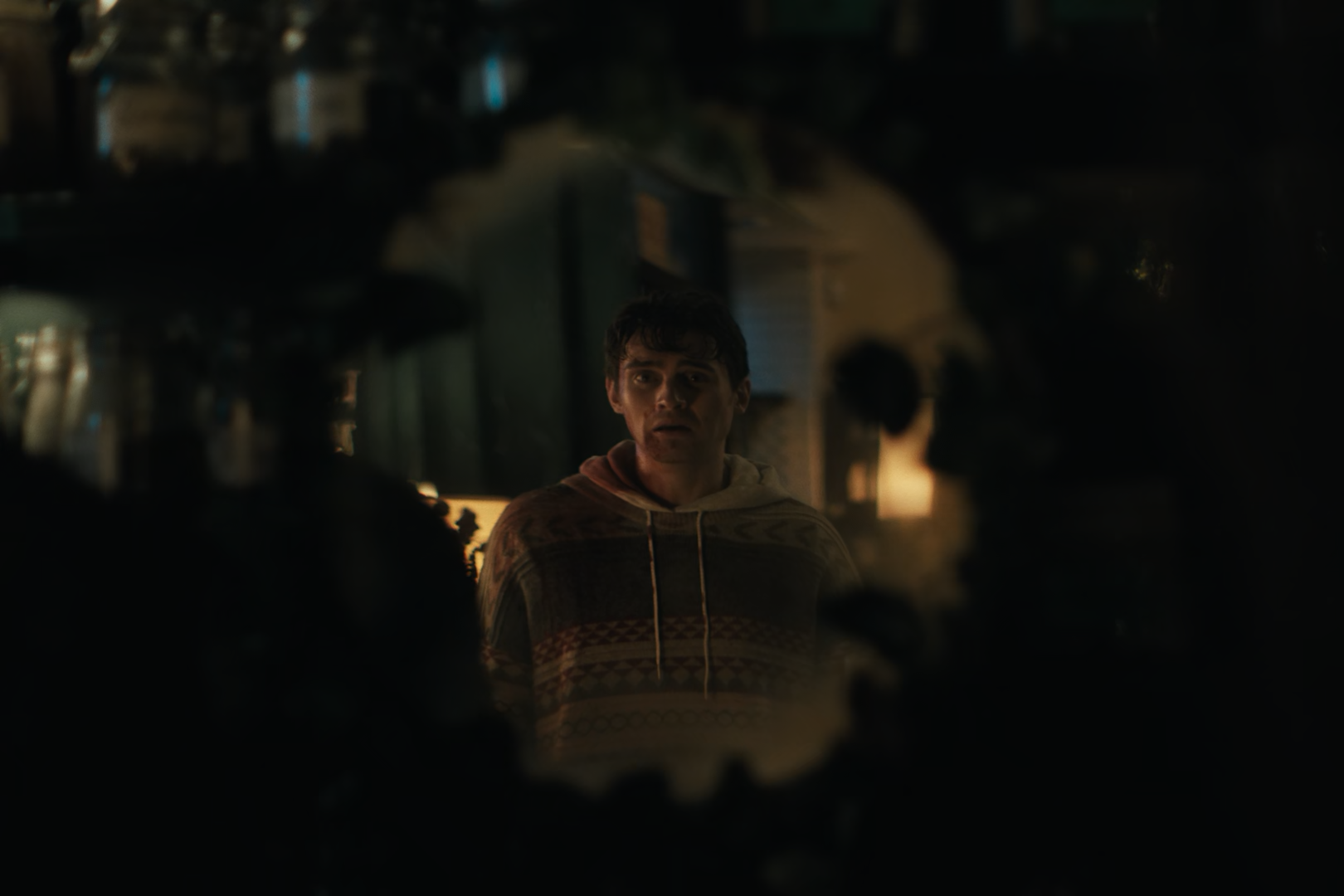
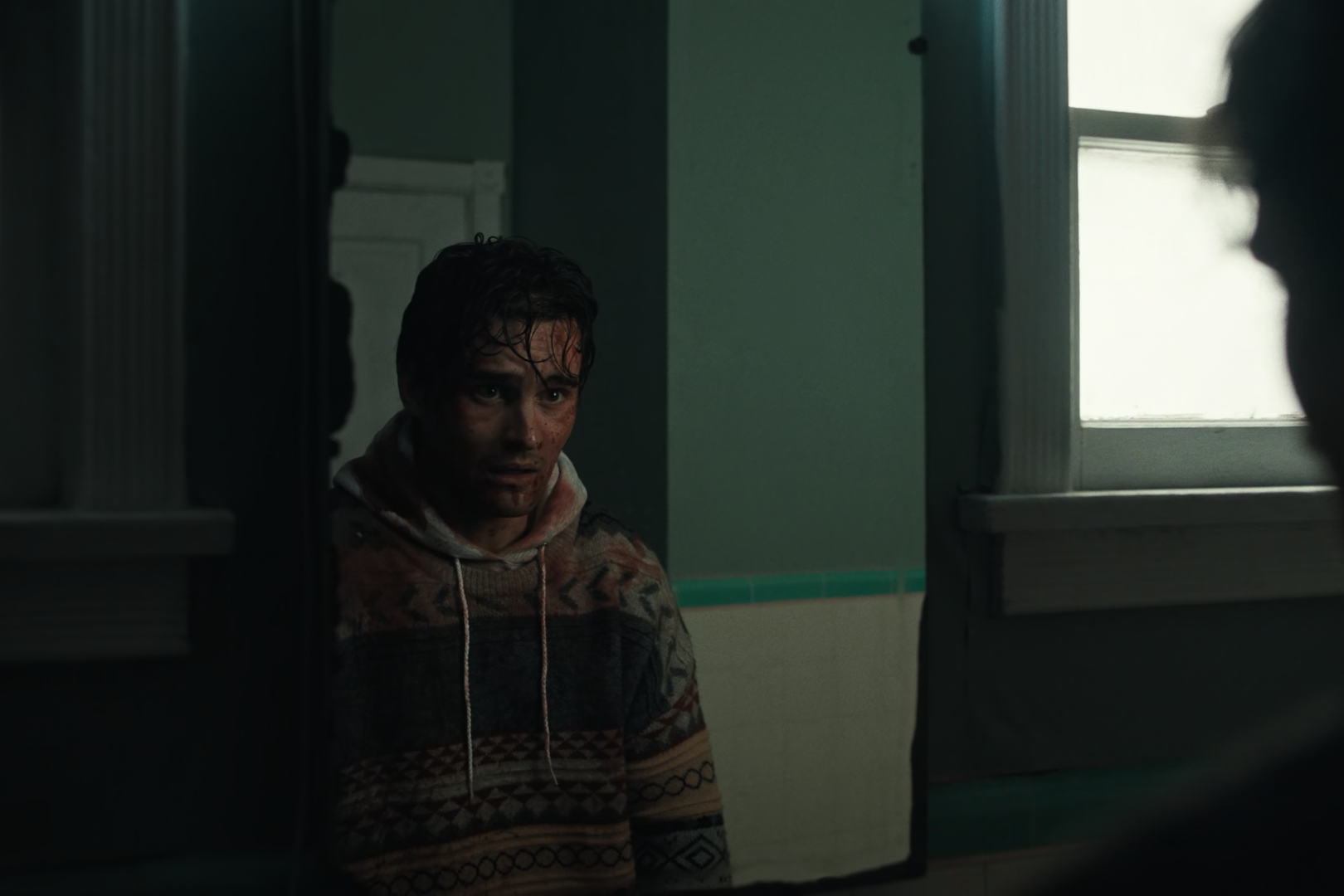
The start of Obsession walks a fine line between Bear being a nice guy and a pathetic coward. Most people will probably empathize with having a crush and being afraid to tell the person. Especially when it could ruin a group dynamic. So by design, Obsession wants this initial sympathy for Bear’s plight.
That slowly changes as his acts of cowardice mount. When he drives Nikki home, it’s a cringe-fest that peaks with Nikki straight up asking Bear if he likes her and adding that now is the time to tell her. Bear responds with “I think we’re good friends.” It makes me angry just writing the words.
But that’s the point. Nikki puts the ball on the tee by telling him when she likes a guy no one knows. Then asking him if he likes her. If Bear had any confidence or courage, he would just say yes and see what happened. Instead, he says no, like a coward, then uses the One Wish Willow in an even greater act of cowardice.
“Chris, didn’t Nikki tell Sarah she just liked Bear as a friend.” Yeah, but that goes back to her saying people don’t know when she likes a guy. And she may have been trying to protect Sarah because it was clear Sarah liked Bear. There’s a world where if Bear had just spoken up when asked that Nikki would have at least gone on a date with him. Alas.
So part of the film is this exploration of the “nice guy” as a villain. A topic that has grown in relevance in the 21st century.
If you use cinema as a timeline of social concerns, then, for a long time, villainous men were classically jerks. Especially in movies involving young people. You’d get some version of the arrogant jock, moody bully, or selfish pretty boy. The well-to-do young man was the hero.
One of the earliest reversals of this was Thomas Hardy’s novel Tess of the d’Urbervilles. Tess has a bit of a sordid past that no one knows about. She wants to tell her nice-guy fiance, Angel, before they marry. But Angel’s like “nah, that’s marriage stuff.” Once they’re married, Angel is ready to dish and reveals he once had an affair with an older woman. So Tess tells him about the time a young noble assaulted her. Angel should accept her past the same way he expects her to accept his, right? Nope. He wanted a pure maiden. So he tells Tess he needs space and leaves the country. I won’t spoil the rest of the story but it’s pretty wild.
So Angel was an early archetype of this male character who loves the idea of a woman and not necessarily the woman herself.
The archetype has gained in prominence. You see it in Vertigo, The Collector (1965) where a non-macho guy abducts a woman because he believes if she only got to know him that she would learn to love him. Oh, man, and The Stepford Wives, where husbands replace their wives with androids who cater to the male ideal of a wife.
(500) Days of Summer is a more recent version of the “nice guy is actually the problem and doesn’t realize it” story. Tom dates Summer and it starts off with a spark but she doesn’t want to commit to him and they break up. Tom spends a large chunk of the film depressed and bitter and longing for Summer and feeling like the victim of her whimsical ways. The ultimate lesson is that the two were always incompatible but Tom was so focused on the idea of Summer that he made their relationship into something it never was and could never be. But he actually does become a better person because of the relationship. La La Land covers similar territory.
But that’s still a sanitized version where the nice guy learns a lesson. Over the last decade, more and more online discourse has focused on nice guys who aren’t so nice.
Examples:
There was a great movie about this called Colossal that stars Anne Hathaway and Jason Sudeikis. I had forgotten about it and just remembered. It’s very weird and gets very intense but I really liked it.
Anyway, Obsession takes the toxic nice guy and makes him the monster of a horror movie. The climax of this is when Real Nikki (in control because Fake Nikki’s knocked out from sleeping pills) asks Bear to put her out of her misery. In that moment, Bear’s concern isn’t about what Nikki’s experiencing but about his own ego. That’s why he asks, “What’s so bad about being with me?”
Nikki’s response: “I’ve never been with you Bear.” Instead of responding, he once again does the cowardly thing and leaves.
A person who is actually good would never have made the wish much less gone along with this farce. But Bear does so because he doesn’t care about Nikki as much as he cares about the idea of being with Nikki. Which is why his first thought isn’t “It’s terrible what she’s going through” but “What’s so bad about being with me?” You can imagine this self-centered logic in the realistic scenario where Bear doesn’t think of what happened as SA because he doesn’t want to. He chose this for her and that makes it real, right?
Bear, like Tom in (500) Days of Summer, is obsessed with the idea of someone who isn’t right for him. And by pursuing the idea, rather than accepting reality, he ruins his life, her life, Ian’s life, and Sarah’s.
It isn’t until the very end of the film that he briefly is honest with himself about what he did and what he needs to do. I say briefly because even though he finally looks in the mirror and takes the bottle of pills to free Nikki, he immediately starts trying to throw up the pills. So he couldn’t even follow through with his one moment of bravery. A true coward until the very end.
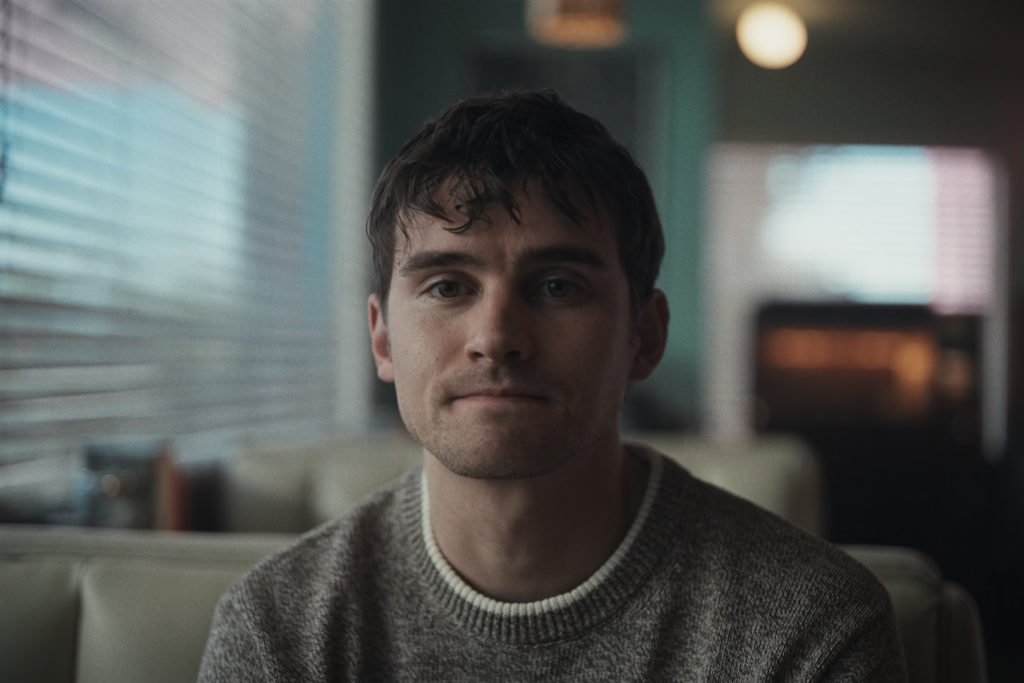
I was thinking more about Obsession and wanted to highlight this. Our introductory scene to Bear is his rehearsal for telling Nikki how he feels. This humanizes him and makes him infinitely relatable as most people have had a crush and felt awkward about telling the person. That first impression is a positive one. And don’t overlook the diner setting. It’s bright, clean, and has the upbeat energy of a public place.
Then what do we see? Bear goes home and his cat’s deceased on the floor. Nearby is a torn bag of cat food and several empty cans. My read here is that Bear wasn’t doing a great job taking care of the cat. Which is why the cat was desperately going after food and ended up eating the pills. The pills being out in the kitchen even raises the question of who was taking them. They were prescribed to his grandmother but he has them in the kitchen still?
Every 2026 movie I’ve seen, ranked. Became a dad, so catching up. Updated: October 5th
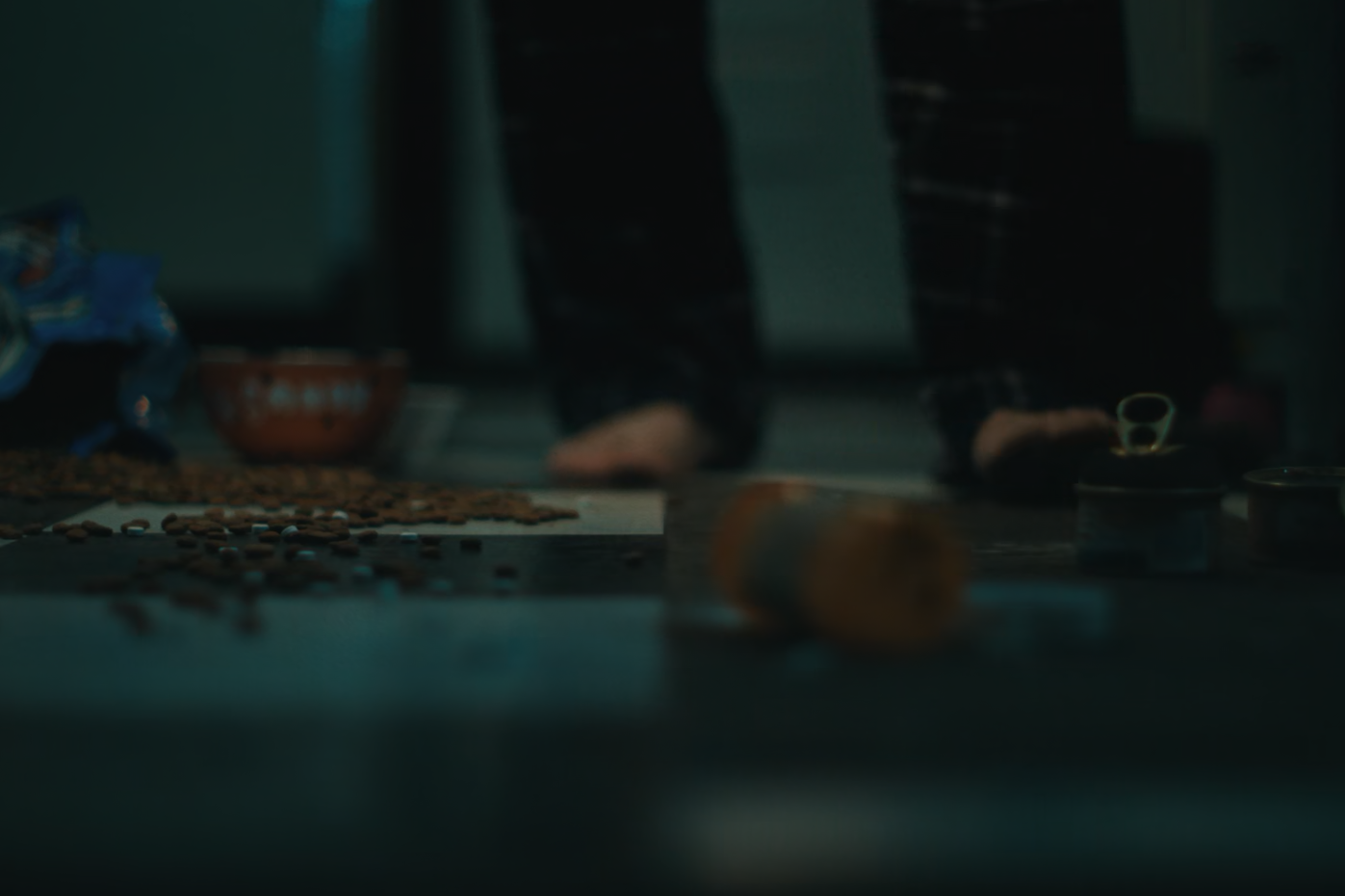
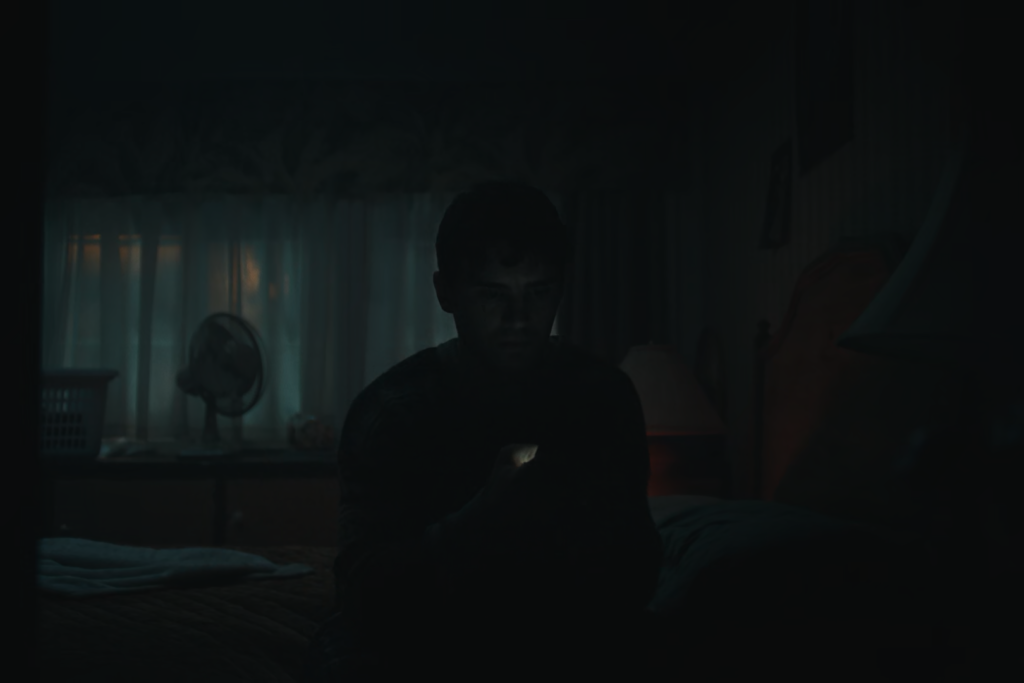
There’s the implication that Bear’s been taking the Oxycodone himself. Which is why he’s kind of out of it and has a bit of a sunken look around his eyes. The script leans into this a bit too:
Bear scoops the pills back into their bottle, reluctantly.
This is the house he recently inherited from his grandmother. And it doesn’t seem like he’s done a great job taking care of it. You can see in his AI chat history that his grandma went into a nursing home in June. Then in July he looked up Oxycodone. And then the last 7 days look like he’s been pretty obsessive about Nikki and potentially depressed himself. If he was spiraling, you could imagine him not paying attention to the cat. He’s taking pills to numb his pain.
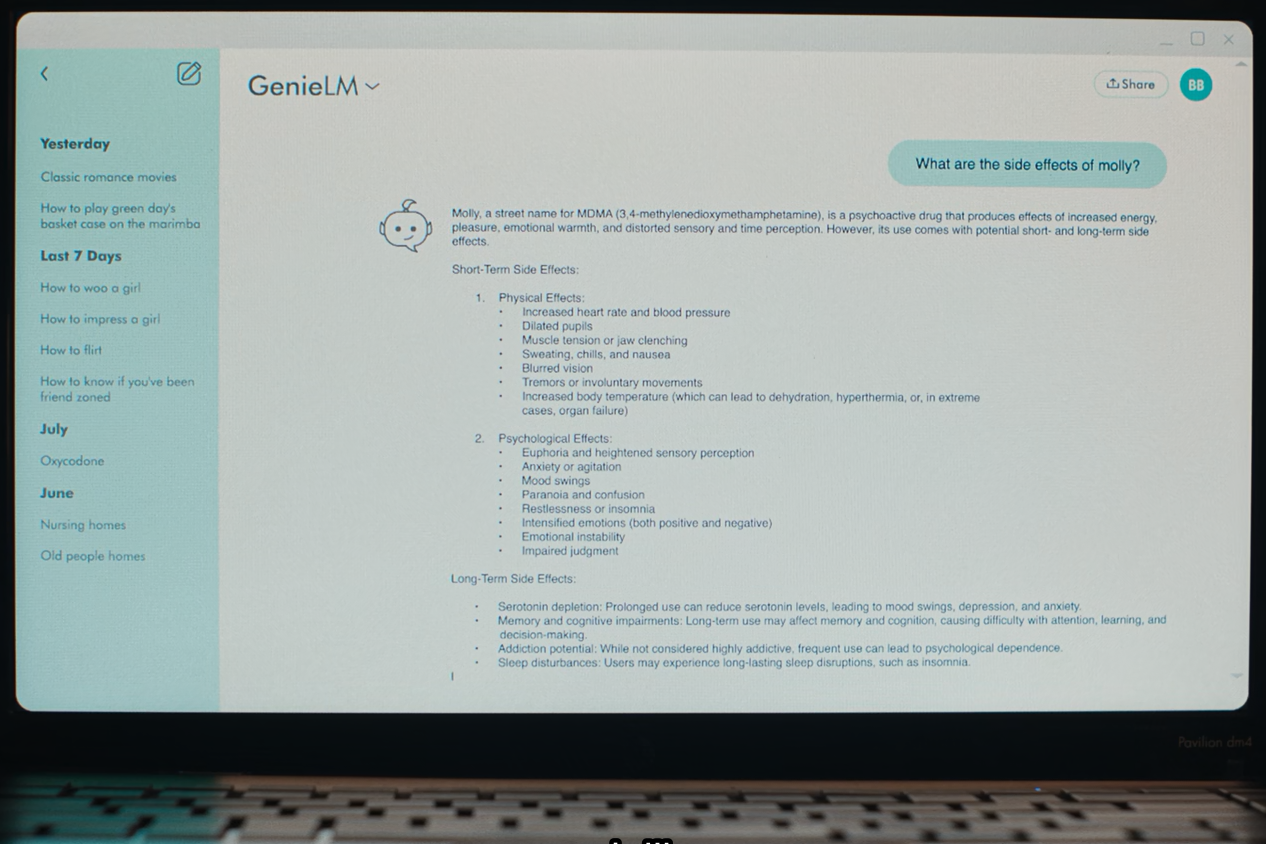
I say all this because it’s evidence that Bear neglected the needs of a dependent. And then Wish Nikki becomes his new dependent. It’s possible that the nature of the wish meant that Fake Nikki was always going to be a bomb waiting to go off. But we also don’t know how much Bear’s aware of her needs and actually taking care of her. Is there food in the house for her to eat? Is he making sure she knows to do basic hygiene?
The first few days or weeks of their “relationship” seemed genuinely positive. Except Wish Nikki starts not sleeping because of the dreams and the whole tortured soul thing. If she’s not sleeping, not really eating, not drinking water, etc., the mental deterioration would be sharp and extreme. As much as people chalk up Wish Nikki’s behavior to the wish going wrong, there’s an argument for it being Bear’s inability to care for her that led to such extreme behavior. The cat teases what will happen and establishes the pattern Bear will play out.
Also, notice the irony of Bear going out the same way as the cat: taking the pills. He never did a very good job taking care of himself, either.
A technique for analyzing movies that’s almost always relevant is comparing the opening scene to the final scene. It’s become a best practice for stories to bookend in this way. So if a movie opens with the sun rising, it might end with the sun setting. No Country For Old Men starts with Tommy Lee Jones’s character reflecting on his younger days. It ends with him describing a dream where his father leads him into the afterlife. That’s pretty heavy and mysterious until you remember the title: No Country For Old Men. That firmly tells us the film is concerned, to some degree, with aging. And the bookend of the opening and closing expresses that concern.
I thought it was fascinating, then, that Obsession ends with a shot of a TV screen. Screens aren’t a major motif. There’s no dialogue in the film about TV or movies or anything like that. So why end on the TV?
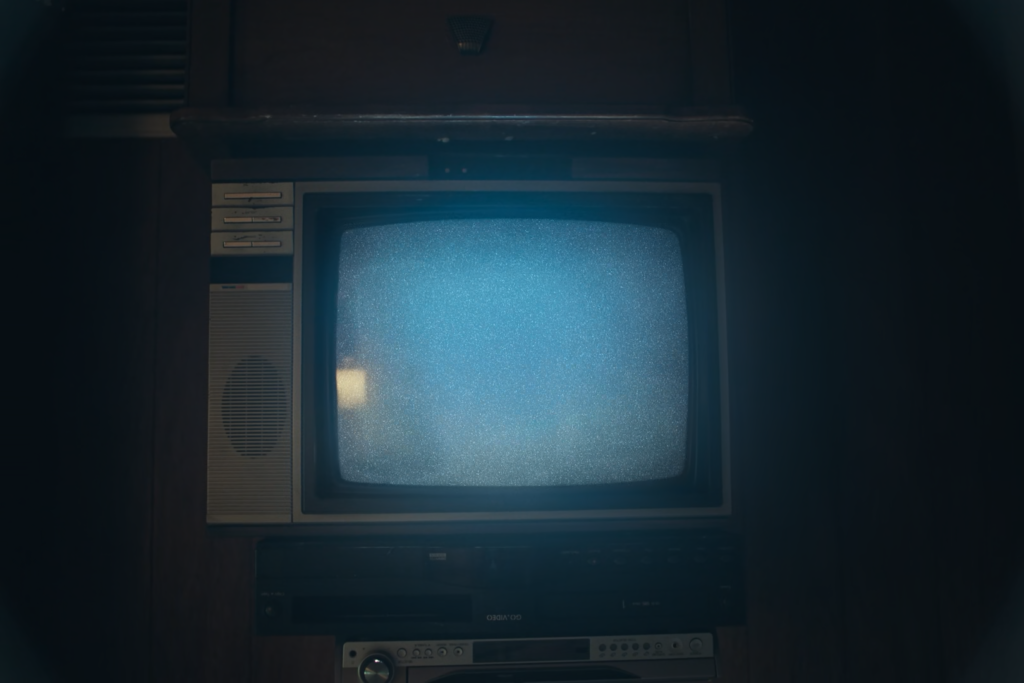
Curious, I went and looked at the original script. And you know what I found? The script’s opening scene is Bear, “decent-looking but lacks self-confidence”, fixated on a movie playing on the TV. A man on the screen delivers a monologue:
I’ve often wondered what it means to truly love someone. And then, I realized it’s what I feel for you. It’s a love that defies the limitations of the world, that remains steadfast even in the face of chaos. Even if the world lost its color, if hope faded into the night, my love for you wouldn’t falter. It’s unwavering and enduring, and it fills every fiber of my being.
The next line gets right to the heart of it: “Bear’s eyes tell the story of a man who yearns for love but enjoys wallowing in his disappointments.”
Obviously that’s not in the final film. What replaced it is the opening sequence where Bear tells “Nikki” how he feels about her. For first-time viewers, we think it’s an actual, earnest declaration of feeling.
Ever since we…. You’re the only person that I’ve ever… Sorry, this is weird. I don’t talk like this. I feel like I’m coming apart. I think about you all the time, Nikki. I try not to. You’re in every song I listen to. You were the only person who was nice to me when I moved here. And at first I thought maybe…. Well, I realized who you are. And then, after Nana passed, you were the one who called, even when I didn’t have anything to say and we just sat there. So I keep telling myself “She’s too good, and she’ll…You’ll lose her.” But maybe you should know that I would choose you over everything.
Then Ian interrupts and we’re momentarily rocked by the fact that what we just saw wasn’t real. It was a rehearsal. Ian’s embarrassed by it. Bear’s embarrassed. But the girl playing Nikki’s not. She actually tries to offer advice and Bear doesn’t pay attention to her at all and Ian’s a jerk to her. Which is just…perfect given what we just talked about in the previous section about how men treat women. Ian’s the classic jerk. And Bear’s the classic nice guy. But both don’t treat the girl playing Nikki like a person who just did them a favor. She leaves and then it’s just the guys talking about how to win over Nikki.
But that’s not the important thing here. The important thing is the artifice. We thought something was real and it turned out not to be real. That idea repeats throughout the film. Bear doesn’t expect the One Wish Willow to be real, then it is. He hopes that Nikki’s love for him is real…but it’s not.
What’s the line from the One Wish Willow customer service guy? “Just because you chose this for her doesn’t make it any less real.” It’s such a ridiculous thing to say. But Bear wants to believe it so tries to believe it.
This concept of real/not real is part of the dynamic between Bear and Ian. We think Ian’s actually trying to help Bear but he’s not. Once we learn Ian had hooked up with Nikki for two years, his advice becomes real suspicious real fast. Like after the failed rehearsal, Ian tells Bear to flirt with Nikki. That’s reasonable advice. But he suggests calling her “Freaky Nikki”. That’s sabotage. Same thing with Bear asking for Ian to give him and Nikki some time alone. Ian always has excuses for why he can’t do that. Because Ian wants Nikki to himself and he’s not honest with Bear because he’s kind of a jerk.
Which brings us back to the television. TV and movies are the perfect example of something that seems real but are not. They’re imitations and exaggerations of reality. Mimicry. I have the feeling that one of the more subtle themes of Obsession is this meta dialogue about the depiction of love in cinema and the impact it has on our idea of love in real life.
If that opening scene from the script were in the film, I could make that case a lot stronger. But the rehearsal scene that Obsession actually opens with is similar in that Bear’s performing and someone is playing Nikki. And Ian’s serving as a director. Beyond that, Wish Nikki is trying to act like Real Nikki. And then Bear has to pretend Wish Nikki is Real Nikki and keeps stopping her, like a director would, and saying “Nikki wouldn’t do that.”. So we see all of these aspects of performance. The TV screen as the closing shot becomes a kind of reveal.
Remember when Bear drives the real Nikki home from trivia?
No, Bear, you dunce. A romance is a genre that’s about the development of a relationship and defined by the happy ending where the couple ends up together. Hallmark movies are romances. A love story is about love and there’s no guarantee what happens. Atonement is a love story. Titanic is a love story. Groundhog Day is a romantic comedy. Crazy Rich Asians is a rom-com-dram. Casablanca? Love story.
Obsession is a story about love. But Bear wants it to be a romance. And I think that final shot of the TV plays into this idea of the tension people have between their idea of things and the reality of things. Movies and TV shape those ideas. Which is why Bear’s speech at the beginning of the film IS something out of a hallmark movie, full of tropes and platitudes that are similar to the original movie dialogue that Barker ended up cutting.
One last detail. Look at the moment Wish Nikki and Wish Bear come together and kiss. It’s right in front of the TV. Which I think is playing a video recording of Bear sleeping. Probably something Wish Nikki recorded. But. The important thing is the location. You can read the placement of the big romantic moment in front of the TV as a reference to the kind of big romantic moments we see in shows and movies.
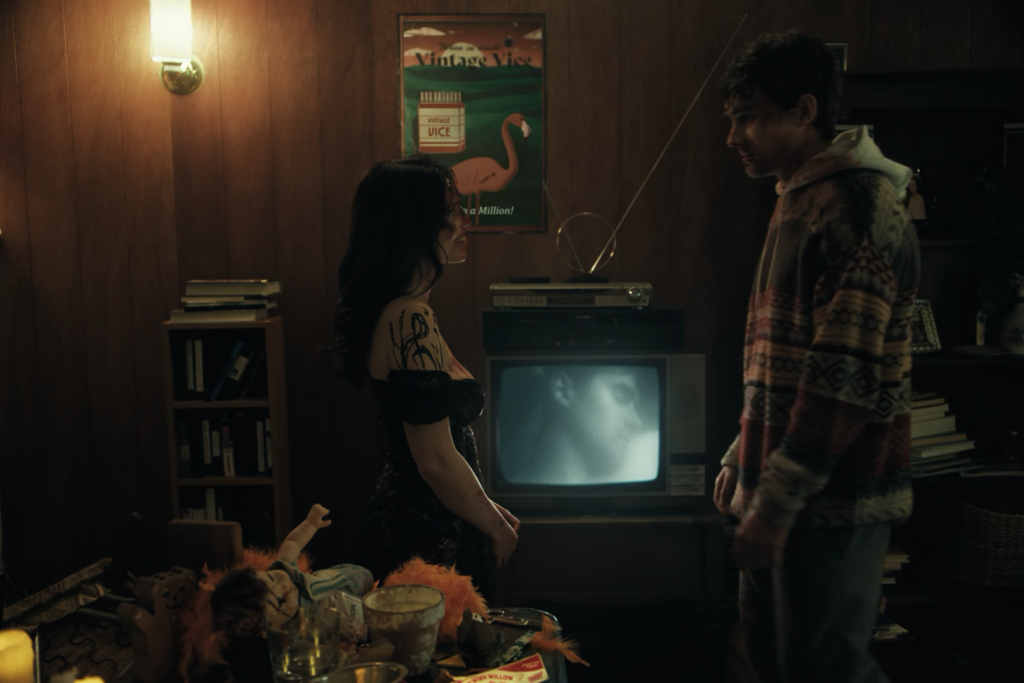
Okay, so Freaky Nikki uses the One Wish Willow to make Bear love her more than anything. It works! They have that brief moment where they’re two imposters who are deeply in love. Then Bear succumbs to all the Oxy he took.
Freaky Nikki holds him and cries, “Baby, what did you do? Baby, what did you do?” She’s so distraught about losing him that she’s about to go out with him (which was the end of the original screenplay). But then real Nikki returns! She observes the weapon in her hand, Bear in her lap, and Ian on the floor. We see the fear and sadness on her face. She pushes Bear off her lap and onto the floor. Then starts to cry, to wail. She yells. Then screams “What did you do?” as an old-timey romance song plays over top of her continued sobbing.
So the final lines of dialogue are Wish Nikki saying “Baby, what did you do?” followed by Real Nikki saying “What did you do?”
This gets back to everything we talked about with the duality and dichotomy between what’s real and what’s not real. The first “Baby, what did you do?” is Wish Nikki mourning Bear and their romance. The second “What did you do?” drops the baby because Real Nikki is not declaring grief but launching an accusation full of fury.
The first is more in line with what you’d expect out of a movie where the lover makes a “noble” act of “self-sacrifice.” But Real Nikki isn’t asking about Bear’s death. She wants answers about what he did to her in the first place. It’s the rage of a survivor questioning her assaulter.
Then Curry brings us right back to that tension around perception by using the song “Forever” by The Little Dippers. It’s sappy and sweet, while Nikki’s audible grief is sad and tragic.
Hold me, kiss me. Whisper sweetly that you love me forever.
You know what other 2020s film used that song? Priscilla, the one about the age difference between Elvis Presley (24) and Priscilla (14) and how the big music star woos this young girl then gaslights and controls her before she ultimately chooses her independence over him. The song plays during a montage that shows the couple “in love” while revealing the recklessness of Elvis’s lifestyle. And as soon as the song ends, the scene that follows focuses on Elvis critiquing Priscilla’s dress, telling her it does nothing for her figure. That directly undercuts the “love me forever” sweetness from the song.
Earlier, we discussed movies that were grounded versions of Obsession. Priscilla is another one. Elvis’s celebrity is a kind of magic that ensorcells Priscilla. She must adjust to his life, his whims, his demands. Before finally coming to her senses and leaving.
Let’s answer some of the questions people ask about Obsession.
I don’t feel this is as definitive as some may think. The movie has Sarah reveal that Nikki told her that she thought of Bear as a little brother. And Nikki does ask Bear if he likes Sarah, seemingly trying to play matchmaker.
But. In the car ride from trivia, Nikki tells Bear that when she likes a guy no one knows. Which implies she doesn’t like to share that information or maybe will even tell a white lie when asked about it. So we don’t know how honest she was with Sarah about Bear. She wouldn’t be the first person in history to not tell their friend the truth. Especially when it’s clear Sarah likes Bear and Nikki wants to give them the opportunity, in case Bear likes Sarah too.
That would also explain why Nikki straight up asks Bear if he likes her then says now is the time to tell her. You don’t say “Now is the time to tell me” if you don’t want the person to tell you. If you don’t want the person to tell you, you never ask.
To be fair, though, the car scene is purposefully ambiguous. In an interview with Cinemablend, Inde Navarrette said: “So me and Curry played with the idea of whenever we did certain takes, we played one where she is super interested, we did another where she wasn’t. And so, in the editing process, kind of marrying those together to also see it from Bear’s perspective of ‘how does she feel?’ So ultimately… we don’t really know. But, speaking as Nikki, I think that there’s a little inclination of like, [he] would treat me right, to a certain extent. I just wanna emphasize that. But, like, in the beginning, like, he’s a good guy.”
Inde’s referring to when Nikki said she wants to experience love. She knows Ian doesn’t love her but that Bear does. And she’s curious about it. If only Bear had had a touch of confidence…
She wished for Bear to love her. We obviously don’t hear the words but I imagine it’s the exact same wish, just with his name instead of hers. Fake Nikki had what she really wanted for the briefest second. Alas.
We talked about this earlier. Not in the traditional sense. Barker said it’s a type of possession but not a demon, more Nikki’s own wishes and desires. But it’s clearly not Real Nikki saying and doing everything, because there are those moments where she regains control and is completely horrified by what’s happening. And the whole customer service phone call where we can hear Nikki yelling. It makes it seem like she’s sectioned off somewhere. Or like she’s stuck in the back seat while Freaky Nikki drives the car, so to speak.
The One Wish Willow doesn’t seem to be cursed. Barker said: “Well, it’s funny because people think that the One Wish Willow (the monkey’s paw in the film) is some sort of a cursed object. I get that… but the funny thing is, it’s a wish that he made. Forcing someone to love you is a pretty extreme wish, right? Maybe if he had wished for something a little less, it could have worked. It’s not like the One Wish Willow has to be this super cursed item, right?”
And the movie supports that reading. Remember the conversation with the shopkeeper? The shopkeeper said he used his wish already. And he seems fine enough. Maybe some terrible thing happened and he’s just dealing with it really well.
But there’s no evidence in the film that the Willow is the problem. Rather, the problem seems to be the people.
That’s a reversal of the classic monkey’s paw scenario where the paw grants any wish but always screws over the wisher. That’s become such a trope that I think a lot of viewers just expected Obsession to use the same logic. But that doesn’t fit the world of the film. Like, if Ian had lived, his wish for a billion dollars might have been totally fine. Well, until the bills make it back to the government and they start trying to trace their origin and realize this guy has cash that didn’t come from the Treasury. Hm.
But if the wish itself was cursed that would, in some way, absolve Bear because some people would blame the curse for undermining Bear’s romantic intentions. Since the wish isn’t cursed, you have to blame the person who made the wish for making a bad wish. Bear’s not the victim of a trick. All the responsibility lies with him.
In the scene, we see Bear’s car parked in front of the hospital. Bear talks with a nurse. The nurse moves to the passenger door. Then we see the nurse leaving the car as Bear pleads with her. Nikki gets out and prances. The nurse leads.
There’s no dialogue so it can be difficult to figure out why the nurse wouldn’t help. But the script has an answer:
From afar we see Bear and a NURSE try to get a reluctant Nicky out of his car. Nicky pushes Bear off of her, refusing to go.
Bear pulls the Nurse off to the side. While they talk, Nicky gets out of the car and begins to do a little dance.
The Nurse ultimately refuses to take Nicky because of the principle of informed consent.
If you’re wondering what informed consent means, this is what the Cleveland Clinic says:
Informed consent is a formal conversation between you and your healthcare provider about your treatment plan. It’s required by law, as well as by the medical code of ethics. Your provider explains what the treatment is, what it can do and what risks it may have. You get to ask questions and decide if you want to go ahead. If you say “Yes,” that’s called giving your consent.
Functionally, the scene answers why Bear couldn’t just take Nikki to the hospital to get looked at earlier in the movie. Because she wouldn’t give consent, no provider would treat her. He could have asked for a 5150, a 72-hour psychiatric hold, since Wish Nikki was clearly a danger to herself. But either Bear didn’t want to or didn’t know to.
Thematically, Nikki refusing to give consent is a wink and a nudge to the entire situation with Bear and how his wish stripped her of the ability to consent.
The simplest answer is that it demonstrates how disconnected Wish Nikki is from human behavior. And it gets back at the idea of the tension between fantasy and reality. Bear’s fantasy life is that he now has Nikki and everything will be good. But things like the cat end up reminding him this isn’t actually Nikki (or even the behavior of a regular person he could pretend was Nikki).
You could try arguing that it’s a jealousy thing, too? Like she knew he cared about the cat and that makes her angry so she lashes out? Freaky Nikki is real petty.
There’s also a cat motif throughout the film. The cat at the beginning, the Tabi Cat on the back of the One Wish Willow box, the cat clock that’s on the wall. But I never saw any connections between the cat and anything else in the film. So not sure what to do with that information.
I know there’s a theory Fake Nikki’s the cat, Samuel, in possession of her body. That’s absurd. Don’t believe that.
Everyone who was at the party is a witness to the bizarre dynamic between Bear and Nikki that was out of character for Nikki. So there’s a scenario where she explains she’s a victim and that Bear was holding her hostage and shot Ian then felt an immense amount of guilt so took his own life. The people from the party could attest to something strange going on. In that case, she might go free.
But obviously there’s the scenario where she’s blamed for Ian, Sarah, and Bear and sent to prison. Barker has said that’s probably her fate. “She’s probably going to prison, for a very long time…. who knows what the cops are going to put together as a story. But she’s not going to have a very good life. It’s very sad.”
Then there’s the metaphoric reading where the ending is Nikki “waking up” from the haze she was in after what Bear did. And now she’s having to actually confront his actions and work through whatever trauma had initially caused her to dissociate. In this version, none of what happened was real. Everyone is alive. The deaths merely represented the end of these friendships. Like, Nikki didn’t smash Sarah’s car window then smash Sarah’s face. That would just represent the big fight they had when Nikki discovered Bear was with her.
Because Wish Nikki used the One Wish Willow to make him love her. So he forgets what he was doing and goes to her.
Man, I had to go to the script for that one. She says “Rail me. Rail my guts.” I know. It’s awful. The scene is slightly different in the script. But she says those lines and it describes how she moves towards Bear in an unnatural, slow motion, and how her lips don’t match her words. So in both the script and the final cut Barker had Fake Nikki have this sense of being inhuman.
People have speculated the awkward walk backwards is Real Nikki battling for control. And that’s why Nikki feints like she’s going to charge at Bear. Because it’s Real Nikki wanting to hurt him and Fake Nikki putting distance between them so Bear’s safe.
But, like with many things in the film, we don’t have enough information to really know why she suddenly seemed extra supernatural.


Film Colossus Supporters get access to the Frameshift and Active Viewing courses, an ad-free site, the Watch More Films newsletter, and the ability to request movies for analysis. Your support also directly keeps Film Colossus alive while I try to scale it into something sustainable, as it's just me, Chris, who does everything here.
Or create a free account. You gain access to the Active Viewing course and Watch More Films.
Join the Film Colossus community, get the newsletter, and unlock member features as they're added.