
Newsletter Subscribe
Enter your email address below and subscribe to our newsletter

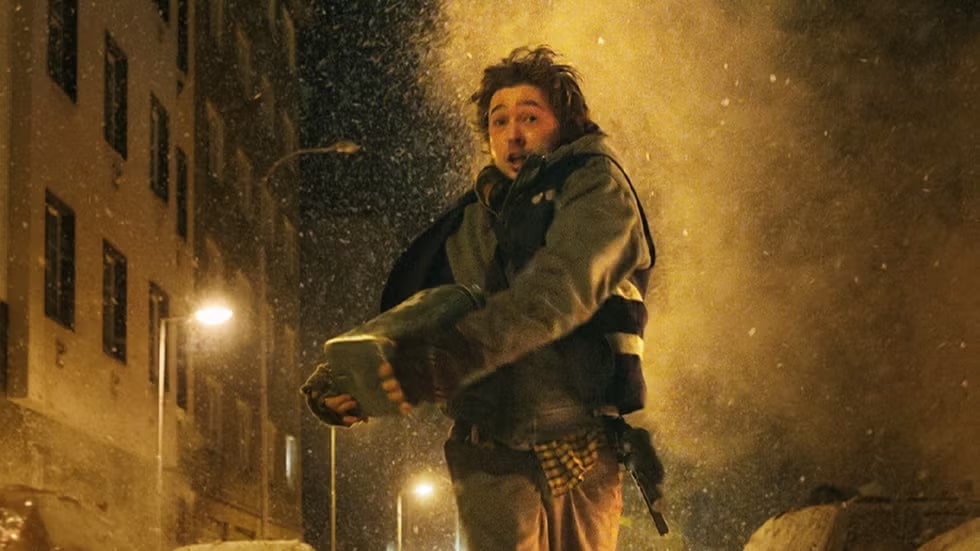
Resident Evil ends with a mutated Bryan roaring at the National Guard helicopters. It seems like a bad ending, as our protagonist has become a terrifying monstrosity. But there’s actually a lot more going on.
At the start of Resident Evil, Bryan’s in the middle of a conversation with his girlfriend, Michelle. She’s told him she’s pregnant and he has a pretty standard response: fear. Because he’s afraid of his life changing, he hems and haws about what to do.
Bryan: You know, I mean, maybe maybe you just take, like, a couple more of them just to be sure. Yeah. No, no, I know, but it’s just, you know, sometimes these things, I mean, they have those, like, false positives, right? So, it’s like, before we start to freak out—No, no, no, no, no. I’m not saying that you are. I’m saying, uh… Look, all I’m saying is, let’s just be, uh, totally sure, you know, before, before we freak out, you know, I’m not saying that you’re freaking out. Jesus Christ. Uh, hey, uh, no, it’s nothing. Sorry, baby. I just got to the place where I gotta go, but I’m gonna be home in, like, 20 minutes. We’re gonna figure this out, okay? Okay. Okay.
Zach Cregger starts this way because he wants the audience to know, up front, that the entire movie is an externalization of the internal chaos going on inside of Bryan. That’s why he spends the entire movie “carrying” the green bag, and we even have the dialogue where he tells Michelle that “this is life that I’m carrying, right now.”
That initially just seems like a dumb thing to say to a pregnant woman, that he’s also carrying a life. But it’s, once again, Cregger announcing the metaphor to the audience to keep people following along.
Zach Cregger, in an interview with Empire Magazine, directly addressed the opening of the film: “For Bryan, it’s already like being in a horror movie. It’s a terrifying situation for a young guy who doesn’t quite have his life figured out.” He goes on to say, “[Is it right to] bring a child into a world that just seems to be getting worse and worse? We’re wrestling with that question. Only for this character to find out it’s even worse than he’d imagined…”
In an interview with IndieWire, Cregger said: “I’m always kind of writing myself into my characters. I’m in my forties now and I don’t have kids, but those conversations are always around.”
Before heading into the hospital, Bryan sees the family sticker on the back of a car that inspires him to record the voice memo for Michelle.
Bryan: “This is for Michelle. Um… It looks like there’s a chance that we might not get to talk again, and, um, that means we won’t be able to finish our conversation from earlier tonight. But I, uh… I hate my response. I hate that my first reaction was just me being… afraid of… of… change and of… growing up, and… you know, the idea of having a baby means that all that’s coming whether I wanted or not. But I do. I do want to have a kid with you. And I should have said that right away, but… no, not ’cause you wanted to hear it, because it’s true. And just… Whatever you decide to do and whatever happens tonight, just… I think you’ve been amazing, Mom.”
In theme-driven movies, the external world becomes a representation of whatever a character is wrestling with internally. So Bryan’s afraid of becoming a parent and how difficult that will be, how it will affect him. The green bag is the representation of his child. And all the zombies and monsters represent his fear of responsibility.
Every 2026 movie I’ve seen, ranked. Became a dad, so catching up. Updated: October 5th
Hayao Miyazaki used this narrative approach in his masterpiece Spirited Away. That film opens with a 10-year-old girl, Chihiro, upset as her family drives to a new home in the country. She’s afraid of having to face the unknown. Some things happen and her mom and dad transform into pigs. That leaves Chihiro to navigate an entire spirit world on her own. By confronting that world, she gains the confidence to face the unknown in the real world.
This explains why Cregger had Bryan traverse the hospital’s maternity ward. It could have been a surgical theater, or some other random room, but the maternity ward reinforces the externalization. It’s the space associated with childbirth.
I think a lot of people will chalk Bryan’s conversion into the monster as a tragic ending. But I’m not sure it is. Remember, it was the little girl in the trailer who bites Bryan. That’s what causes him to start to change. And “change” becomes a loaded word, thematically, after the voice memo, because Bryan calls out that he was afraid of the baby changing him, of making him grow up, because he’s happy with how things are.
What then happens at the very end? Bryan’s still trying to prevent change by trying to get the antidote. But the bite from the kid causes the transformation (whether he wanted it or not). And the result is Bryan quite literally growing up.
Cregger: “[Bryan’s] life right now, without his choosing, has reached a really crucial fork in the road. It’s like, am I going to embrace change and take a leap into something that’s terrifying, but potentially going to improve my life? Or am I going to dig in my heels and try to freeze time and stay exactly where I am, which is comfortable, even though he realizes that’s not possible.”
For most of Resident Evil, Bryan’s running away from the things that scare him. That’s why he avoids going home to Michelle and the reality of becoming a father. He also spends much of the night running from increasingly horrific things.
But the end is a reversal. Once Bryan becomes the amalgamation monster, he doesn’t run from the National Guard’s helicopters and the threat they present. He turns towards them and roars.
I don’t necessarily think we should reduce the ending to “Bryan’s a monster now” so much as “Bryan’s changed.” The old Bryan is gone. He’s completed his coming-of-age arc. And that’s why I think you could even read his final roar as…heroic? The world is terrifying. How do you manage to raise a child in such a place? You become someone capable of confronting it, head on.
From a 2014 study titled “We take care of our own” by Michael Gilead and Nira Liberman: “The parental caregiving motivational system leads people to behave selflessly. However, given that the purpose of this motivation is the protection of close kin, it might also lead to aggression toward distant, threatening others. In the present studies, we wished to investigate the effects of behaviorally activating the caregiving motivational system…we predicted that activation of the caregiving system would enhance bias against out-groups whenever their members posed a salient threat. This prediction was confirmed in three studies…”
You could argue that Bryan’s journey to the top of the hospital is a journey of acceptance. And by the time he makes his way through the maternity ward, he changes, becoming the kind of person who can protect his family from the world. That’s if you view the movie as representative rather than literal.
With that said, Bryan’s literal fate is quite sad. Which is something I discuss in my breakdown of the amalgamation monster. He was afraid that becoming part of a family would cost him his individuality. Yet, running away from that existential threat to his identity is the very thing that leads him to a far more horrific loss of identity. Hoisted on his own petard.
I know a lot of people are complaining about the ending, but I actually think it’s one of the most interesting choices Cregger has made across Barbarian, Weapons, and Resident Evil. It transcends a director making a commercial film and becomes an artist working through his own complicated relationship with starting a family.
Rodrigo Perez (The Playlist) asked if Cregger would want to remain in the Resident Evil universe after this film And Cregger said:
“I can’t help thinking about other places this story could go. I’ve got ideas, but this movie hasn’t even come out yet. Let’s see what happens.”
On the one hand, that bodes well. On the other hand, Cregger has suffered a storm of abuse from angry Resident Evil franchise fans who picked about the movie from the trailers alone. So I can imagine him being like “I don’t want to deal with that again.” But, at the same time, the movie is now out and getting rave reviews and crushing the box office. That success combined with his love of the franchise could pull him right back into the universe.
So Cregger does seem interested and motivated to continue in this world. Personally, I’d like to see him do more with it.


Film Colossus Supporters get access to the Frameshift and Active Viewing courses, an ad-free site, the Watch More Films newsletter, and the ability to request movies for analysis. Your support also directly keeps Film Colossus alive while I try to scale it into something sustainable, as it's just me, Chris, who does everything here.
Or create a free account. You gain access to the Active Viewing course and Watch More Films.
Join the Film Colossus community, get the newsletter, and unlock member features as they're added.
The one point I disagree with is that the green bag represents his unborn child.
I think it represents him clutching on to his immaturity (he repeatedly says it’s “a kid’s heart”) and later, when he realises it’s the key to an antidote, his own selfishness.
Hey! I wasn’t trying to say anything as specific as the green bag represents his unborn child. Just that his reference to it being a “life” that he’s carrying reinforces the overall concept that Bryan’s thinking about the whole pregnancy/becoming a dad situation. I like your suggestion that it represents him clutching onto his immaturity. Especially because when he’s finally changing, he’s begging for what had been in the bag so it could revert him.
Oh yeah! I didn’t make that connection after he changed at the end.
I think it casts that scene where he records the message for his girlfriend next to the hospital elavator in a different light, too.
He’s just seen that he is heavily infected, then sees the “family” image on the car, and then records the message. He acts as though he’s matured and accepted the idea of being a parent, but only because he doesn’t believe he’s going to live long enough to actually do it.
And immediately after that, he is given new hope when someone speaks over the intercom, and he goes right back to chasing the cure; the escape.
Wow what an amazing essay!
One thing I’m still confused about is how the antidote in the green bag ended up in a hospital in another city. Is there any indication that Umbrella is also working with other hospitals?
And oh yeah, after reading your essay, I finally understood the main theme and realized a few details about the monsters that appeared. First, the zombies Bryan hit at the beginning of the movie turned out to be a childless couple with only a dog. Second, the little kid zombie with tentacle-like legs, whose parents are nowhere to be found especially the mother, who supposedly bit him and then wandered off who knows where. Third, the acid-spitting zombie (to be honest, I wasn’t really paying attention to that one because I went to the bathroom lol, I might need to watch it a second time), and the whole incident in the maternity ward (just like you explained in your essay). It feels like each zombie represents Bryan’s fears regarding the theme of ‘starting a family’.
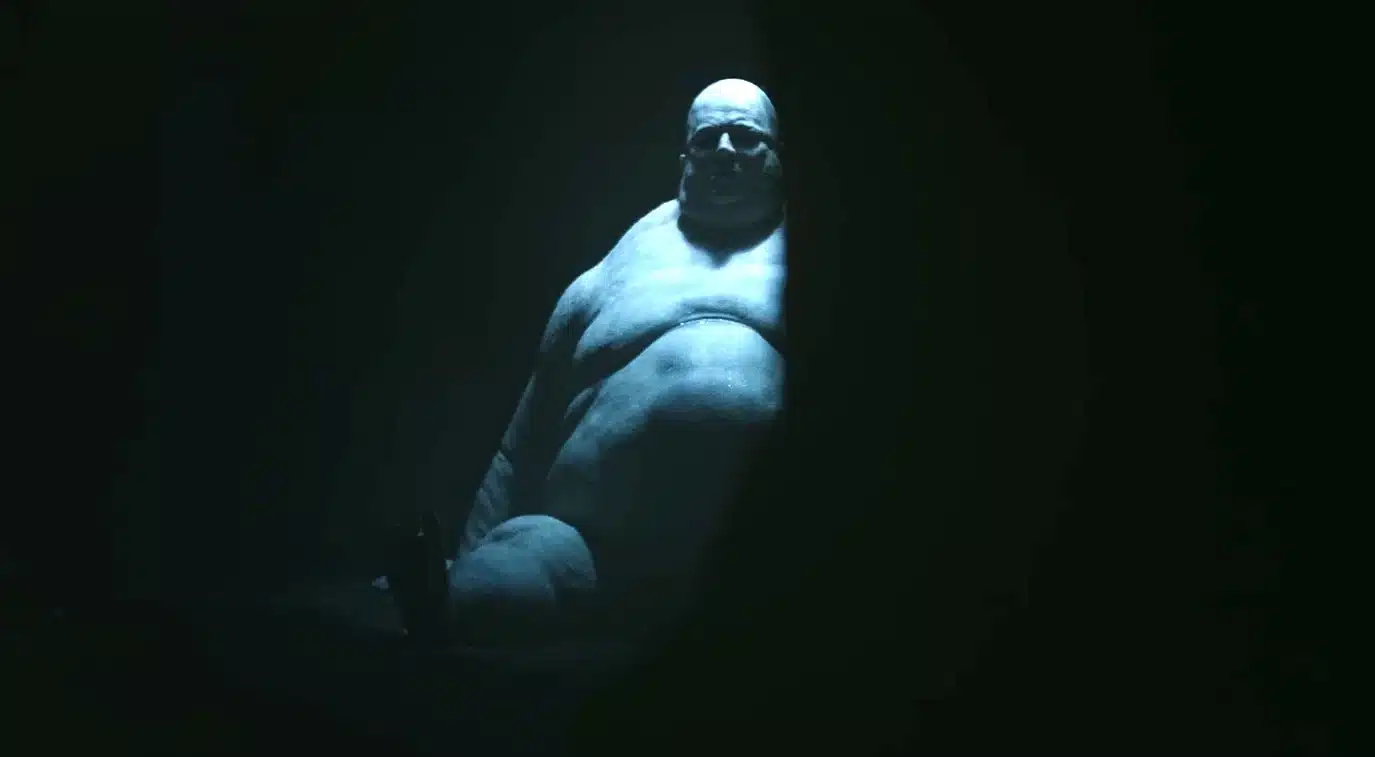
Oh, and I almost forgot about the zombie in the sewer that looks like Baron Harkonnen, I still have no idea what that one is supposed to represent lol
Hey, Tama! Thanks for the kind words. From Paul Walter Hauser’s characters dialogue, the implication seems to be that the lab at Raccoon City had the other hospital creating backup materials. “This wasn’t an emergency back when we called you. We had some. What we were using you for was just out of an abundance of caution. But then… But then, a technician compromised the supply.”
Great identification of the couple and the kid. The acid-spitting zombie, yeah, doesn’t seem to have a clean connection. But then we’re back to it with the maternity ward. Definitely agree that all but the acid-spitting zombie map pretty cleanly to Bryan’s fear.
The Rat Guy in the sewer “gives birth” to the rats. So just another instance of pregnancy/parenthood fears.