

Newsletter Subscribe
Enter your email address below and subscribe to our newsletter
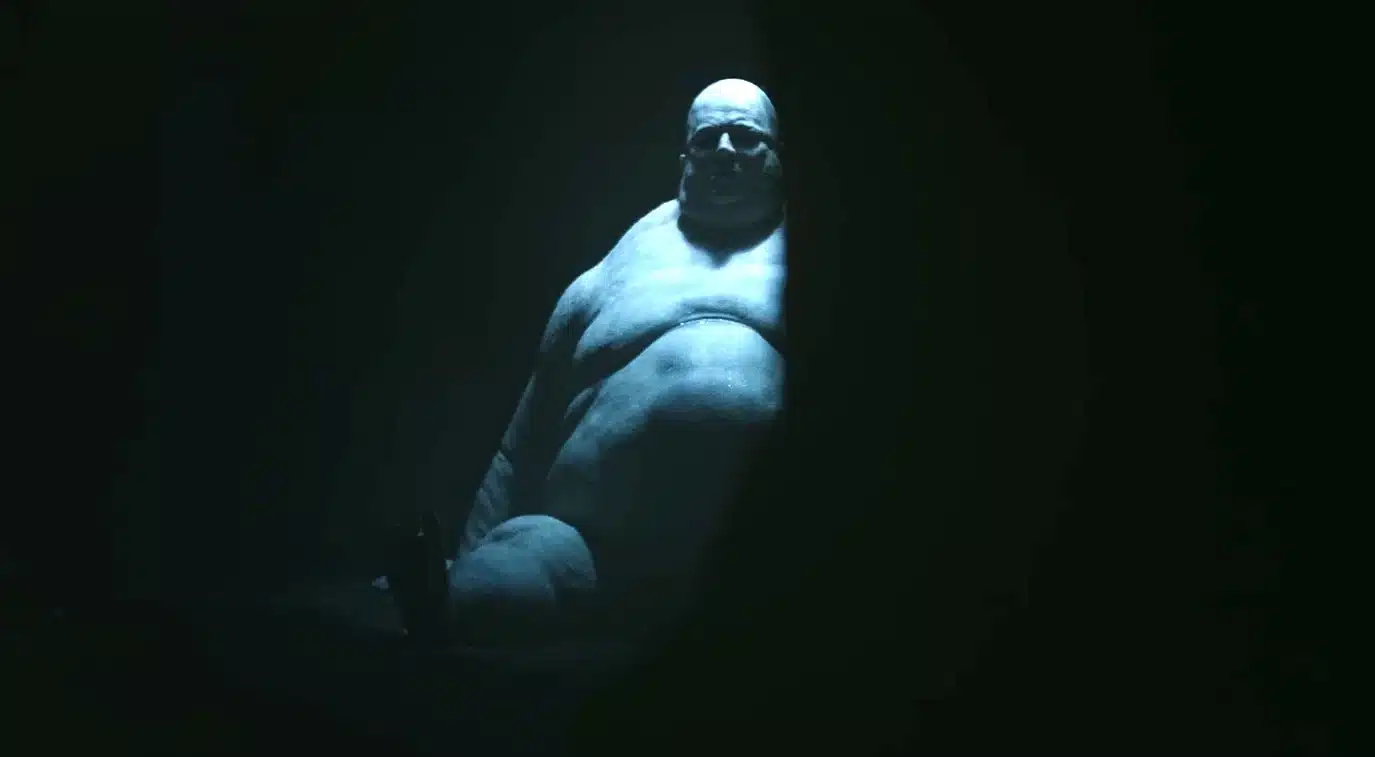
Resident Evil accomplishes a very interesting feat by confusing both the die-hard fans of the Resident Evil franchise and the casuals who only know it as “those zombie games”. It achieves this by leaning into the bio-monster lore that you only really get from playing the games while seemingly ignoring the established behavior of the T-Virus.
In Resident Evil and Resident Evil 2, the games that really define the perception of the franchise, ordinary people infected with the T-Virus overwhelmingly become zombies. It makes sense why anyone aware of that would be confused by the virus in Cregger’s Resident Evil. It’s blatantly the T-Virus, yet there are very few zombies.
Zach Cregger addressed this in an interview with IGN. He said: “This movie doesn’t utilize zombies that much. It’s much more focused on the weird creature stuff than the zombies.…I wouldn’t call it a zombie movie. I just feel like, you have this opportunity for the T-Virus to do all these really fascinating things to the human body, and to the world around you, and so to just limit it to zombies feels like a squandered opportunity. I tried to really vary it up.”
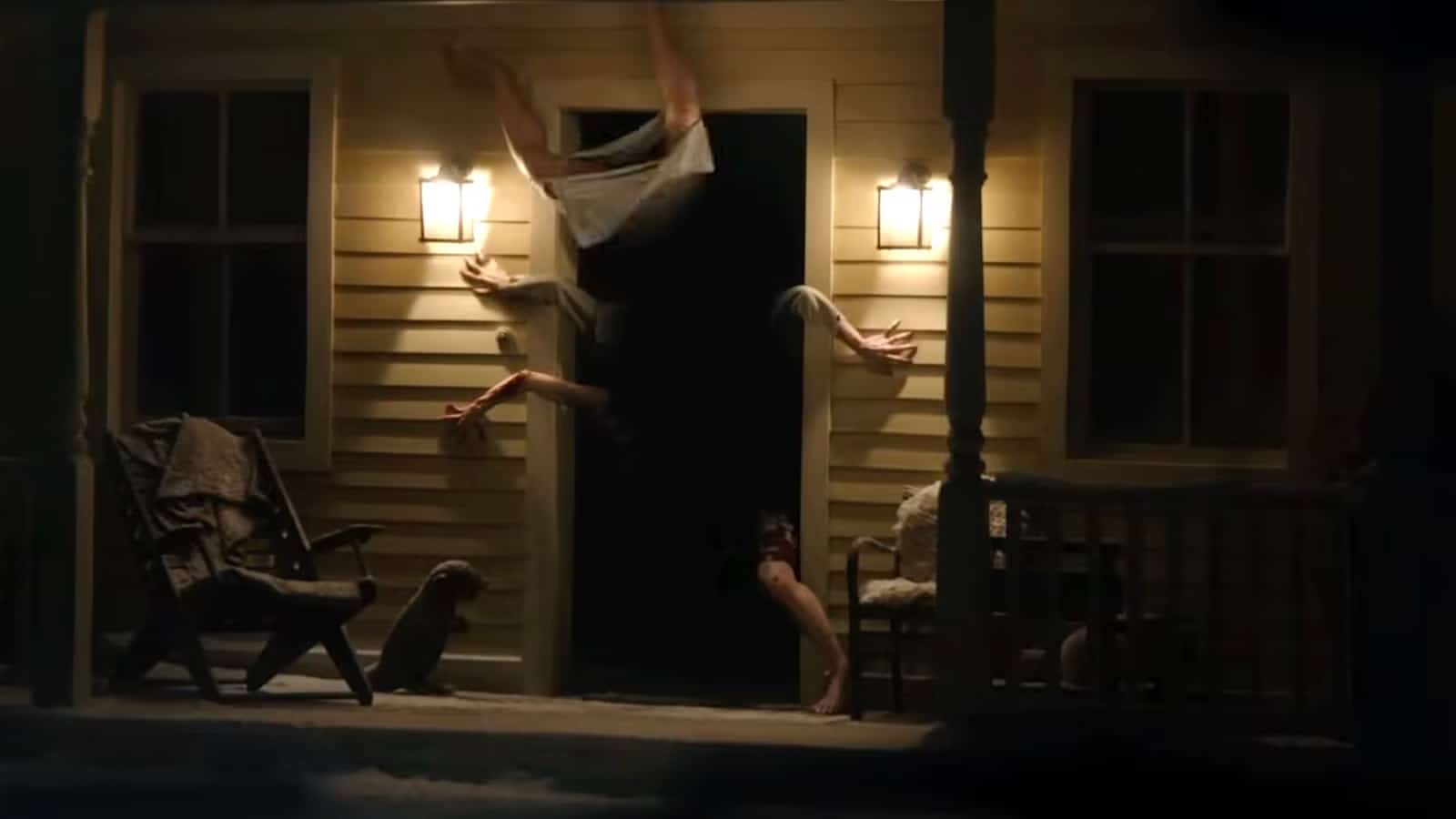
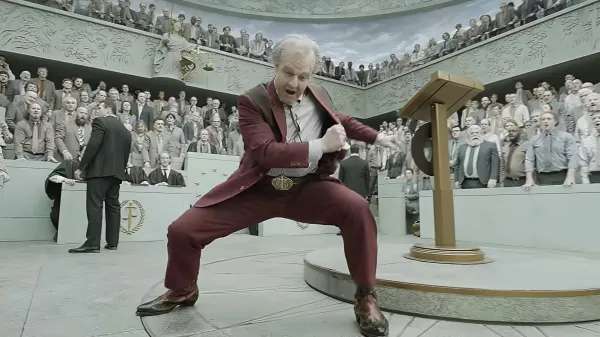
This seems like a simple situation, right? The T-Virus doesn’t behave like the T-Virus because Cregger decided to spice it up a bit. The result is this slot-machine effect where sometimes the T-Virus turns someone into a zombie, sometimes a flower-face, other times the Judge from Blood Meridian, or a bunch of arms and legs that tumble through the world.
But Cregger also told SFX Magazine: “I don’t think they break the rules of the games, but you’ll see unique behavioural things about the way the T-Virus works that the games don’t do.”
I dug more into it, and, yeah, there’s more to the T-Virus than the games usually show.
I’m looking at the official Capcom entry for the Plague Crawler, and this is what’s in the notes:
“Manipulating the genes of creatures to improve them or to produce a new species is a process that happens in the real world, but the use of the T-Virus produces far more drastic results such as the sporadic mutation of a creature’s features, or the merging of multiple creatures into a single organism. Together with gigantism and the accelerated evolution mentioned earlier, this merging ability is another one of the T-Virus’s more obvious features.”
The Plague Crawler made its first appearance in 2002’s Resident Evil Zero, which serves as a prequel to the original game. So official lore establishes that the T-Virus can cause sporadic mutation and allows for the merging of multiple creatures into a single organism.
Another entry for the Ivy enemy states that “the T-Virus has the effect of accelerating the evolutionary rate of infected species.” If that sounds familiar, it’s because the Umbrella scientist played by Paul Walter Hauser says something nearly identical to Bryan. “We created a substance that can almost instantaneously transform any organism into a hyper evolved version of itself.”
Every 2026 movie I’ve seen, ranked. Became a dad, so catching up. Updated: October 5th
We see that with the Licker, which the database describes thusly: “Lickers are the result of a mutation caused by the progression of the T-Virus infection in a zombified human host’s body.”
On the surface, Cregger’s T-Virus operates differently than the broad idea of how the T-Virus worked in the games. But the more you dig into the minutiae of the game world, the more you realize that Cregger’s interpretation of the T-Virus is actually in line with established behavior.
The entry for the Giant Moth actually puts the icing on the cake. “Although the most well-known effect of the T-Virus is zombification, as can be observed in humans, gigantism is just as common.” Being the most well-known effect doesn’t mean it’s the only effect.
Hopefully Resident Evil fans can rest easy knowing that Cregger didn’t simply ignore lore and make up his own T-Virus. He looked into the nuances of what it’s capable of then showcased them.
The film doesn’t give the monsters cool names the way the game does. But we see versions of:
There’s that scene where Bryan observes the tentacles reach out from the wife and pull up the husband then merge the bodies. That behavior doesn’t seem very T-Virus-y. But it does fit more of what you’d expect from the plagas from Resident Evil 4 and 5.
The Plagas are parasites that attach themselves to the nervous system of human hosts, influencing the host while they continue to develop. In the game, after the host takes enough damage, the plaga erupts to continue attacking you. They’re ugly as hell.
The connection to Cregger’s film is that plagas are very tentacle-y. So when the tentacles emerge from the husband and wife, fans of the games will probably think “Plagas?!?!”
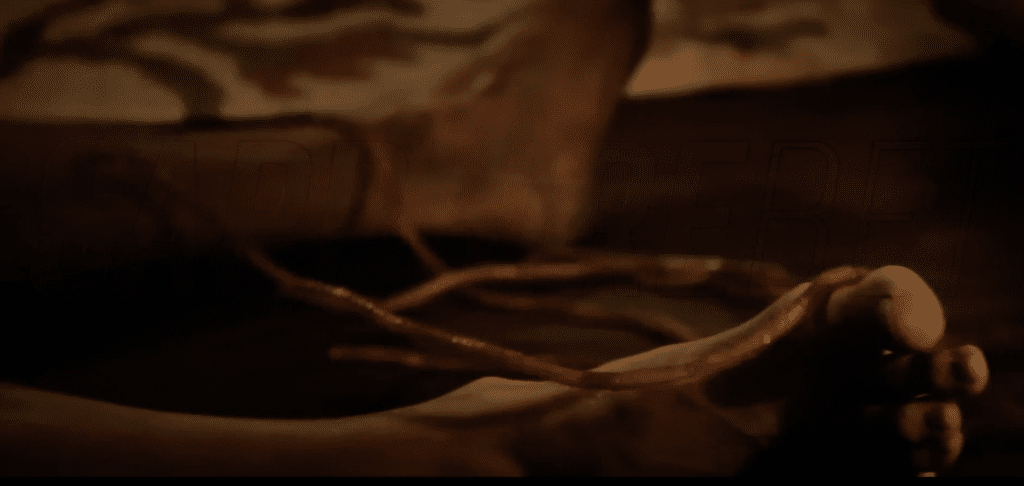
As far as I’m aware, that tentacle behavior is not part of how either virus operates. But the film’s production designer, Tom Hammock, told GamesRadar: “You’ll see a lot of Resident Evil 4, Resident Evil 6. Zach and I went through and pulled specific creature elements that we like from the games, whether it’s tentacles, the teeth integration, and then tried to take that language and move it over to these creatures.”
Cregger has also said that Resident Evil 4 is “probably the game I’ve played most out of the series.”
Cregger didn’t combine the T-Virus, G-Virus, and Las Plagas. But he does reference what players associate with all three. I should explain the G-Virus.
In Resident Evil 2, we meet William Birkin, creator of the G-Virus. The G-Virus causes a much more aggressive and extreme transformation than simply becoming a zombie. Of course, he ends up injecting himself with it. Over the course of the game, Birkin evolves into increasingly horrific forms (and boss fights). Bryan’s monster form takes a lot of inspiration from Birkin.
Cregger grounds his version of the T-Virus in ideas the games established decades ago. But he pulls visual language from across the entire franchise. So it’s a lot more interesting than Cregger simply ignoring lore. He’s amalgamating it, much like an Umbrella monster. So we get this version of the T-Virus that’s both unfamiliar and faithful.
Bryan’s entire character arc is about his fear of change, specifically related to becoming a dad. He doesn’t feel he’s ready for that. So what does Cregger have Bryan encounter throughout the film? People forced to change by the T-Virus. I break down this concept fully in my article on the amalgamation monster.


Film Colossus Supporters get access to the Frameshift and Active Viewing courses, an ad-free site, the Watch More Films newsletter, and the ability to request movies for analysis. Your support also directly keeps Film Colossus alive while I try to scale it into something sustainable, as it's just me, Chris, who does everything here.
Or create a free account. You gain access to the Active Viewing course and Watch More Films.
Join the Film Colossus community, get the newsletter, and unlock member features as they're added.




The Molded and C-Virus aren’t anything to do with the T-Virus, most of the creatures you list being “created by the T-Virus” are creatures made with the Mold or C-Virus and DIRECTLY STATES WHAT THEY WERE CREATED WITH IN THE FIRST COUPLE SENTENCES OF THE WIKI ARTICLE. You’d embarrass yourself less if you actually read the links you posted, Zach and the creature designer for the movie have outright admitted they took ALL their inspiration for these creatures from RE4, 6, and 7 all games that definitively DO NOT feature the T-Virus.
MEANING THERE’S NO T-VIRUS IN THIS MOVIE, they just mashed up the C-Virus, Mold, The Thing, and The Flood from Halo/Necromorphs from d*** Space.
Hey, Nohan! I think there’s some miscommunication going on here. I was never saying that the creatures in the games were all T-Virus creations. I was saying that the T-Virus in the film creates versions of monsters inspired by creatures from the game. Then listed those inspirations. Their origin in the video games has nothing to do with the fact the film references them.
You’re yelling about something I never said. I said “We see versions of:” not “We’re getting these exact creatures from the games and they’re all T-Virus creatures.”
Also, it is the T-Virus in this movie. Cregger said in an interview that he “chose to stick with the T-Virus, keep it as grounded as possible. So that means I’m not going to have a gigantic jacked dude in a trench coat, because I’m like, where’d the coat come from?” He calls it the T-Virus over and over again. It’s just he exaggerates aspects of the T-Virus that are easily overlooked in the games. Which is what I was referencing in “more faithful than it seems” section.